|
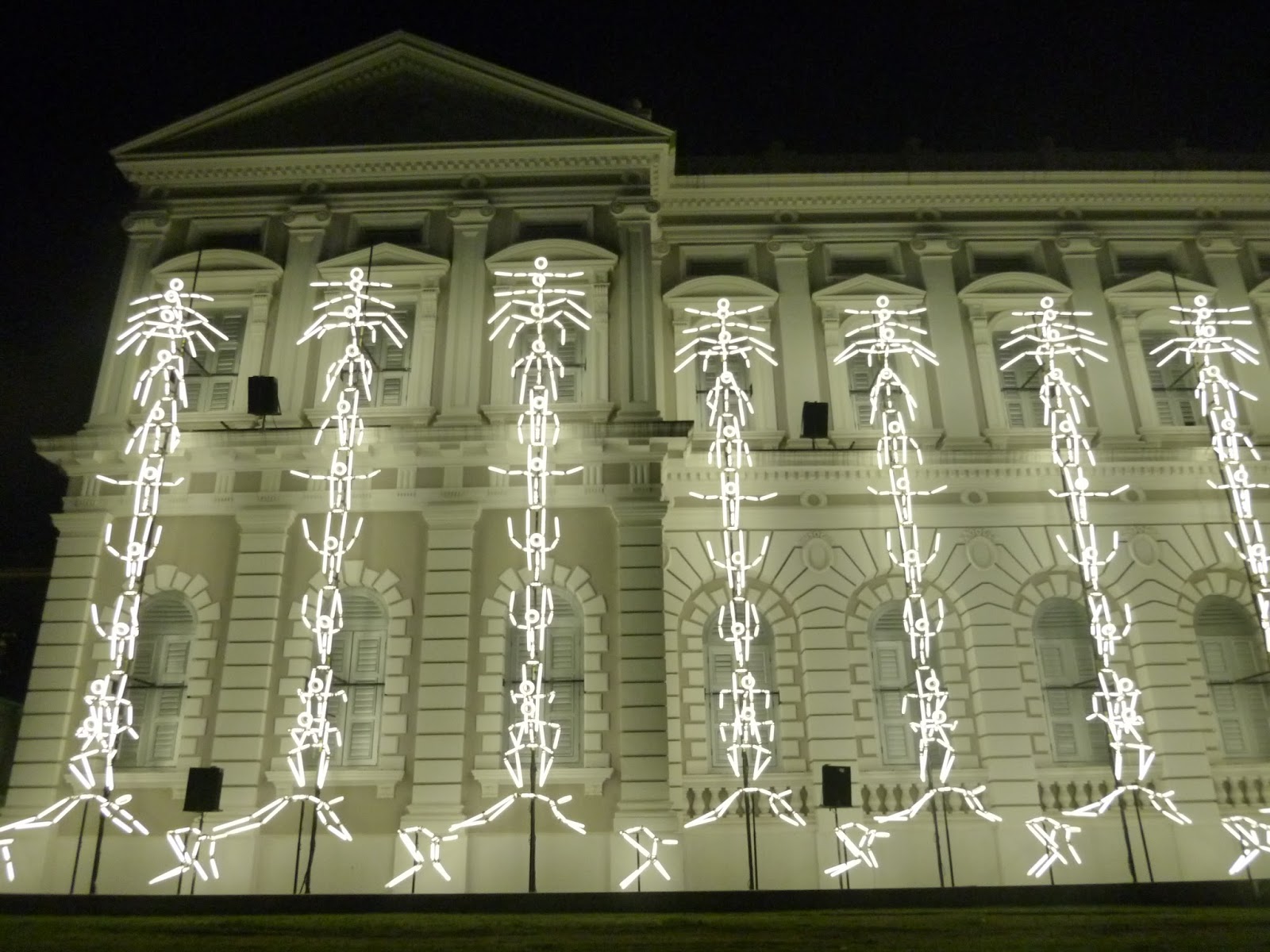
One of the installations of Singapore Night Festival 2016.
#showerthoughts. National Design Centre.
Image Credit: Photo used with permission from Belinda Tan.
©Belinda Tan
|
How will science fiction and fantasy intertwine to engage visitors over the upcoming two weekends of a lively and spectacular
Singapore Night Festival 2016?
This year's Singapore Night Festival sets to inspire with its theme of 'Inventions and Innovation'. Guests to the Singapore Night Festival could find themselves catching glimpses into the minds and souls of inventors and innovators. This year's night festival employs a number of elements of science and technology weaved with fantasy.
What could we look forward to for this year's night festival especially on the first weekend?
The light art installations of the Singapore Night Festival have been popular with most festival-goers. My humble suggestion for people who likes to stay away from the crowd to consider enjoying the following light art installations on weekdays nights, outside the night festival's official hours.
 |
| KEYFRAMES. |
KEYFRAMES
Group Laps
19 Aug to 27 Aug 2016
7.30 p.m. - 11.00 p.m. (Sun - Thu), 7.30 p.m. - 2.00 a.m. (Fri and Sat)
National Museum of Singapore, Facade.
Free admission
KEYFRAMES by Groupe Laps (from France) will narrate a series of urban micro-stories through the use of part animation and part moving sculpture. Catch the LED-lights figures and their routine of movements imbue energy and excitement to the building of the National Museum of Singapore.
Could this installation bring glimmers of the past to life? This installation will be a source of nostalgia for anyone who grew up playing games such as Stick Man.
 |
| Journey. Singapore Art Museum. |
JOURNEY
Soundtrack by Ed Carter
NOVAK
19, 20, 26, 27 Aug 2016, 7.30 p.m. - 2.00 a.m.
21 - 25 Aug 2016, 7.30 p.m. - 11 p.m.
Front Lawn
This dynamic projection-mapping performance is inspired by the world of Victorian novelist Jules Verne, known for his creation of a world reflecting the future of Victorian invention and fantasy. A magical adventure shall begin.
***
There will be a number of noteworthy performances to check out too:
 |
The Wheel House.
Image Credit: Photo used with permission from Belinda Tan.
©Belinda Tan
|
 |
| The Wheel House. |
THE WHEEL HOUSE
Acrojou
19 and 20 Aug 2016
8.00 p.m. - 8.25 p.m., 9.25 p.m. - 9.50 p.m., 10.50 p.m. - 11.15 p.m.
National Museum of Singapore, Mainground
Free admission
Acrojou (from United Kingdoms) will present The Wheel House. Described as a 'tender, post-apocalyptic story", The Wheel House is a unique, rolling acrobatic theatre show. Watch this show unfold inside and around the stunning circular home. This show is essentially about friendship.
This show will work wonders when presented in an intimate space with restricted number of members of the audience. I wonder what magic it will reveal when it is presented at the Singapore Night Festival to a large mass of festival goers? Perhaps there will be live screen projections of the show?
 |
Les Aquamens
Photo Credits: Singapore Night Festival 2016. |
LES AQUAMENS
Machtiern Company (from France)
19 Aug and 20 Aug 2016
8.00 p.m. - 8.30 p.m.: National Museum of Singapore to School of the Arts to Singapore Art Museum
9.30 p.m. - 10.00 p.m.: Festival Village at Singapore Management University
11.00 p.m. - 11.30 p.m.
Various locations
Free admission
For the poetic audience who are open to some level of absurdity, Les Aquamens by Machtiern Company may appeal. Their performances seek to ask the fundamental question: How do we connect with each other when barriers are up?
 |
The Story Box
Photo Credits: Singapore Night Festival 2016. |
THE STORY BOX
Dandypunk
19 and 20 Aug 2016
8.30 p.m. - 8.40 p.m., 10.00 p.m. - 10.10 p.m., 11.15 p.m. - 11.25 p.m.
National Museum of Singapore, Gallery 10
Free admission
A projection-mapped live performance, The Story Box takes its audience to an animated universe of unexpected adventures. Watch DandyPunk interact with a Pandora's box of creatures, characters and light in a novel synthesis of live performance and projected animations.
***
 |
| Photo Credits: Singapore Night Festival 2016. |
Han Sai Por Secret Landscapes
19 and 20 Aug 2016, 26 and 27 Aug 2016
11.00 a.m. to 10.00 p.m.
The Private Museum, 51 Waterloo Street
Free Admission
This would be my personal pick that is located away from the key highlights of the Singapore Night Festival. I personal think that Han Sai Por is one of Singapore's leading sculptors to take notice of. The highlights of this exhibition include the artistic interpretations of various geographical visits.
 |
:Samara
Image Credit: Photo used with permission from Belinda Tan.
©Belinda Tan
|
:Samara
Max Pagel and Jonathan Hwang
Armenian Church
19, 20, 26 and 27 Aug 2016
7.30 p.m. - 2 a.m.
21 - 25 Aug 2016, 7.30 p.m. - 11 p.m.
For more light art installations, consider making a trip to the Armenian Church. A reflective installation that reflects on the duality of progress and sacrifice. What regrets do we have in accepting the price of progress. A poetic installation for the reflective souls. This is one of my favourite installations this year!
 |
| #showerthoughts |
#showerthoughts
LifeWerkz
19, 20 26, 27 Aug 2016, 7.30 p.m. - 2 a.m.
21 - 25 Aug 2016, 7.30 p.m. - 11 p.m.
Level 1, Design Gallery 1, National Design Centre
Free Admission
Nearby The Private Museum is the National Design Centre. This installation is immersive and invites visitors to relax as if in a shower. Patience will be required. A queue to enter the spaces of this installation a few people at a time will be expected. For myself, the experience was worth waiting for. Date a friend or two and go on a weekday night. This could be a strategy to reduce the time spent to queue.
***
During the festival, please remember to nourish our physical bodies with artisan culinary delights at the Festival Village. There are 30 flea market and food and beverage stalls this year. Chill and dine at the Singapore Night Festival 2016!
 |
Spinacas will be serving meaty fries and deviled eggs at the Singapore Night Festival 2016.
Photo credits: Spinacas |
Festival Village: Eat and Shop
Singapore Management University Campus Green and University Square
19. 20, 26, 27 August 2016
6 p.m. - 1 a.m.
***
For a memento to take home or give as a gift, the
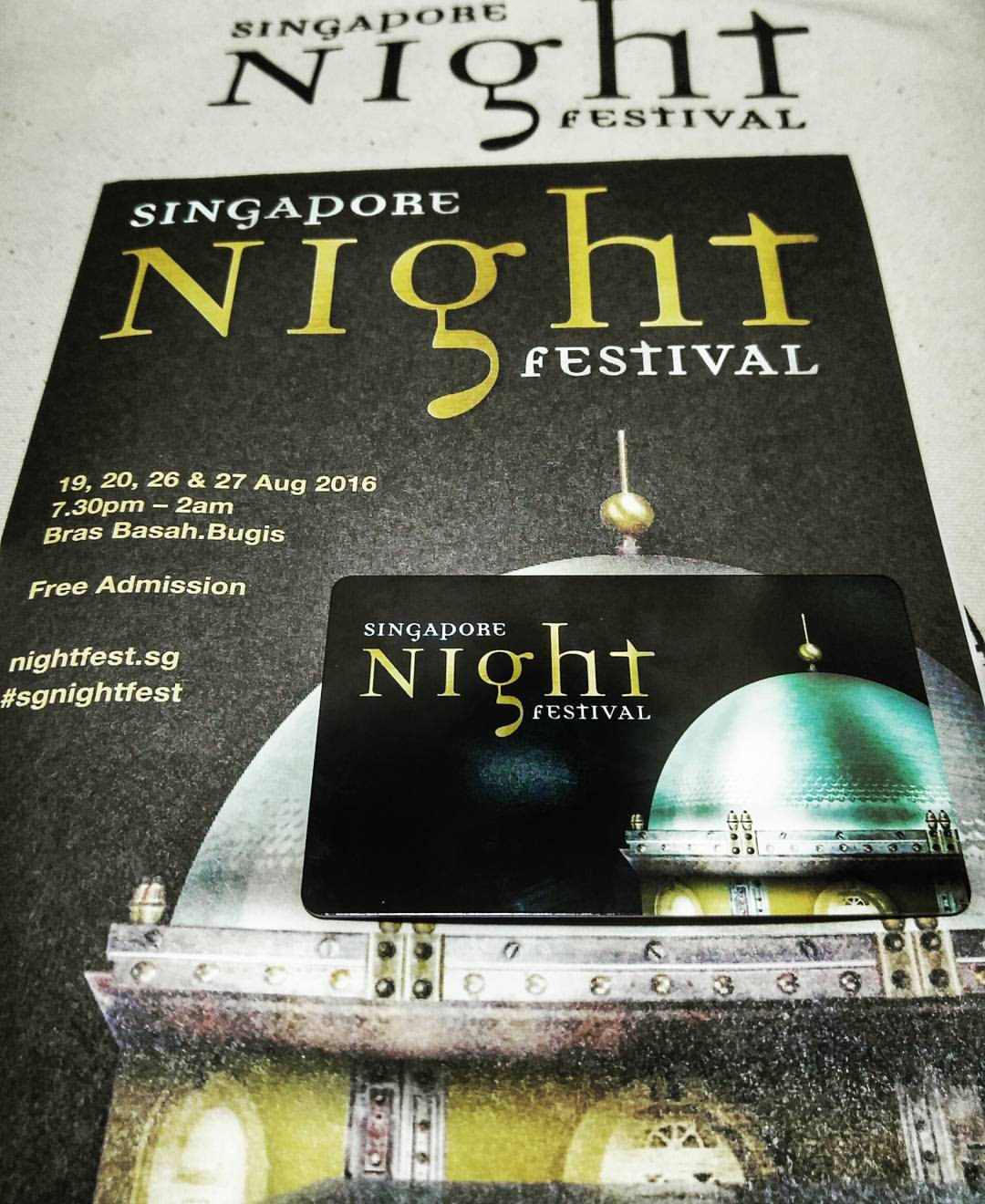
Singapore Night Festival Collector's Edition ez-link card is a practical and special item to consider. Collectors of this card stand to win attractive prizes. The top prize is a two-night weekend staycation package at Grand Hyatt worth over $2000.
Look out too for the
Tap to Donate wall installation at the Platform, Level 2 of the National Museum of Singapore. By tapping any ez-link card, you will be making a donation of $2 towards the funding for Singapore Night Festival 2017. You will also be given a LEGO brick to add on to the wall installation of LEGO Bricks by Singapore artist, Xylvie Huang.
This installation combines art and technology in a fund-raising initiative. Everyone who taps an ez-link card at this installation will be one of the benefactors for next year's Singapore Night Festival!
In conclusion, my personal experience of the first weekend of this year's Singapore Night Festival is that it seemed more reflective. To find out more, please visit the official website:
http://nightfest.sg
 |
Singapore Night Festival's Collector's Edition ez-link card.
Available from 15 to 27 Aug 2016 at the Visitor Services counter at the National Museum of Singapore.
Image Credit: Photo used with permission from Belinda Tan.
©Belinda Tan
|
Singapore Night Festival 2016
19 and 20 August 2016, Fri and Sat
26 and 27 Aug 2016, Fri and Sat
Bras Basah Bugis
Free Admission
7.30 p.m. to 2.00 a.m.
http://nightfest.sg