Thursday, March 17, 2016

A Heritage Trail to look out for


Here is a My Queenstown Heritage Trail to look out for.

This tour to the Commonwealth and Holland Village area brings its guests to learn about how a part of Queenstown transformed from a rubber planation in the 1870s to a military village in the 1930s and then to a renowned expatriate centre in the 2000s.

Commonwealth + Holland Village Tour
Every third Sunday of the month
8.30 a.m. - 12.30 p.m.
Holland Village MRT Station (Meeting Point)

To register
www.myqueenstown.eventbrite.sg
Email myqueenstown@gmail.com
Or call Queenstown Community Centre at Tel: 64741681

Monday, March 14, 2016

OH! Potong Pasir


These few weeks, on the green open spaces of the Bidadari Field, passerby will have the opportunity to witness an installation that looks like a wayang stage. This wooden structure conceived by Randy Chan is titled Palimpsest (2016).

Randy Chan's Palimpsest (2016).

In its own ways, this installation give a hint to the key theme of departed spaces that underpins OH! Potong Pasir, an art walkabout. In this year's edition of OH! Open House, artists explore the theme of departed spaces.


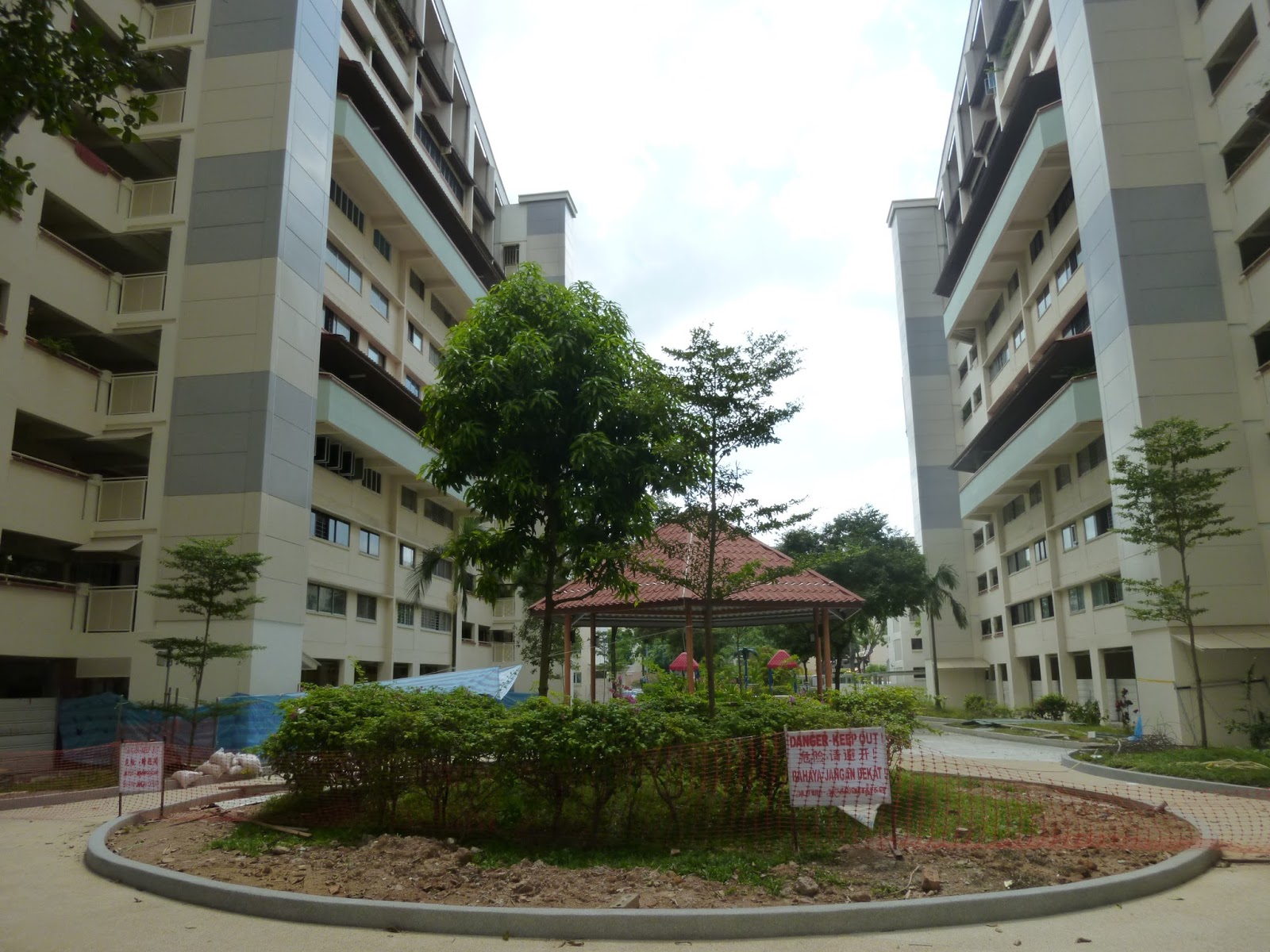
For this year's art walkabout, much of the tour was spent visiting spaces in the public housing estate of Potong Pasir. I witnessed for myself that the estate was going through a series of upgrading. Construction can be found easily at many corners of the estate.


Do you know what the words "Potong Pasir" mean? "Potong" means cut, and "Pasir" means sand. One of the artists, Ong Kian Peng, presents two sandscape installations to recall Potong Pasir's origins as a sand quarry by the Kallang River for this year's OH! Open House.

A glimpse of Ong Kiang Peng's Fractal Dunes (2016).

I had the pleasure to attend one of the Director's Cut tours on the first weekend of OH! Potong Pasir. One of my favourite segments of the tour was the visual to a beautiful and scenic view of the Kallang River from Jacob Ballas Bridge that connects St Andrew's Junior School and St Andrew's Junior College. I felt thankful for the good weather. Nature is a brilliant artist!


Other than the privilege to explore the public housing estate of Potong Pasir, OH! Potong Pasir brought us to recollect a place that no longer exist now, the Alkaff Gardens. While learning about a place which I totally had no personal experience of, I start to wonder if I had missed out on any interesting experiences. When wondering, I awed at the ideas behind the work, Consigned, by Tan Wee Lit.

Tan Wee Lit's Consigned. (2016)/

What about more of the art pieces that are showcased during OH! Potong Pasir? Patience please. An art walkabout like OH! Open House has to be experienced, and not read. How about signing up for one of the tours instead?

Interesting observations at OH! Potong Pasir.

Details can be found as follow:

OH! Potong Pasir
12, 13, 19, 20, 26, 27 March 2016
2 p.m. - 10 p.m.
(Last tour leaves at 8 p.m.)
Each tour is about 2.5 hours in duration.
Admission: 

S$25 per person 
(S$45, For the "Director's Cut tour on Saturdays)
Meeting place: Potong Pasir Community Club.
http://ohopenhouse.peatix.com/view
http://ohopenhouse.org
https://www.facebook.com/ohopenhouse


Tip: Please wear comfortable shoes and appropriate clothing. Bring along a bottle of water. It will come in handy on a hot day especially.

Monday, February 01, 2016

The Jubilee Walk Exclusive Tour

National Museum of Singapore.

Created to mark Singapore's Golden Jubilee in 2015, the Jubilee Walk is a specially curated trail of iconic sites. The Jubilee Walk recalls Singapore's history, her path towards nationhood and presents Singapore's present and future as a global city.

Thanks to the invitation of the National Heritage Board, I had the opportunity to attend the Jubilee Walk Exclusive Tour on 30 Jan 2016. The exclusive Jubilee Walk guided tour treated us to a tour of various sites of the Jubilee Walk led by Jubilee Walk Researcher, Marcus Ng. This exclusive Jubilee Walk covers more sites than the normal upcoming Jubilee Walk tours which would cover five sites.

The National Museum of Singapore is starting point of the Jubilee Walk. This building is Singapore's first purpose-built museum. Our guide, Marcus Ng, shared with us the history of the building, weaving in a few of Singapore's key milestones since 1823.


One of my favourite locations of the Jubilee Walk is the Fort Canning Park. Being close to Nature and listening to our guide traced a glimpse of Singapore's history to as early as the 14th century had brought a lot of delight. Be prepared for an adventurous and intriguing walk. I was reminded that the current Fort Canning Hill was the site of the first Botanical Gardens in Singapore.


Flower-head of Parkia timoriana.

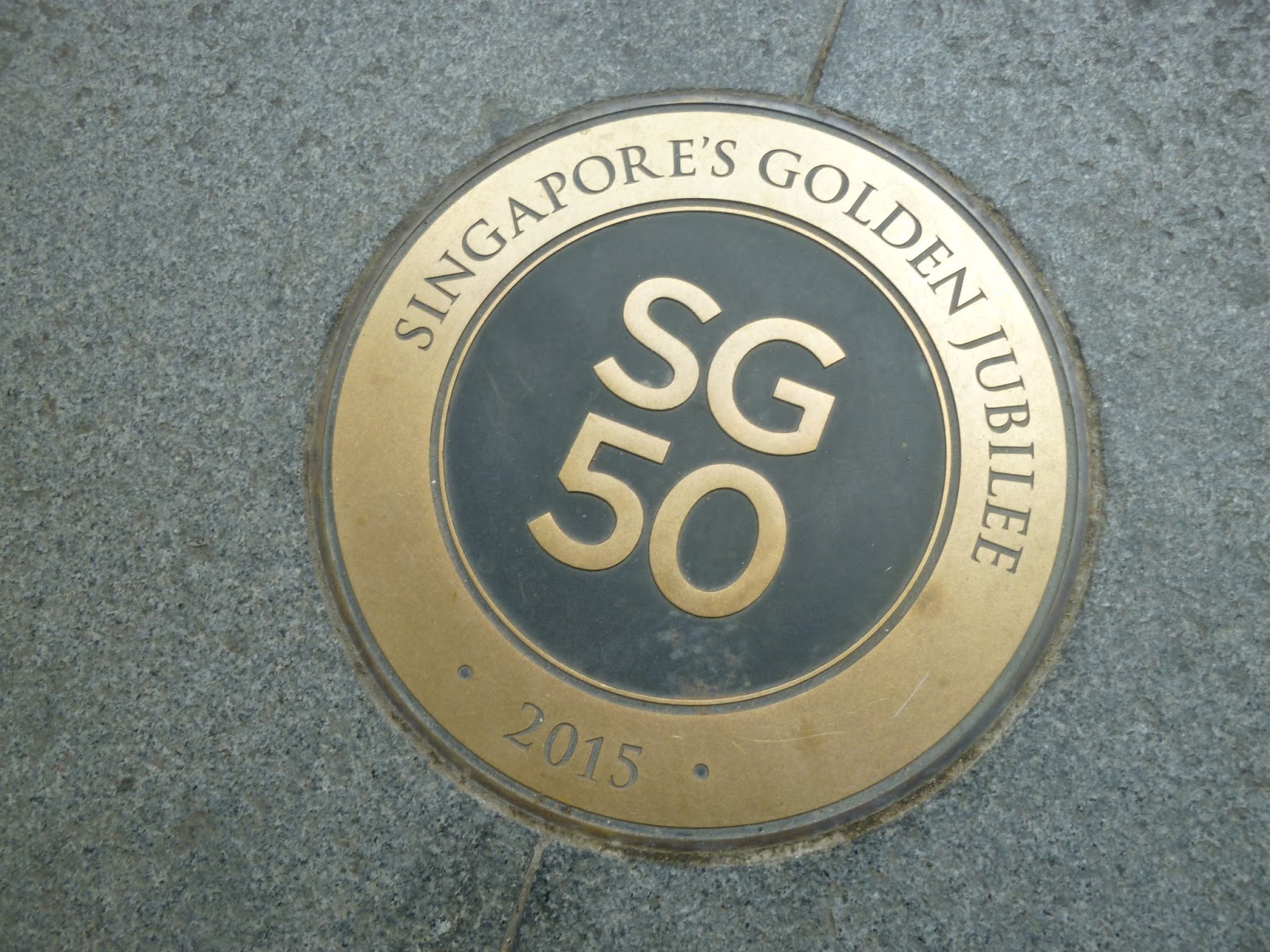
Our knowledgeable and eloquent guide led the group to more sites along the Jubilee Walk. Along the way, the markers of the Jubilee Walk marked the trail. These Jubilee Walk's markers reminded of the brick markers of the Freedom Trail in Boston, United States of America.


The Jubilee Walk Exclusive Tour brought us to learn about sites such as the current Singapore Philatelic Museum and the Peranakan Museum. Participants also learnt about the influence of the Armenian community as the tour led us nearby the Armenian Apostolic Church of St Georgy The Illuminator.

Singapore Philatelic Museum to the left.

It was interesting to listen to a few of the participants in the tour group sharing their personal anecdotes of their experiences growing up nearby sites of the Jubilee Walk. I felt I was being transported to a moment in the past as I listened attentively to their personal accounts.

Hill Street Fire Station.

After the Old Hill Street Police Station, the participants of our tour group were greeted by the Singapore River. The Singapore River was yet another favourite sites of the Jubilee Walk of mine. As we strolled along the Singapore River, our tour guide reminded us of the critical issue of water survival for Singapore and highlighted the sites along the Jubilee Walk that present the significance of water issue for Singapore.

Singapore River.

Fullerton Building.

During the tour, our tour guide revealed that the overall themes of the Jubilee Walk were that of change and continuity. He pointed us to examples that demonstrated these themes. My mind pictured how people from all walks of life have worked together to transform Singapore and to ensure its continuity. As I walked along the Jubilee Walk, I reflected what have changed and what have continued over time.

The Jubilee Walk Exclusive Tour will be a 2-hour walk that is worthy of consideration for anyone who is interested in celebrating the milestones that Singapore has achieved over the years, and to gain a sense of Singapore's present and future.

For more information of the Jubilee Walk Exclusive Tour, please visit these links:
http://www.nhb.gov.sg/places/trails/jubilee-walk/jubilee-walk-overview
http://www.nhb.gov.sg/places/trails/jubilee-walk/jubilee-walk-exclusive-tour

In addition, you can download Singapore Timewalk on IOS and Apple Store prior to the tour. It is best to download Singapore Timewalk (178MB) using wifi. For a preview of the app, please visit: https://www.youtube.com/watch?v=t_9FIXLhB0Q

Saturday, November 21, 2015

A tour of the Singapore Conference Hall


This year, the year of 2015 also marks the 50th anniversary of the Singapore Conference Hall. The Singapore Conference Hall (then called the Trade Union House) was completed in September 1965 and opened by founding Prime Minister Mr Lee Kuan Yew on 15 October 1965. On 28 December 2010, it was gazetted a national monument and is now the home of the Singapore Chinese Orchestra.

To celebrate the 50th anniversary of the Singapore Conference Hall, several events have been organized. For more information, please visit: https://www.sco.com.sg/media/singapore-conference-hall-celebrates-50th-anniversary-with-a-line-up-of-events-talks-and-concert-from-october-to-december/

On 31 Oct 2015, I had the pleasure to participate in the SCH Building Tour, in essence, a tour of the building of the Singapore Conference Hall.


When I was a teenager, I had visited the Singapore Conference Hall at least once a year to attend music concerts at the then auditorium. I even had the privilege to perform at least once at the Singapore Conference Hall before it went through a major renovation that was completed in 2001. The Singapore Conference Hall was also the place where I took part in at least two Singapore Youth Festival (SYF) competitions.

The tour, was an avenue for me to recollect my memories of Singapore Conference Hall and for me to learn more about the history of this building. I valued the opportunity to explore the Concert Hall and the backstage.


I learnt that the Singapore Conference Hall which was formerly known as the Trade Union House, was the first modern building on Shenton Way. When I saw a photo of Shenton Way before the Singapore Conference Hall was built at the SCH Photo Exhibition, I felt in awe how much Singapore has progressed over the decades.

One of the most impressive design features of the former Trade Union House was that it was designed for our local tropical climate. Cantilevered roof and terraces were used to provide sun-shading and a natural ventilation system was used to keep the interior cool.

A part of the SCH Photo Exhibition.

During the tour, I learnt from our tour guide and a few of the tour participants that there used to be a famous Teochew Restaurant that used to operate in the Singapore Conference Hall. Does anyone know its whereabouts now?


The mosaic tiles that were placed near the entrances to the Concert Hall have been there witnessing the changes that have taken place to the Singapore Conference Hall. The mosaic tiles are inspired by the Malay mat pattern. Looking at them reminded me fondly of my past memories of the Singapore Conference Hall.

Before I knew it, the tour led me into the Concert Hall. Strangely, I prefer the previous design of the auditorium of the Singapore Conference Hall before the completion of the renovation in 2001. Somehow, while I did not like sitting on any of the seats that were on the slope of the auditorium, I like the idea that the space could be flexible to changes to cater to multiple functions. Possibly, familiarity with the previous auditorium made me more biased in preferring it over the current design of the Concert Hall?


During the tour, I had the privilege to visit the backstage of the Concert Hall. Our tour guide also shared with us an interesting story about the Steinway piano. If you are curious, this is one reason to join this tour.


One of the interesting aspects of the building tour was to have the privilege to take a good look at some of the gifts that were housed in the Singapore Conference Hall. The Seiko time-piece that comes with life-time warranty drew my attention because it immediately resonated with me because I had seen it before at least more than a decade ago before the Singapore Conference Hall became home to the Singapore Chinese Orchestra.


This is one tour that I was glad that I had signed myself for. It gave me an hour to reminisce the positive memories of the past and I learnt a lot more about this building which is a gazetted National Monument.

SCH Building Tour
Daily: 26 October to 31 December 2015
Tour timing: 10.30 a.m. - 11.30 a.m., 2.30 p.m. - 3.30 p.m., 4.30 p.m. - 5.30 p.m.
Write in to vmktg@sco.com.sg to register
SCH Building tours are available on a first-come-first-served basis by registration only.
Free-of-charge

***
References:
http://eresources.nlb.gov.sg/infopedia/articles/SIP_1853_2011-12-31.html
https://www.sco.com.sg/media/singapore-conference-hall-celebrates-50th-anniversary-with-a-line-up-of-events-talks-and-concert-from-october-to-december/