Saturday, June 03, 2006

In praise of the Chinese

This must have been a long overdued post. I visited the Hua Song Museum about a month ago. Located very nearby the Haw Par Villa, its name Hua Song means "in praise of the Chinese (Community)".

In a nut shell, I read that " Hua Song is a one-stop centre for visitors to learn (about) the stories of Chinese living around the world." (Source: http://www.huasong.org/about_huasong.htm)

When I first entered the Hua Song Museum, I felt I had entered the wrong place. Instead of being greeted with what I expected to be a museum set-up, I was faced with a Chinese restaurant set-up. I realised that the museum is combined with a in-house restaurant, Made in China, that serves Chinese cuisine. So if one is keen on fine dining before or after visiting the museum, one can conveniently enjoy fine Chinese cuisine within the compounds of the museum.

I made my way to a counter in the restaurant and made purchase for the admission ticket. Then, I was ready to tour the museum.


The Chinese junk. Somehow, it seems that the Chinese junk would often be featured if we were to speak of Chinese migrants and how they had travelled to various parts of the world in the much earlier days?


I remembered that one of the first exhibition rooms is that of The Long Road. It describes about the origins of the Chinese migrants. That long walkway that one has to walk through to the next exhibition room seems to give me a sense of the uncertainties that migrants might have felt when they left their homeland in search for opportunities overseas.

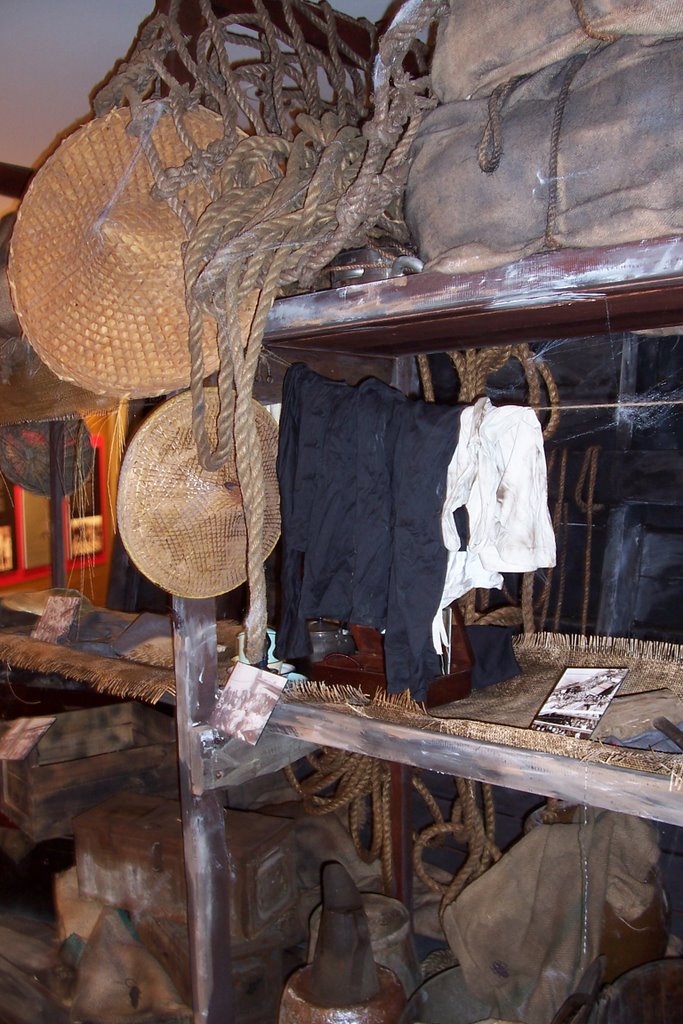
At the next exhibition gallery, Floating Hell, there is this model that you will see below. It depicts the harsh conditions that some of the Chinese migrants had to endure when they sail to the new lands.


I took time to read a chart containing information regarding the estimated number of Chinese living in various parts of the world. It looks like there are traces of Chinese in many parts of the world. (See photo below)


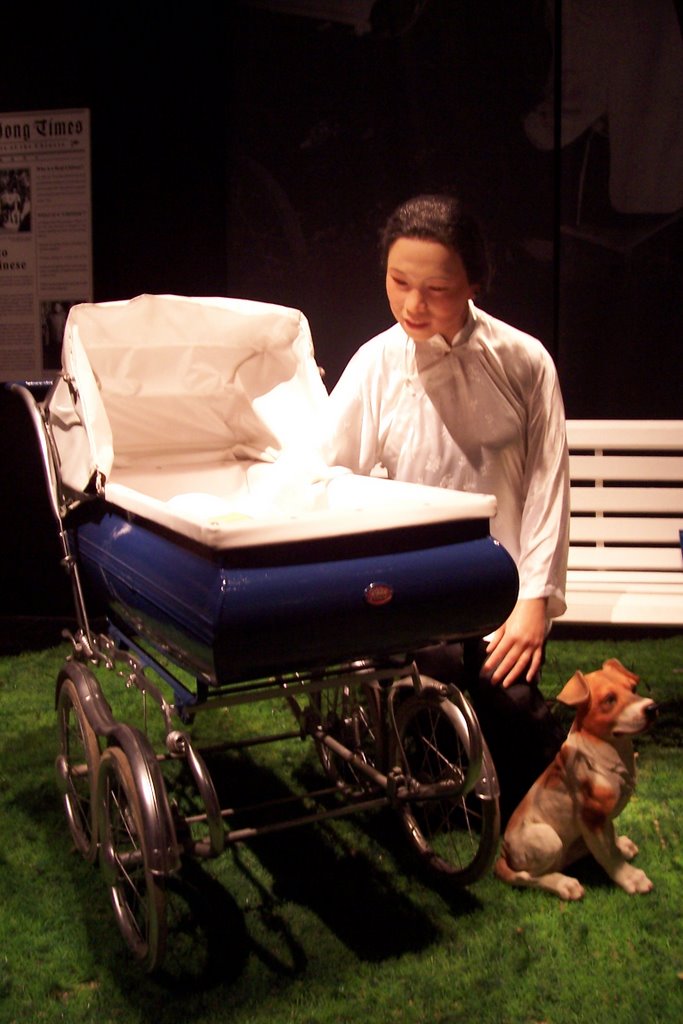
I particularly like the exhibition gallery titled The Survivors. In my own understanding, this section touches on how the early Chinese immigrants had to bend and blend in to survive. If there is anything I could learn from the stories of these Chinese immigrants, it is that of resilience and adaptability.
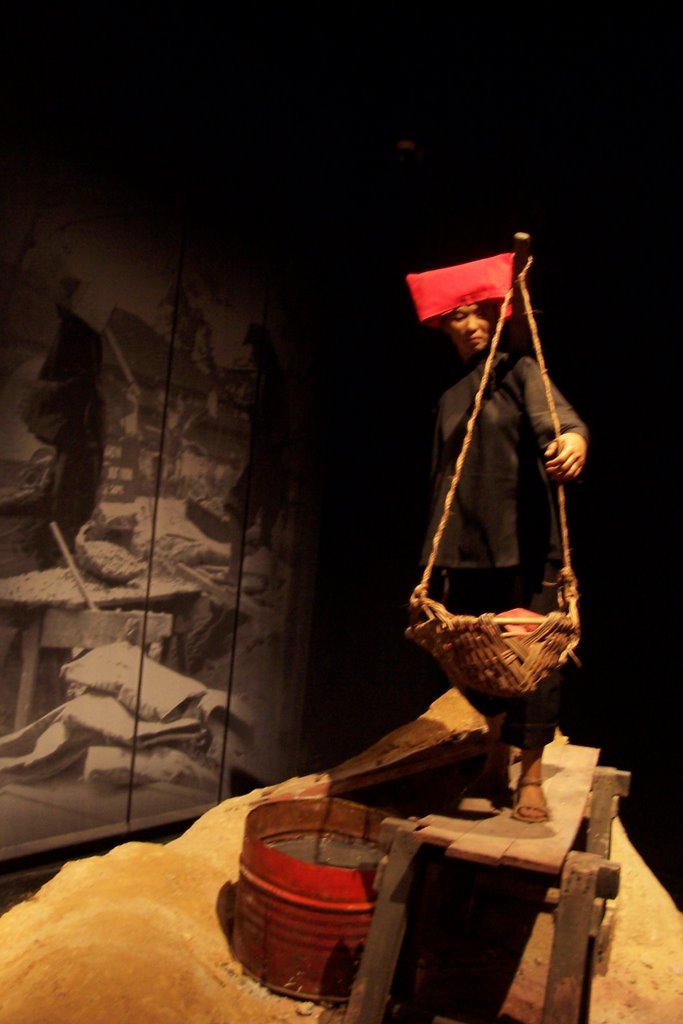

The Samsui Woman. I quite like this one, it seems to tell that women can be independent and be equally good performers as men.


The Ma Jie.


The Railway Worker. I remember reading that many Chinese workers were employed in the building of America's railroads.


There are more to discover about in The Survivors gallery, so I shall not reveal too much. Check out for yourself.

The next gallery is the En En's Kitchen. Here, one finds a replica of a typical traditional Chinese kitchen. When I was there, there was a family of four (with two young children), and I could see that the children enjoying themselves. There were spices put on display meant for visitors to touch, and the children of course helped themselves readily.
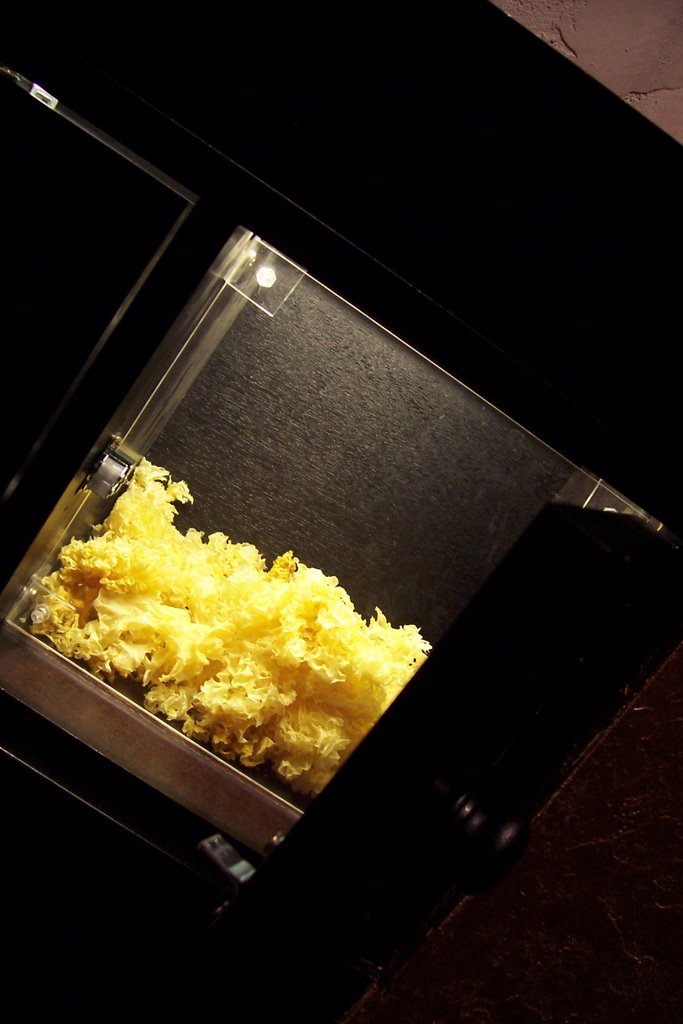


Have a closer look at the White Fungus used in some Chinese cuisine.


The Chinese Kitchen.


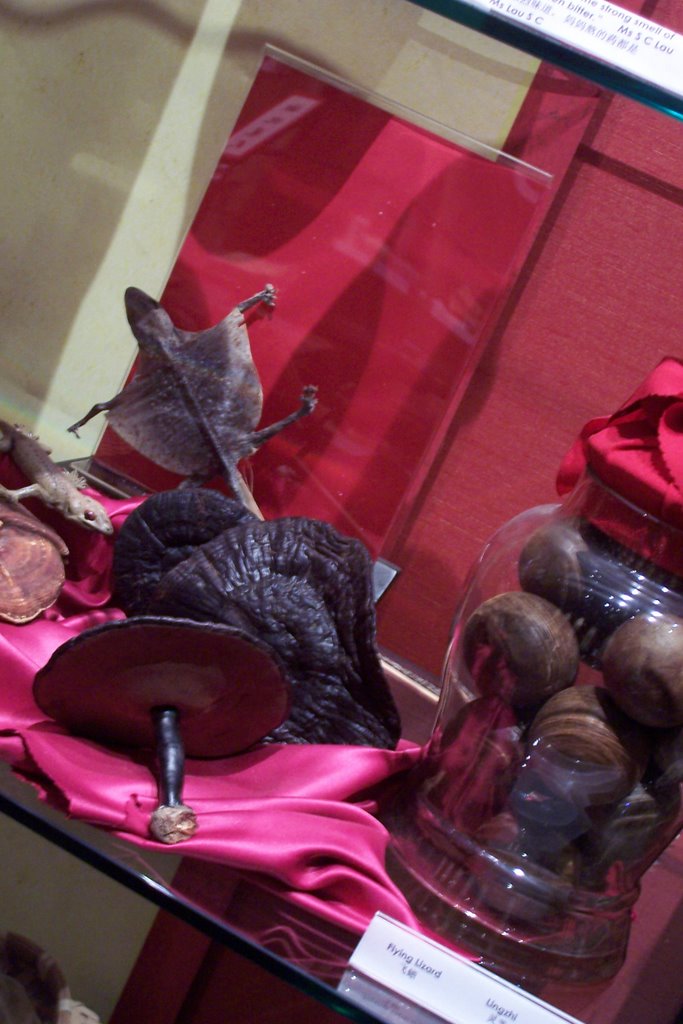
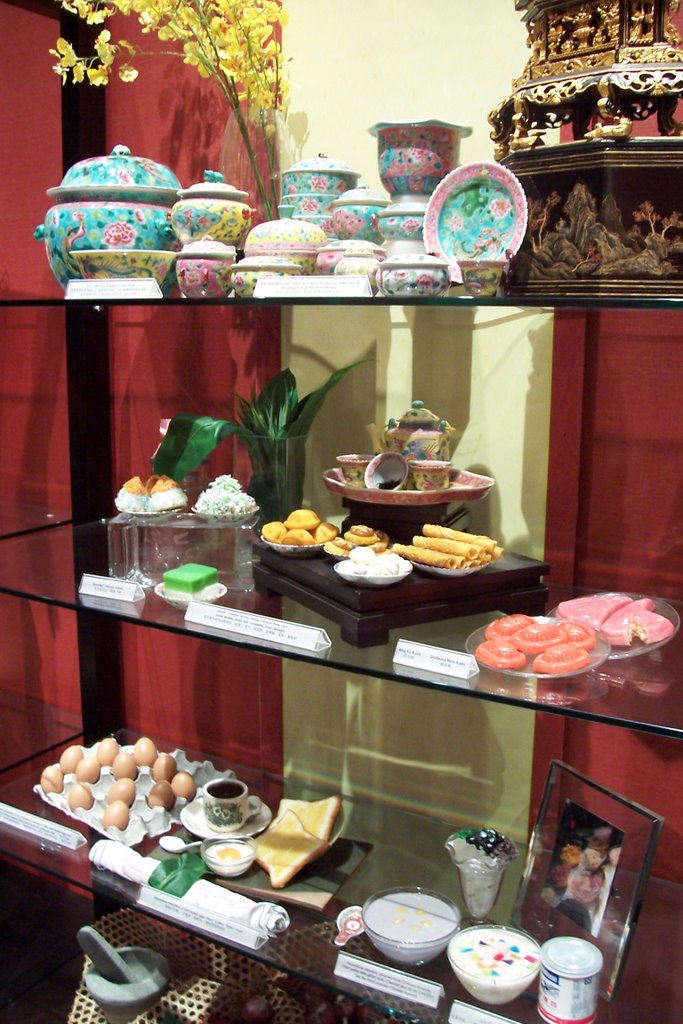
The Grand Food Hall tells interesting facts and stories about Chinese food. Warning: The exhibits may not be real, but they may make one feel hungry. One needn't worry too much, real food can be found nearby, from the in-house restaurant.

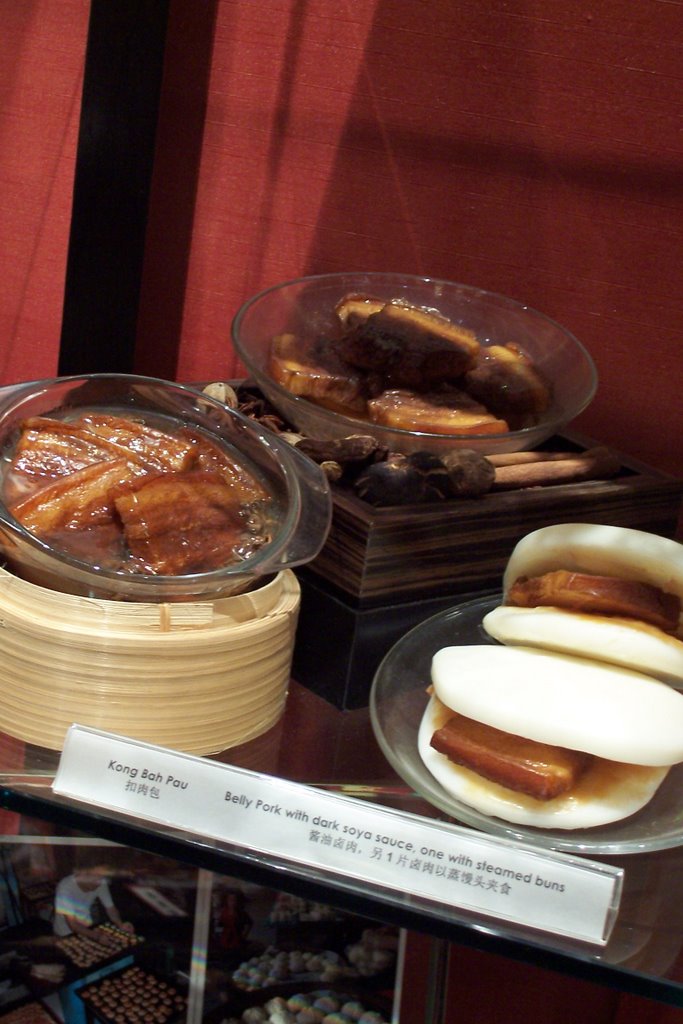


On the right, Belly Pork with steamed buns.


Exotic items for one's diet. Flying lizard and more.


Some herbs used by the Chinese.


Don't you feel the craving for food by now?

For the visitor's information of Hua Song museum, check out this link.

***
More posts on Hua Song written by other bloggers can be found below:

Thursday, June 01, 2006

Sun Yat Sen Nanyang Memorial Hall

On 20 May 06, I visited the Sun Yat Sen Nanyang Memorial Hall. It was situated in a rather peaceful part of Tai Gin Road.

After entering the gates, I was greeting by a large stone structure at the courtyard. The words on the stone say in both English and Mandarin: One man changed China, Dr Sun Yat Sen. (Words by our Minister Mentor, Lee Kuan Yew.) These words pointed to me that Dr Sun Yat Sen whom this museum commemorates has an important part in the history of modern China.


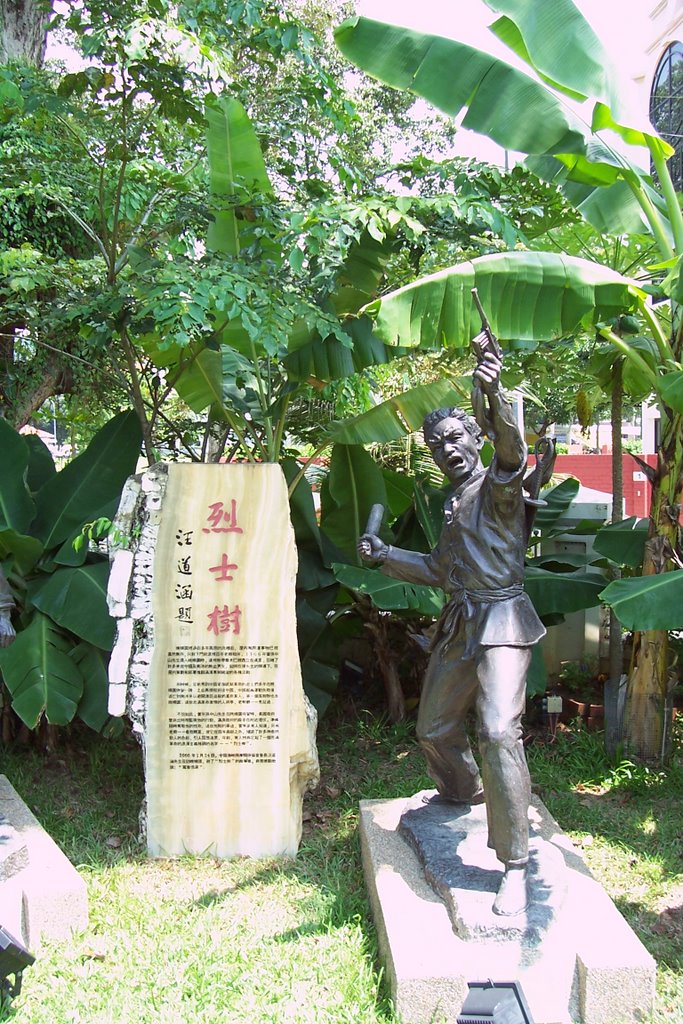
As I walked further into the courtyard, I was quite attracted to the sculptures under The Tree of the Martyrs. The Tree of the Martyrs, I heard, is the very tall tree that stands tall on the grounds of the courtyard. I read from this source that this tree is an Angsana tree, and is estimated to be more than a hundred years old. It must have bear witness to many historical events that have happened at the villa. The tree looked fairly tall. I did not take a photograph of the tree, but I've managed to take a photo of one of the sculptures under this tree.


I spent some time outdoors at the courtyard before proceeding to the two-storey bungalow that houses the Sun Yat Sen Nanyang Memorial Hall.


I was told that the tree on the left bore tropical fruits that were one of Dr Sun Yat Sen's favourites.


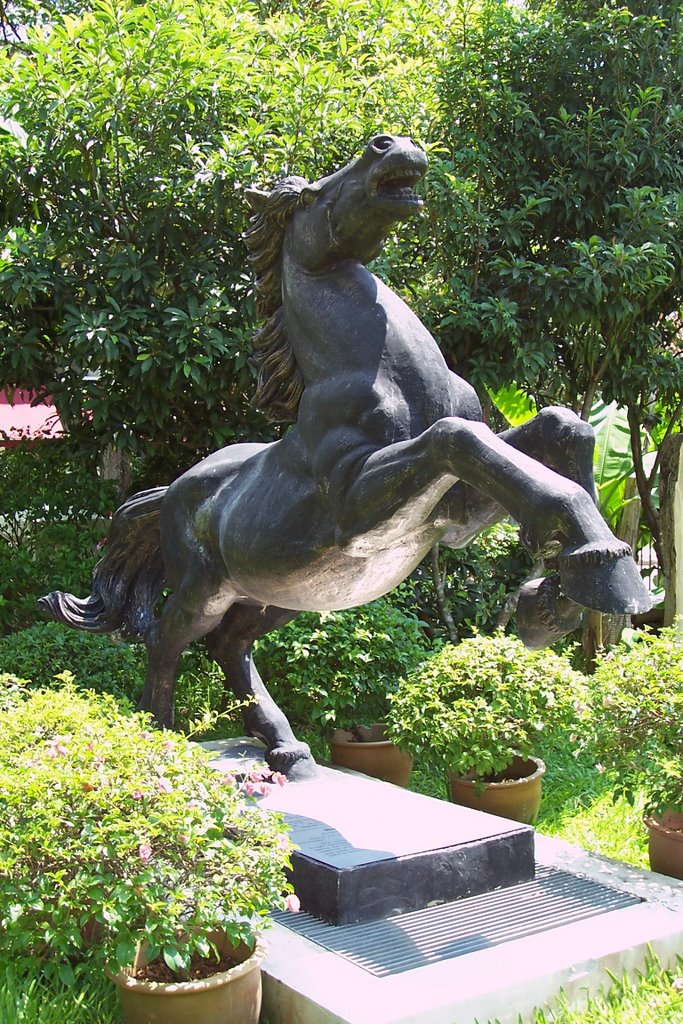
The Horse of Loyalty. There seems to be a story behind the horse that this sculpture is depicting.


I took notice of this statue of Lin Zhexu


***
After purchasing the admission ticket, I walked into the Hall of Peace. There was a Mandarin video recording screened on the television set placed in this exhibition gallery. The recording depicted the history of the villa. It also showed some of the key historical events in China that had led to the need for the 1911 revolution. In this gallery, there was a portrait of Mr Teo Eng Hock. The history of the villa may not be made possible without Mr Teo Eng Hock, who offered the villa (acquired for his mother) to Dr Sun Yat Sen for revolutionary activities.

Also on the ground floor, is the Gallery of Endeavour. In this gallery, one gets to find out more about the childhood and family background of Dr Sun Yat Sen.


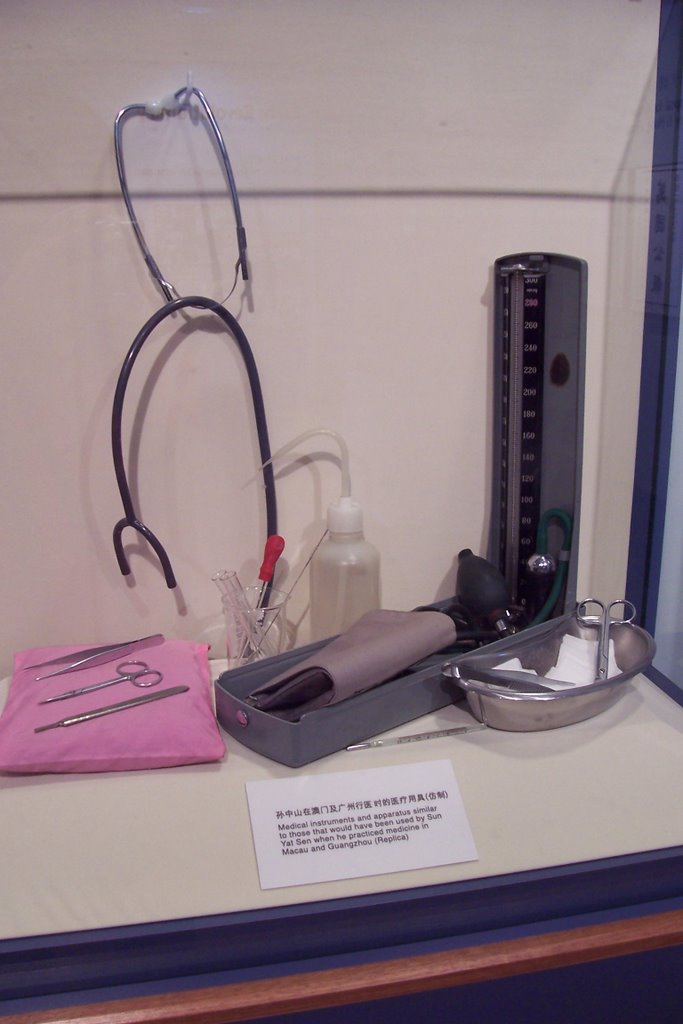
Dr Sun Yat Sen was a Western medical doctor.


This exhibit seems to suggest to me that the revolution can only be made possible with the contributions of countless people who supported its cause. Many of these people may be common folks who have donated to the causes of the revolution.


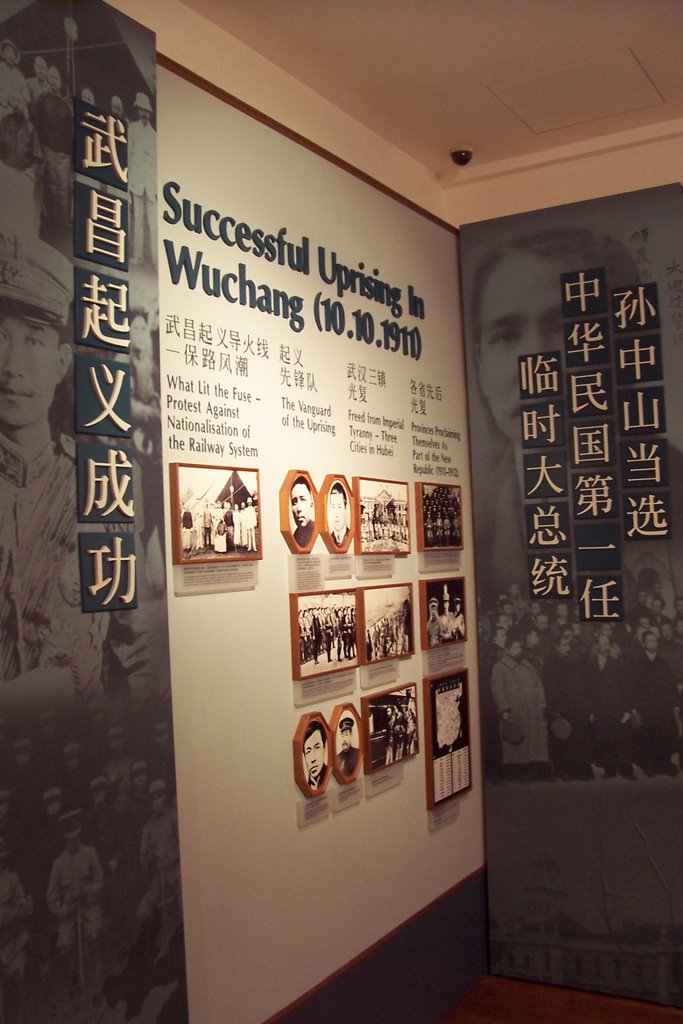
It seems that many failures were met before the successful Xinhai Revolution on 10 October 1911.


In one of the galleries on the second floor, I could find an exhibit panel that puts on display the tools used in the rubber plantations in those days. (See picture below.)


The life-sized high-polymer figures in the Singapore Gallery which depicts the various important revolutionaries holding a secret meeting in this very villa captured my attention.


I particularly like a number of the paintings that were on display in the memorial hall. One of these paintings is titled Overseas Chinese - Mother of the Revolution. by the artist, Li Shuji.

Overall, there is a lot that one can learn about the revolution in China by visiting the Sun Yat Sun Nanyang Memorial Hall. The historical information was presented in a fairly engaging manner. Maybe that could be why one of the political leaders from Taiwan sang high praises about this museum in his recent visit to Singapore?

More about the various exhibitions galleries can be found here: http://www.wanqingyuan.com.sg/english/exhibition/exhibition.html


Perhaps one message that I have gotten from visiting the Sun Yat Sen Nanyang Memorial Hall is that all great things achieved start from having a vision.


To visit the Sun Yat Sen Nanyang Memorial Hall, also known commonly as Wan Qing Yuan, check out the information for visitors.

***
Also read: One Man Changed China, posted by June Yong.
Also visit: http://www.wanqingyuan.com.sg/english/index.html

Wednesday, May 31, 2006

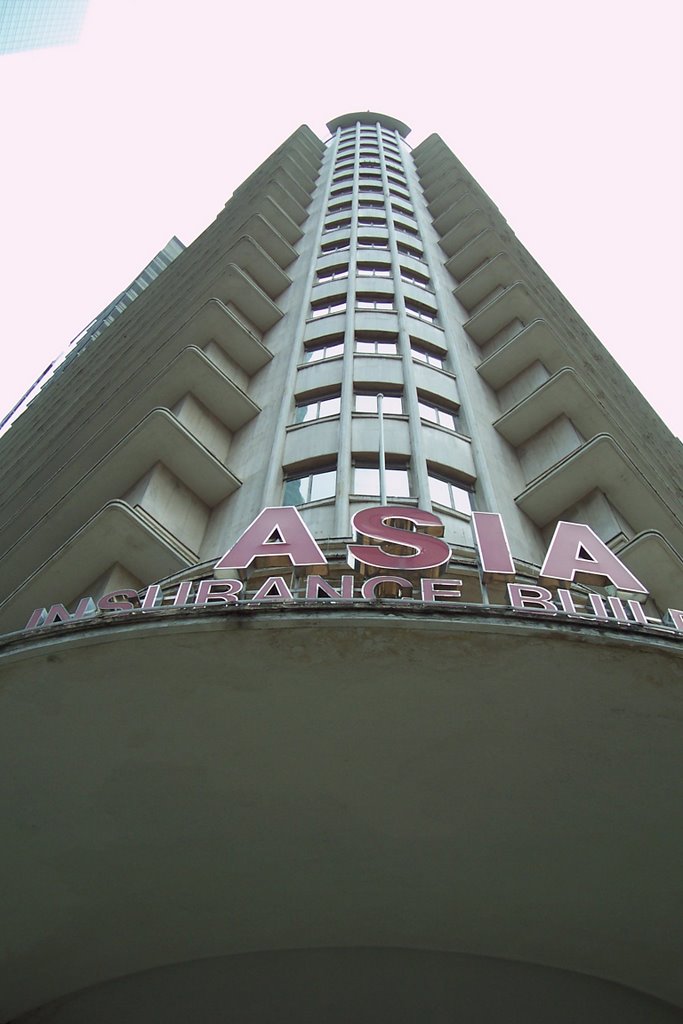
Asia Insurance Building

Chun See asked me this question some time ago and I shall pose the question to everyone here: "Did you know that across the road to Clifford Pier used to be a famous landmark. It was often featured in our geography books. It was the tallest building in Spore in the old days. Do you know the name of this building?"

Chun See's question had set me on a mini journey to try to answer that question. (Though I have obviously gave away the answer on the title of this post.)

Thank goodness that I have managed to get some help. Victor shared with me a photo of the skyline of Singapore in the 1970s that he had came across.


Doing a search on a2o has also helped me in my search for the answer. If you would like to see how the Asia Insurance Building looked like in the past, you can do a search at a2o. Enter "Asia Insurance Building". Next, enter the date (I suggest that you key in from 1970 to 1980), then select photographs, then press the "Search" button. View the results.

Can.com.sg has a post about the Asia Insurance Building being Singapore's first tallest building. The post can be found here.


Try to decipher what is written on this plaque found on the ground level of the Asia Insurance Building.


According to some other sources, the Asia Insurance Building may have once been the tallest building in Singapore in the 1950s but it was not the first tallest building. Check out this link for some revelation: http://yesterday.sg/comments/singapores_first_tallest_building/

**
Back to the Asia Insurance Building, Dr Tan Wee Kiat came by and pointed me to the stamp below. It shows the 1971 Singapore Skyline. See if you can find the Asia Insurance Building? And if you look carefully, you will also see Clifford Pier on the stamp below.


I was told that the stamp above (of the 1987 Central Business District) also shows the Asia Insurance Building.


The stamp above shows the 2004 Singapore Skyline. I have found myself requiring more effort of the eye to identify the Asia Insurance Building from this skyline.

The stamps seem to tell me of the building's glorious past, and how it has now took a step back to pass the glory to newer and taller buildings.

**

Before Chun See posed that question to me, I was still ignorant that the building that stands at the corner of Finlayson Green was once the tallest building in this part of the world. Now there are taller buildings in Singapore and in comparison, the Asia Insurance Building somehow may seem not much of a significance. Will the Asia Insurance Building be forgotten? Or will it have a place in our history?

Friday, May 12, 2006

Haw Par Villa


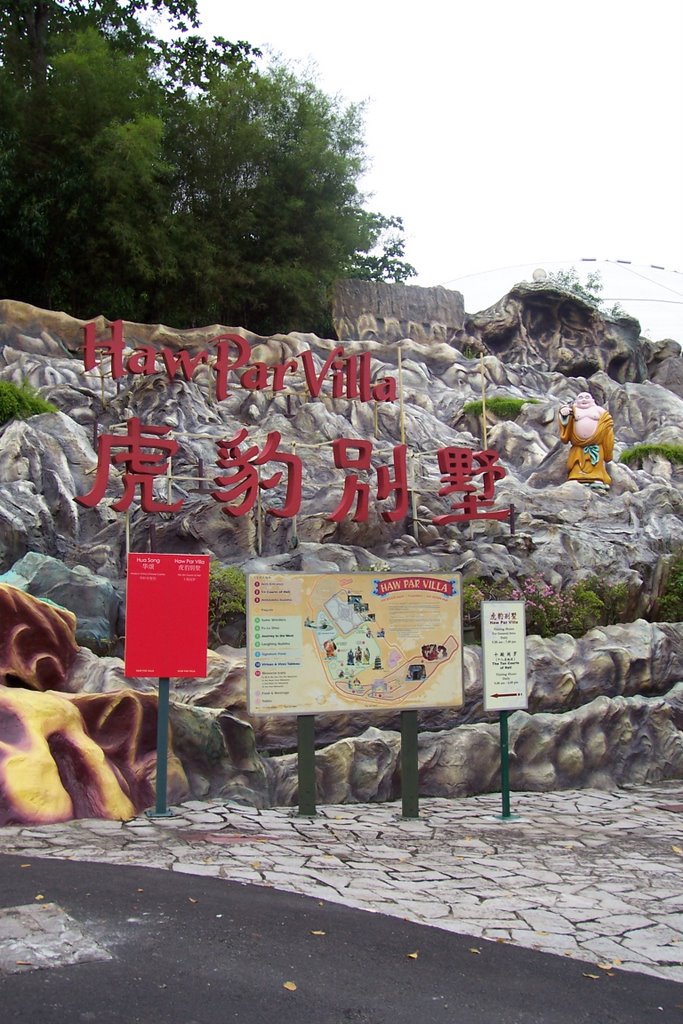
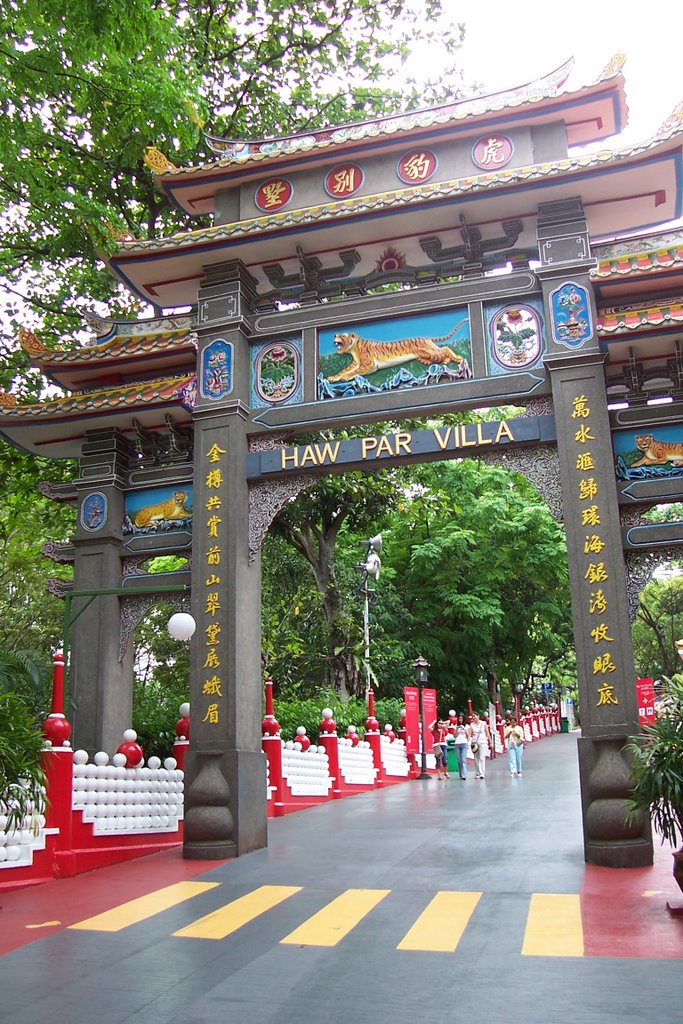
About a few weeks ago, I took a bus and travelled to Haw Par Villa. Haw Par Villa was formerly known as Tiger Balm Garden. Actually, my intention was to visit the Hua Song Museum nearby, but it does not hurt to visit Haw Par Villa which was just very nearby.

Haw Par Villa has a rather interesting history behind how it first came about. It was built in 1937 by entrepreneur, Mr Aw Boon Haw, for his younger brother Mr Aw Boon Par. I think it is a display of brotherly love. This place is a nice place to visit for those of you who wishes to have an encounter with Chinese Mythology. For your convenience, I have consolidated a few links as seen below:


I have visited it many years ago. It was a Theme Park then. I remembered taking the roller coaster ride, and a boat ride through the Ten Courts of Hell. I remembered that at that time, admission charges into the park can be rather expensive. Reflecting, I shall be grateful that my father was willing to spend the money for the admission ticket for myself and my brother back then.

Currently, there is no admission fee to visit the Haw Par Villa. But on my most recent visit, I noticed that one may have to pay S$1 to enter the Ten Courts of Hell section of the villa? Or was I wrong because my eyes had played a trick on me? This site offers a good description of the Ten Courts of Hell, click on the link please.


If you have been there, you may wonder like I had of how someone so many years ago could be so rich to build this villa and have commissioned the making of the many statues in the park.


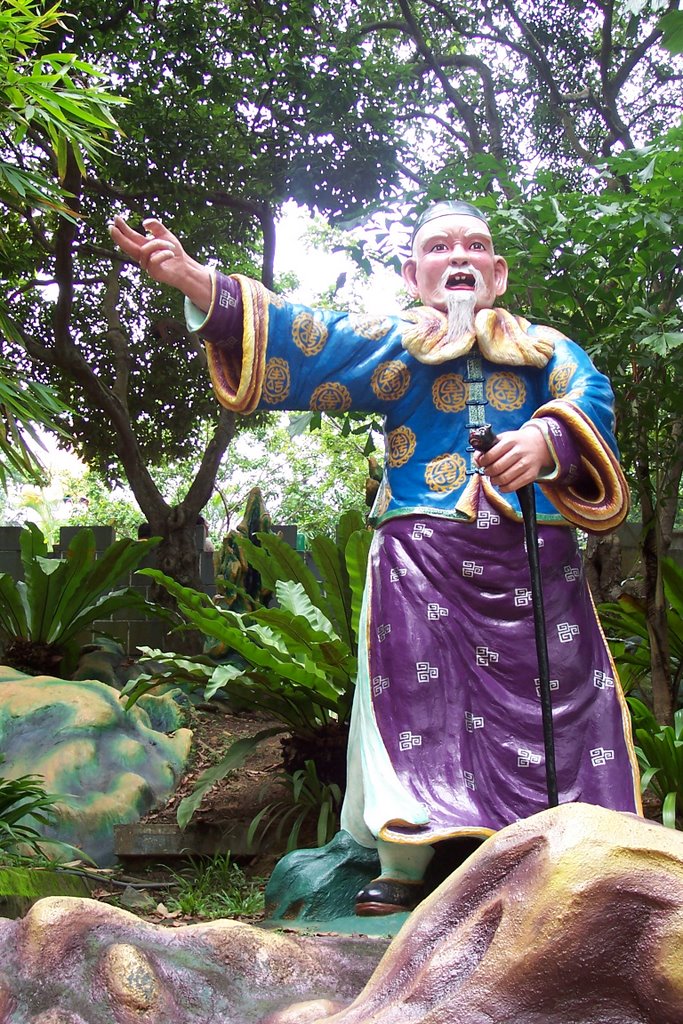
The gesture of this statue represents the Chinese saying "Zhi Dian Mi Jin", give advice to those who are lost. You will find this statue near the main entrance. Maybe its location is trying to imply that one will not be lost in the villa?


Confucius


Maybe this statue should share its secrets on how it could make itself laugh so heartily.


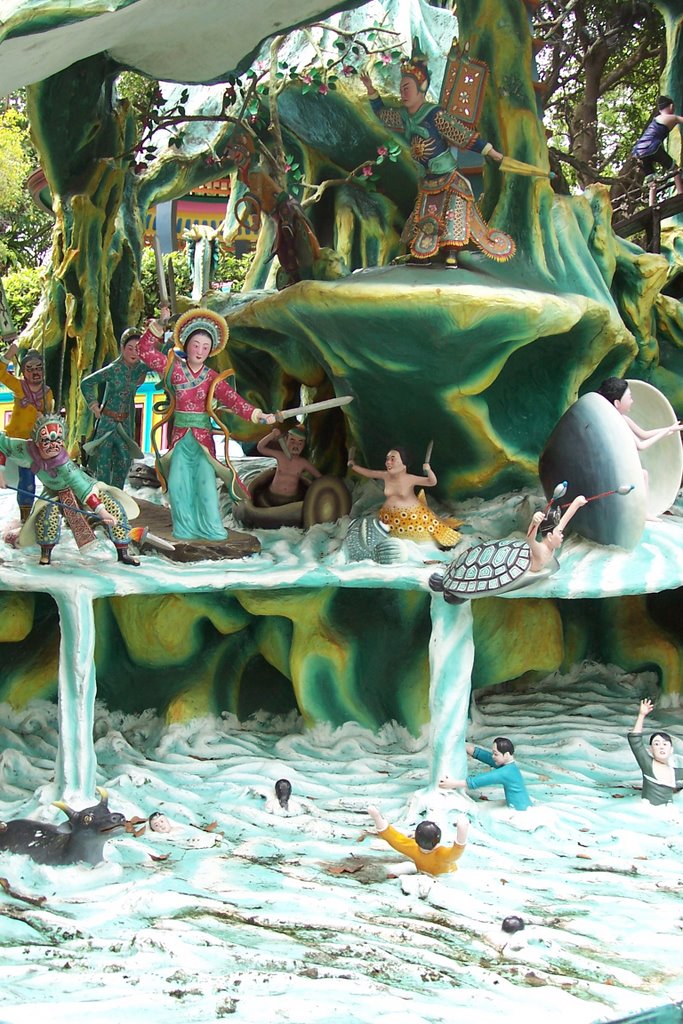
This work depicts the story of the Chinese folklore "Madame White Snake".


One could also find larger size works like this in Haw Par Villa


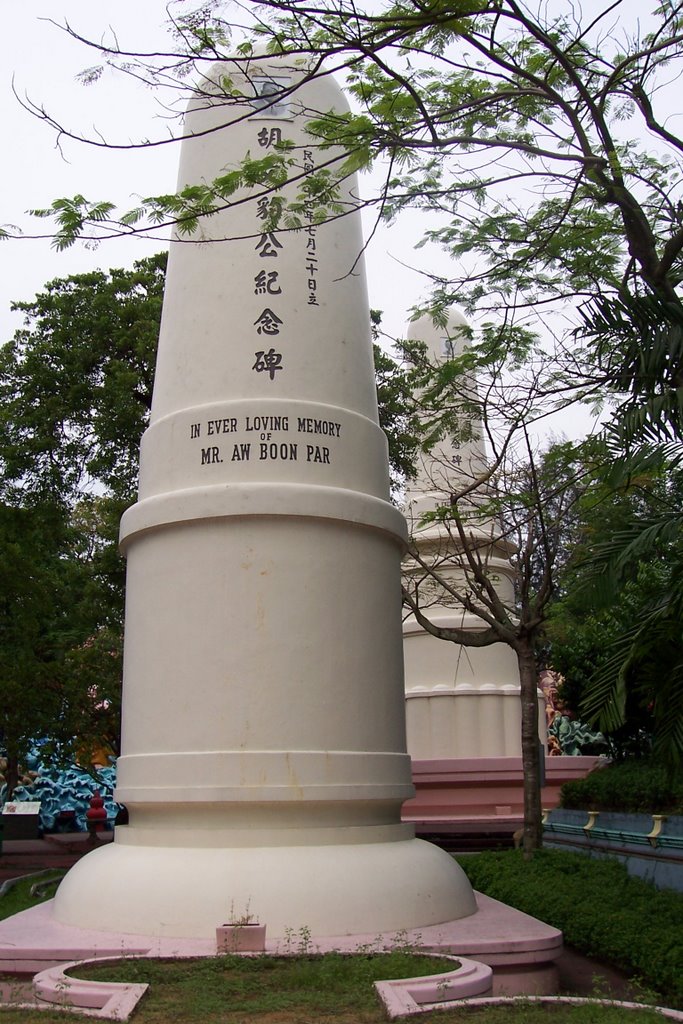
I think the memorial of Mr Aw Boon Par has an important place in this villa.


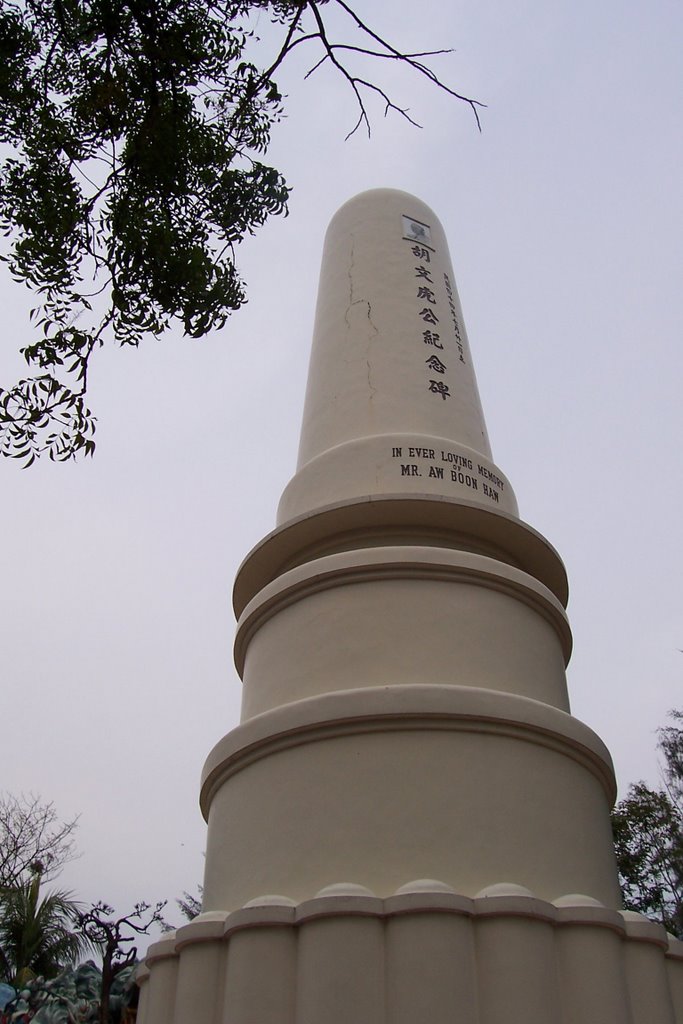
The memorial of Mr Aw Boon Haw.


I could simply not resist highlighting the contributions that these two brothers have made to the community of this region. You can see this near the main entrance of the villa.


It was a nice walk about the villa that afternoon. I did not spend too much time there however. Instead, I proceeded to the Hua Song Museum nearby after spending some time at the villa.

If you would like more glimpses of the villa, I think this URL that I have indicated earlier is worth your time to visit: http://www.jehpin.com/travel/singapore/hawpar/