Saturday, August 12, 2006

Back to the ancient world, Part II


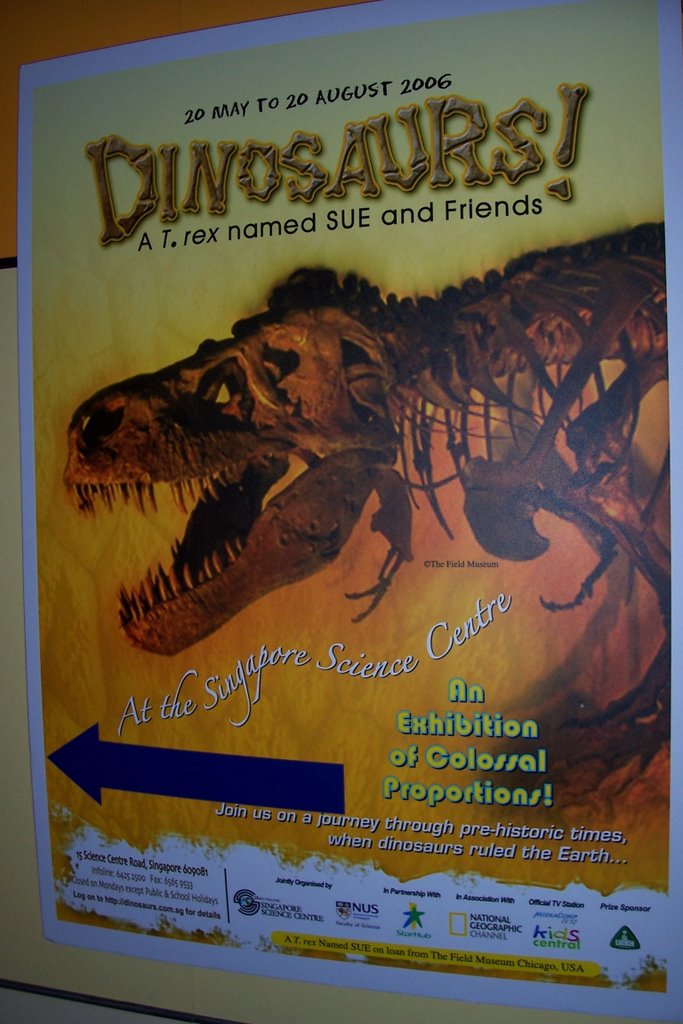
Has anyone reading this post been to the exhibition: Dinosaurs! A T. rex named SUE and Friends already?

It was fairly crowded when I was there on National Day. I expected that it would get more crowded as people rush to catch the exhibition by 20 Aug 2006. I have survived the crowd on National Day, so I reckon that there isn't much harm joining the crowd?

I remember that since I was a child, I have been fascinated with dinosaurs. These animals are extinct and shrouded in mystery. How do they look like? Why do they disappear from this Earth? I suppose that there should be a lot of other curious souls like myself who cannot resist the temptations to find out more about the dinosaurs.

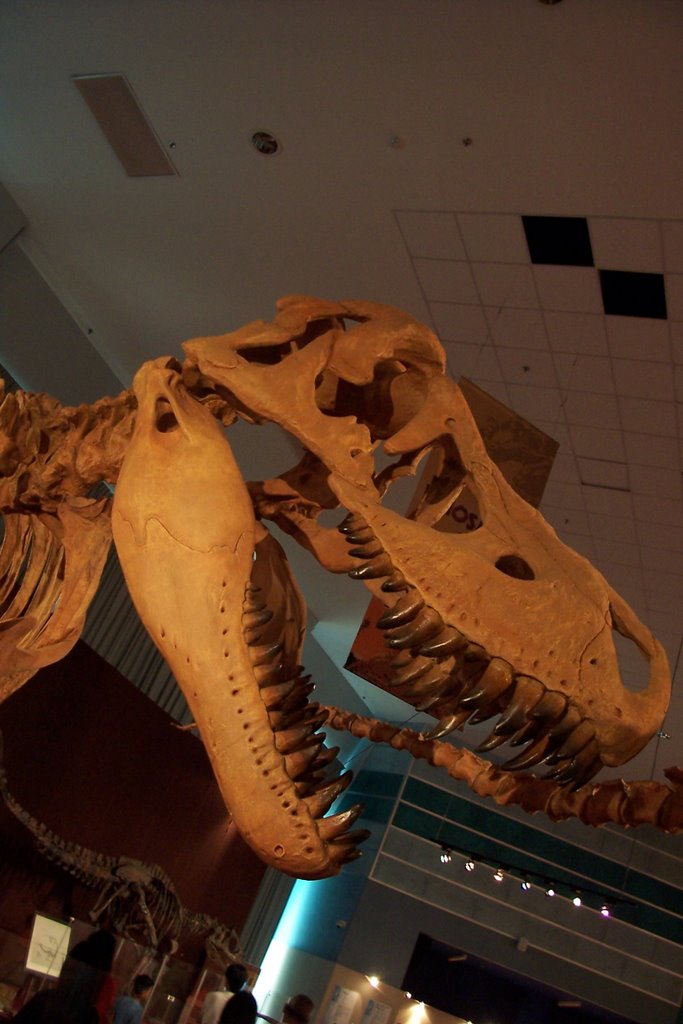
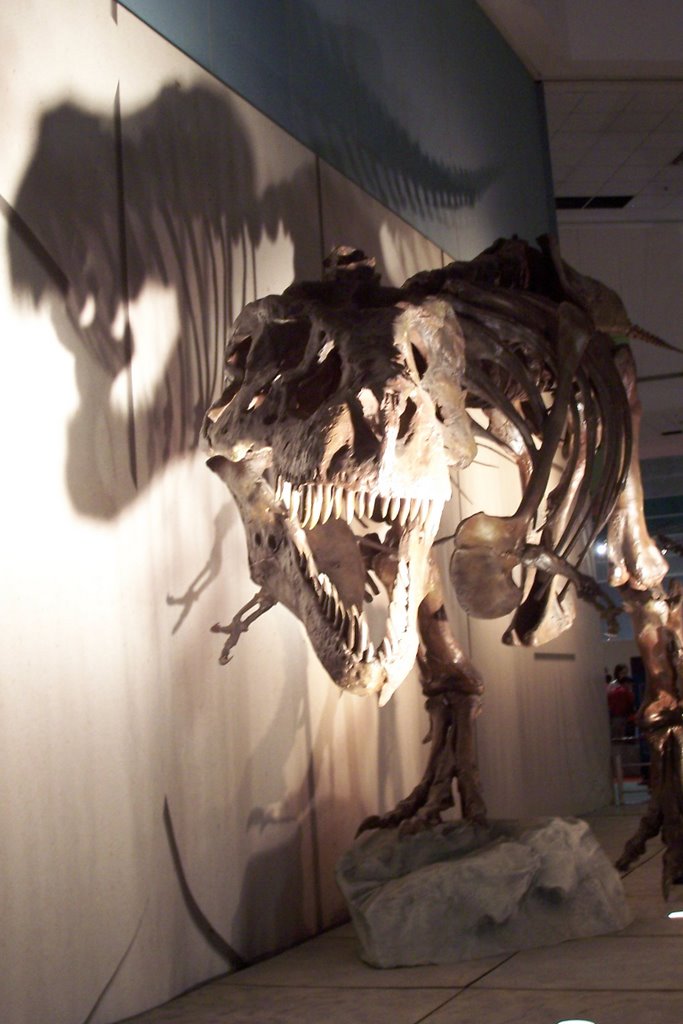
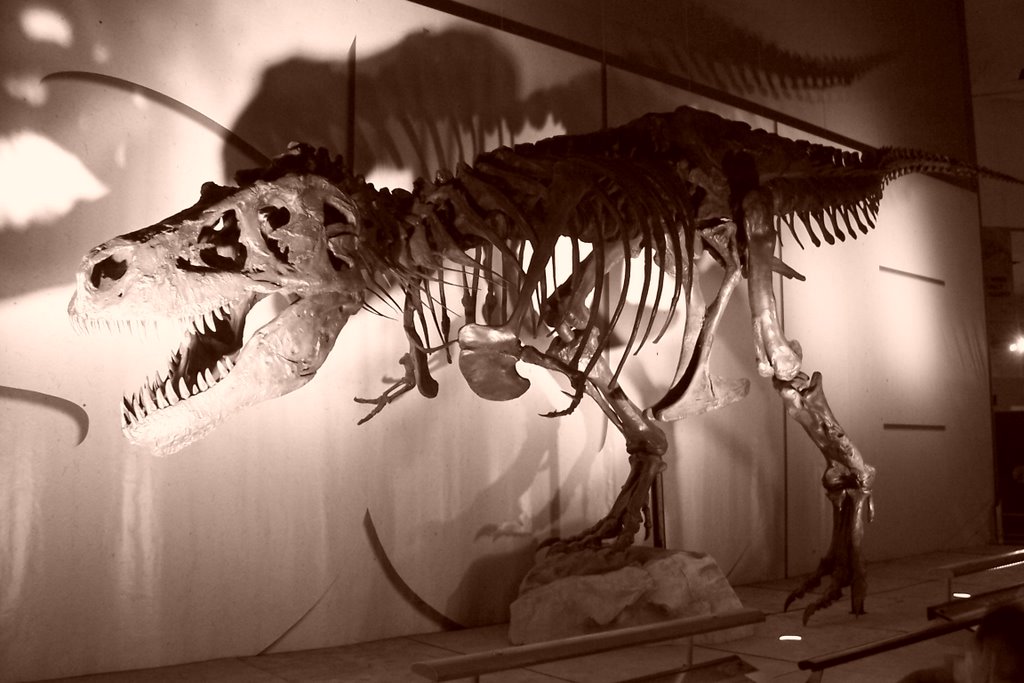
"(Dinosaurs) belong to a group of reptiles called diapsids, which means they had two temporal openings in the back of their skull..."


In my previous post, Back to the ancient world, I have mentioned that I was quite puzzled over what two temporal openings in the back of the dinosaur skull should look like.

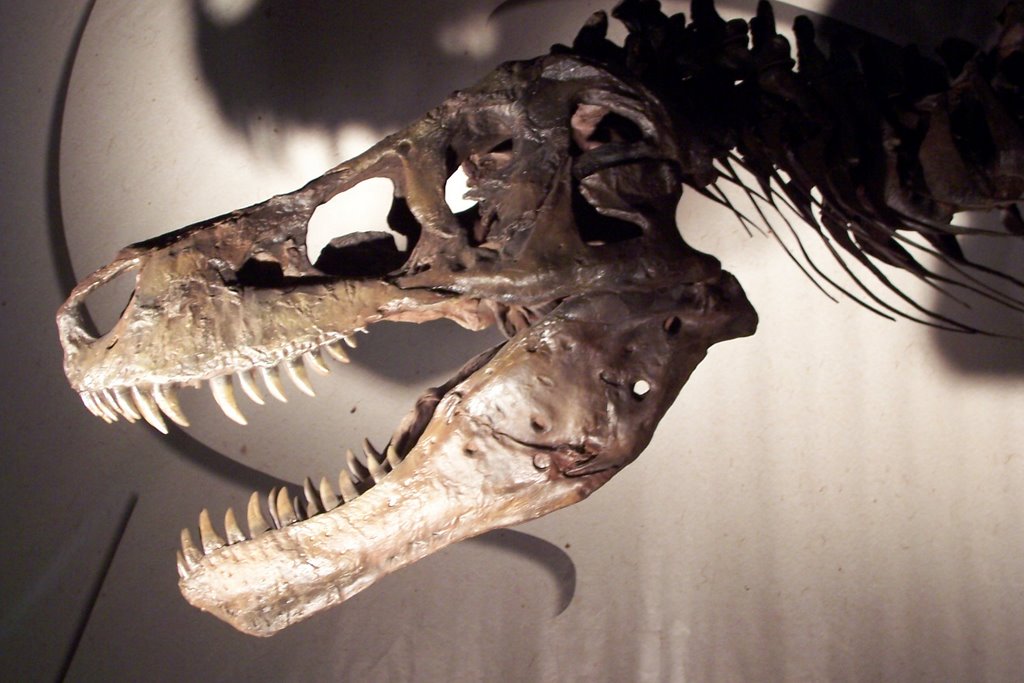
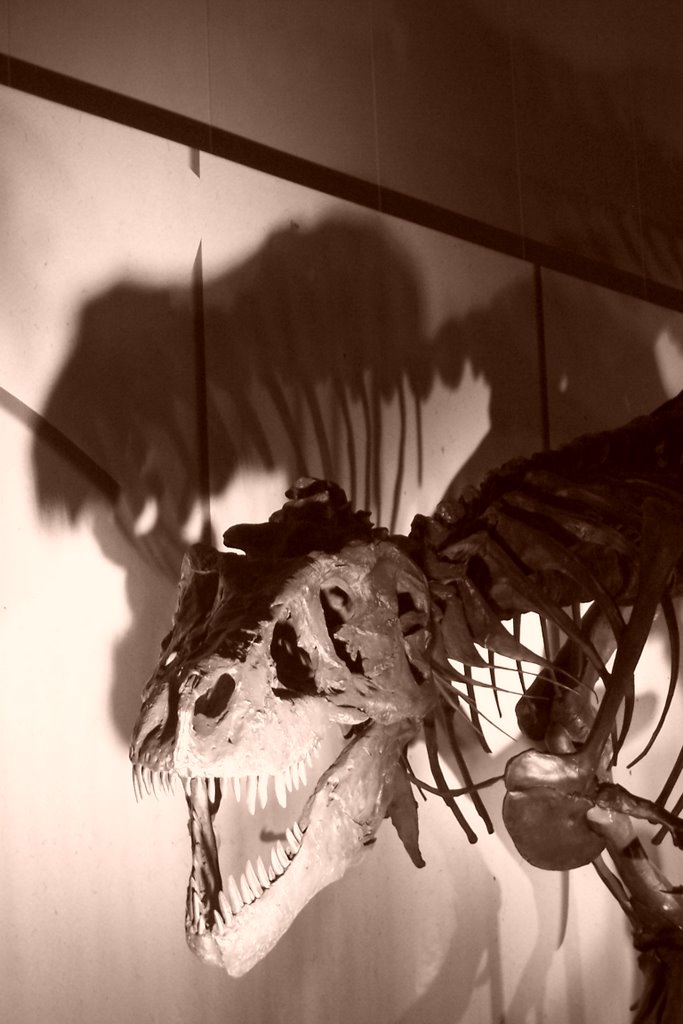
To be honest, I did not manage to find out the answer to this question while I was at the exhibition. Somehow, I must have missed the exhibit that would have lend me clues to this question. So I searched using Google for what might lend me some clues, and I found this link. Try looking out for the two temporal openings in the photos below.


Dinosaurs! A T. rex named SUE and Friends seems to be catered for the young and old. There are exhibits that can keep the energetic young children entertained while educating them about dinosaurs.

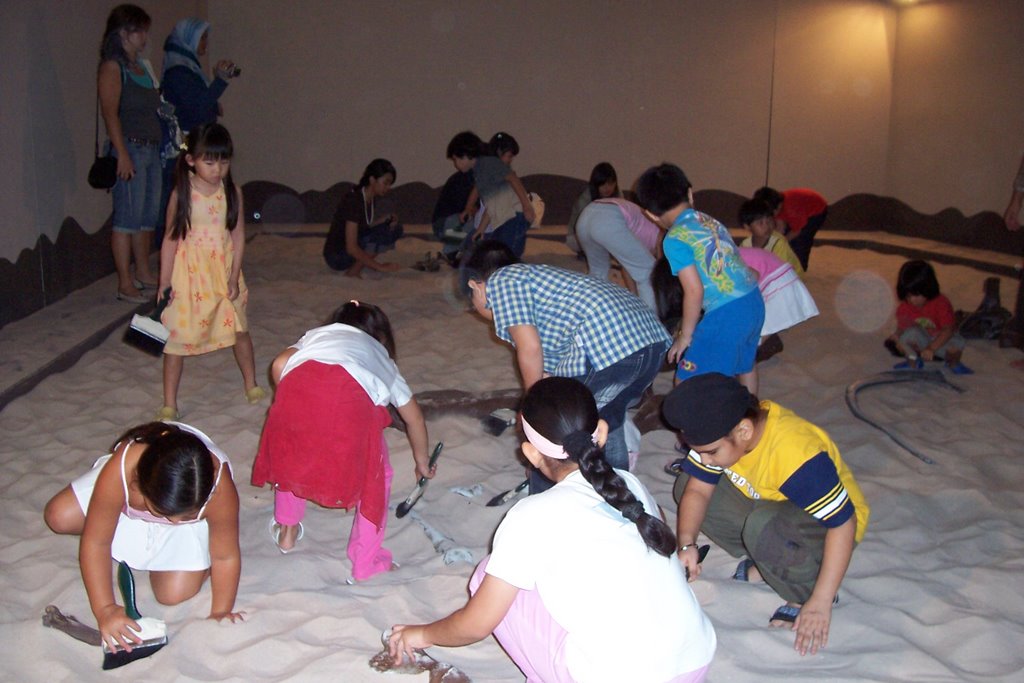
If you were at the exhibition, you will notice that there will almost always be a queue at the fossil dig corner. At this section, the children role-play themselves as fossil hunters, trying to discover and uncover fossils of dinosaurs. Don't the children seem to be engaged in the role-play?


There was also a queue sighted for the exhibit that stimulates the field of vision of the Triceratops. I remember that Triceratops have wide field vision. While the wide field vision can serve a good function, it also has its blind spot. To find out more, check out the DINOSAURS! exhibition of course.

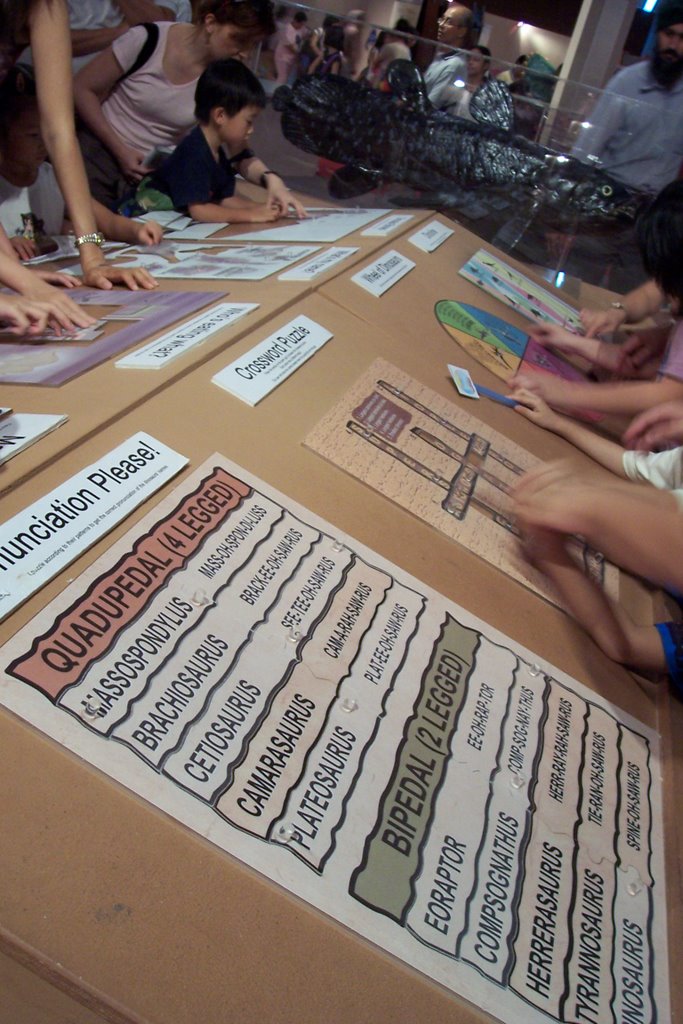
At one particular section of the exhibition, visitors can also learn to pronounce the names of the dinosaurs. There are also quizzes and puzzles to challenge the mind. This section seems quite popular with children too.


There are also video shows on dinosaurs that can win the attention of almost anyone, young and old.


Other than being able to view exhibits on dinosaurs, one can get to view exhibits of living fossils. Did you know that cockroaches have first appeared on Earth about 350 million years ago? Some of the cockroaches that we see today are fairly similar to those that had lived million years ago. Dragonflies have also been around since the very ancient times. I wonder what are their secrets for surviving?


cockroaches


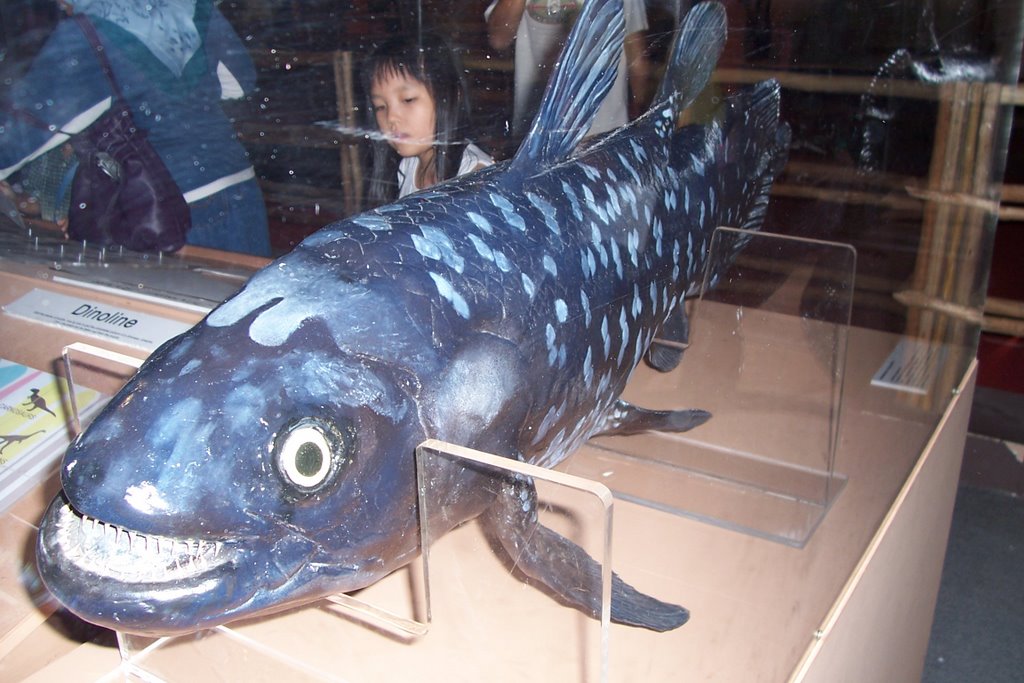
The fibre-glass model of the Indonesian Coelacanth was one of the exhibits that had caught my eye. This model was made from a specimen of the coelacanth. After the exhibition, I was intrigued with this primitive fish that I went to search for more information about it and found this link: http://www.dinofish.com


Other species of animals considered as living fossils are the crocodiles and the horseshoe crabs. Another question on my mind is: How did the crocodiles outlive the dinosaurs?


Estuarine Crocodile Skull


Horseshoe crab


Some animals are however, not able to survive. They have become extinct. Make a guess of the name of the bird below.


Yes, it is the Dodo. It is now extinct due to overhunting by human, and the destruction of its natural habitats.

These birds are now extinct in Singapore.


Visitors can also get to see specimens of rare animals. Perhaps the organisers of the exhibition had wanted us to pause and think seriously about conserving our natural heritage? If we do not do anything, these rare animals could soon become extinct.
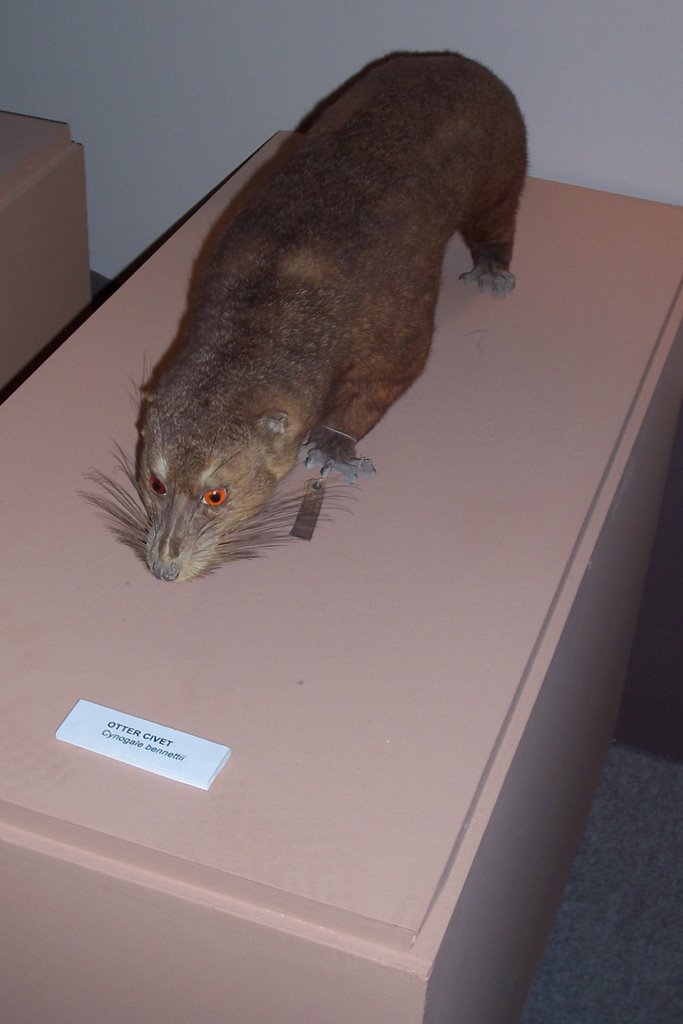


Otter civet


Rhinoceros Hornbill. Rare in Singapore.


There is a section on Conserving Singapore's Natural Heritage. I suppose the lessons drawn from the past can help us learn the importance of preserving the biodiversity on our island? There will be no use of regretting once an animal whom we know so fondly becomes extinct, not due to the forces of nature, but due to the destructions made by mankind.

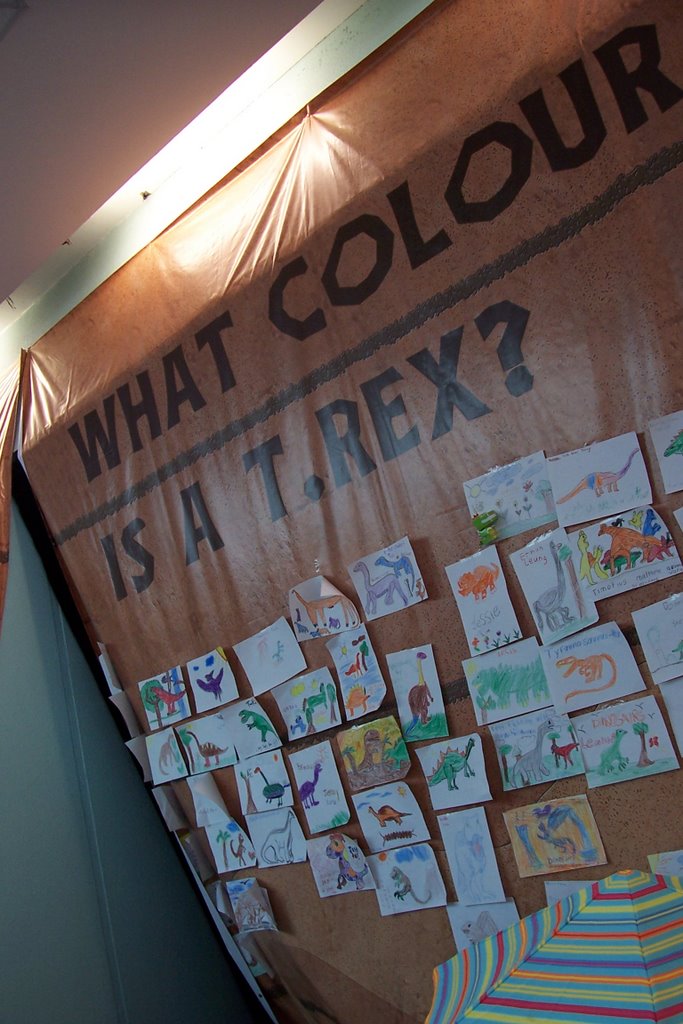
At the exit, I saw drawings by children mounted on a wall that has a title that goes: What colour is a T-rex?. It seems like the children will never get to feel bored if they were to come for this exhibition? There seem to be just so many things for them to do and to learn.


If you are now tempted to catch this exhibition, more information can be found here: http://dinosaurs.com.sg.

By the way, for fellow bloggers, you may like to know that there is a contest at yesterday.sg. Submit an original blog post to yesterday.sg about your experience at the exhibition, and you may stand to win prizes.

Wednesday, August 09, 2006

Back to the ancient world


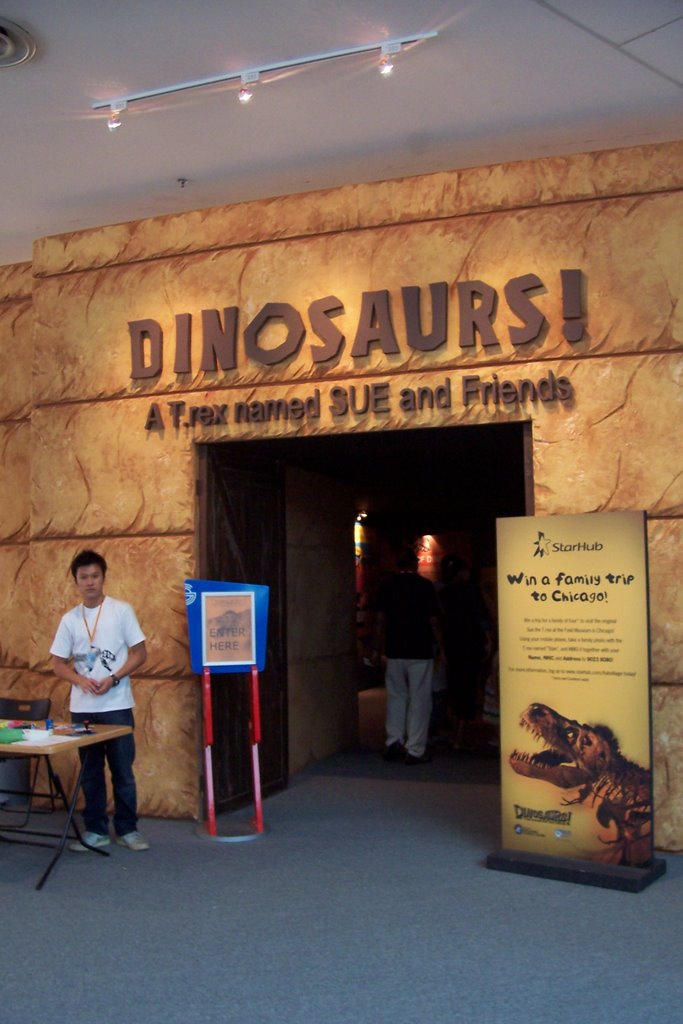
It was National Day. I decided it would be a good idea to visit the exhibition: Dinosaurs! A T. rex named SUE and Friends that day, since I had to meet someone at a locality relatively near the Singapore Science Centre in the morning.


Despite the crowd, the trip to the above-mentioned exhibition proved to be an enriching one. I felt I was being transported back in time to find out more about the ancient world. The ancient world that dates back to about 248 - 65 million years ago.


Interestingly, the exhibition also provides links to how the knowledge of the ancient past may serve use to us, even million years later.


***


The weather looked fairly dull when I reached the Singapore Science Centre that day. Some level of patience would be needed to queue and get the ticket at the counter near the main exit. I was given a ticket that has the logo of the Singapore Science Centre printed on it. When I entered the Science Centre, I walked towards Annex D.


I found out that at the ticketing counter at Annex D, it is selling tickets that has the image of the T-rex printed on it. So, if you would prefer to get a ticket with the image of a T-rex printed on it (instead of the one with the logo of the Science Centre), I figured that you should not purchase your tickets at the main entrance of the Science Centre. You should purchase the tickets at Annex D.


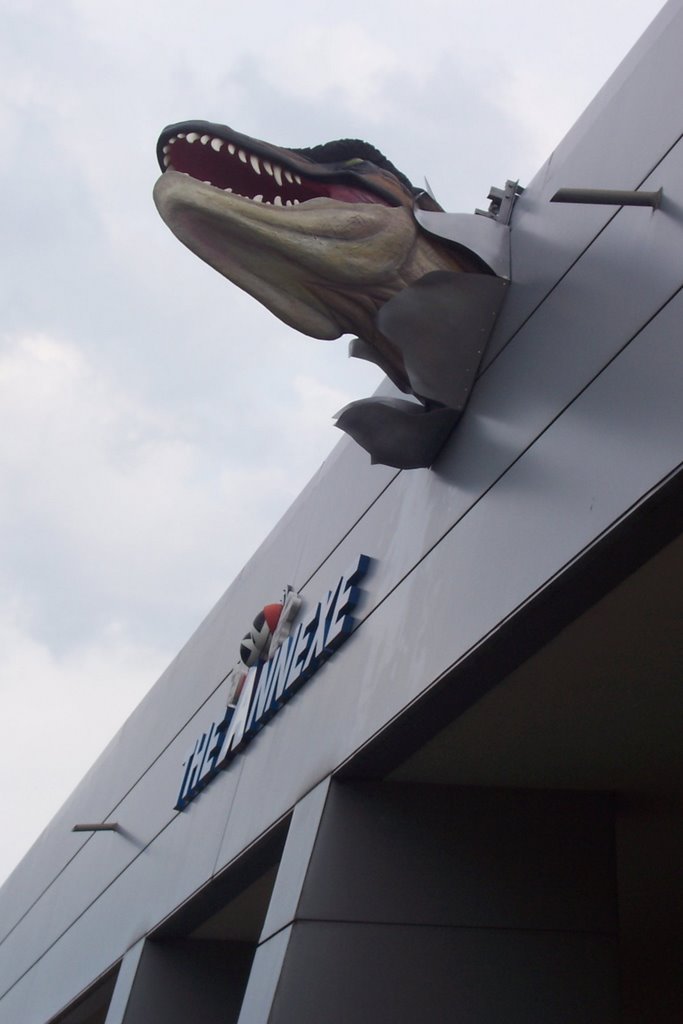
If you are not sure where Annex D, try looking for what I call the "protruding dinosaur head" (see right below).


Annex D


What better way to start the exhibition than to find out what exactly is a dinosaur?


"(Dinosaurs) belong to a group of reptiles called diapsids, which means they had two temporal openings in the back of their skull..."

The explanation seem to get very scientific, but it was enriching for a lay-man to be exposed to the terms. However, I don't know what a temporal opening in the back of the skull should look like. I just kept the terms and concepts at the back of my mind, hoping that those questions that I have might be answered along the way.


The first dinosaur cast that greeted me was that of the Tarbosaurus bataar. This dinosaur was a hunter, as we can induce from its ferocious looking teeth. I read that it was a lizard-hipped dinosaur.


Tarbosaurus bataar

Tarbosaurus bataar


One thing that I remember after this exhibition was that in general, dinosaurs can be either lizard-hipped or bird-hipped. Or did I get this wrong?


The amusing part when I was at the exhibition was when I overheard a few children trying to debate with the adults whether the exhibits on display were real or were not. Innocence has its beauty.


Unknowingly, I seemed to have taken an interest in dinosaur-eggs. I took at least three different photos of exhibits of dinosaur-eggs. I overheard from one of the video clips shown at the exhibition that no matter how large a dinosaur was, its egg would not be bigger than the size of a football.


This exhibition is not just about dinosaurs. Visitors will also get to see casts of primitive reptiles, theriodonts (mammal-like reptiles?). These animals had roamed on Earth million years ago.


Scutosaurus Karpinskii


But who can ever resist viewing the star of the exhibition? Yes, the T-rex (Tyrannosaurus rex) named Sue. Almost everyone with a camera on his hand wanted to take photographs of this very exhibit. That included myself.


Sue


That was not all. There were exhibits that displayed replica of different specific parts of Sue (e.g. the teeth, the hips, the skull). There was an exhibit that focuses on the very good sense of smell that T-rex had. Yet an exhibit touches on how the fossils of Sue was found. There was even a section that focuses on how the technology of CT Scan has helped scientists gain better insights to T-rex and its behaviours.


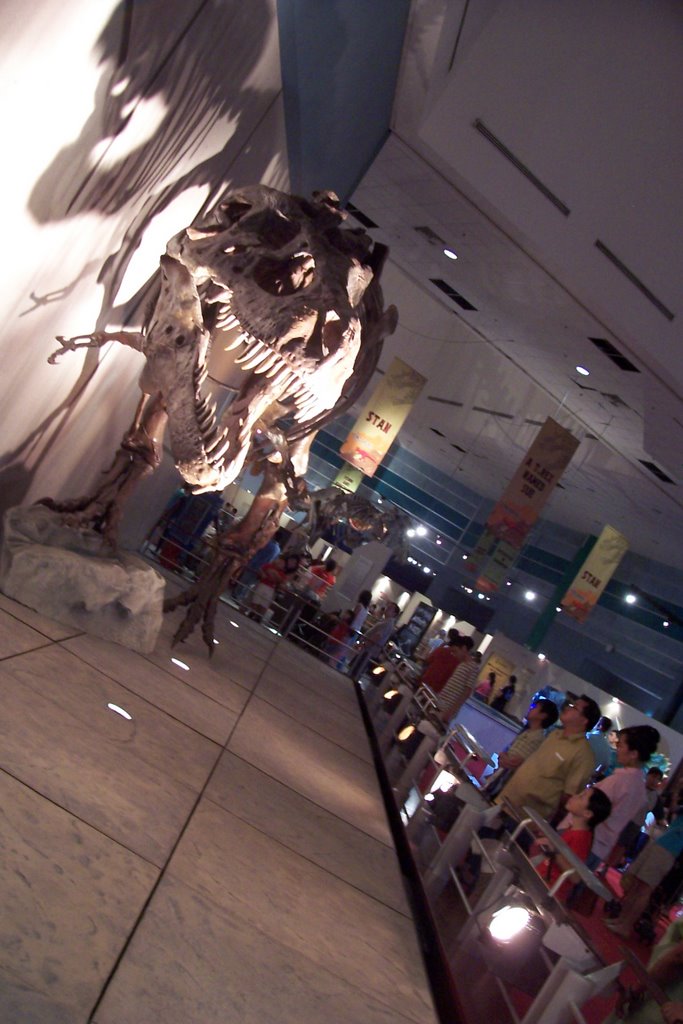
Nearby, there was an exhibit of another T-rex, Stan. Actually, it was much easier to take photographs of Sue, than of Stan. The way the lightings were shone on Stan has made it challenging to get a good angle to capture shots of him. If the glaring-looking spotlights stare in your face, that is exactly what I meant by "challenging to get a good angle".


Stan


I went to catch the show The Truth about Killer Dinosuars! at the auditorium. It has been educational. I learnt how the T-rex and the Velociraptor hunt and prey for food. The interesting finding was that according to this show, Velociraptors actually had feathers.


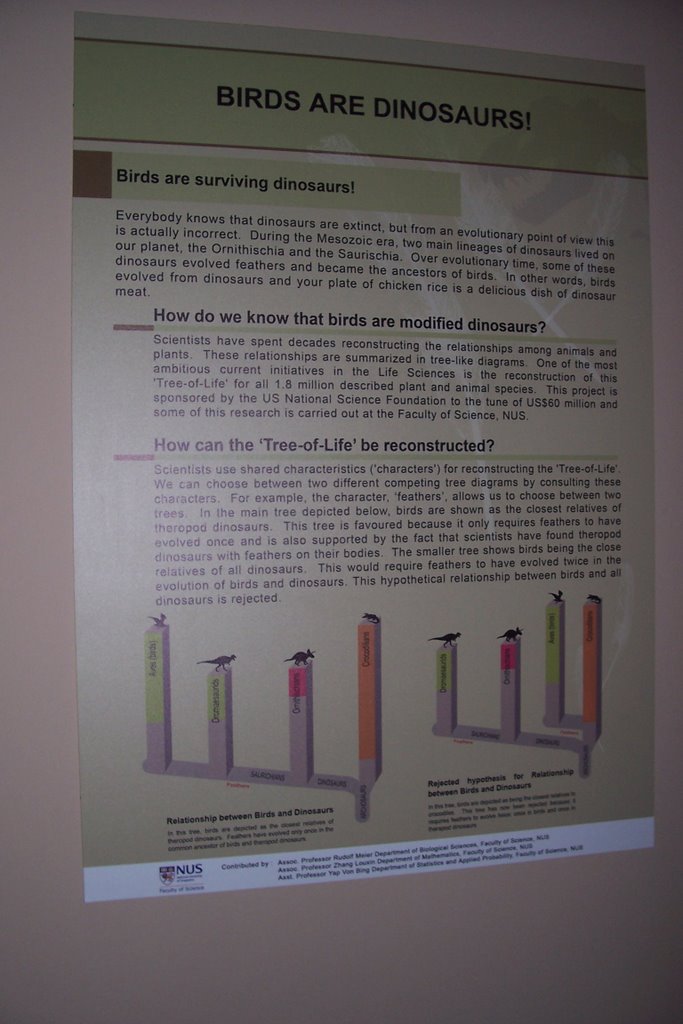
Feathers. I had associated feathers with birds. Perhaps because of this association, I was particularly intrigued with this segment of the exhibition that has a title: Birds are Dinosaurs!


Visitors to the exhibition were even invited to identify the similarities between the skeleton of a Moa and a Velociraptor. By the way, did you realise that birds have scales on their legs? After watching The Truth about Killer Dinosuars!, I was somehow being planted with this idea that "feathers are actually highly evolved scales". Nature is so amazingly, I think.


Moa and a Velociraptor

Moa and a Velociraptor


Velociraptor. Imagine it with feathers.


At the exhibition, there was a replica of a fossil of an animal that would serve to be a good example of what might have been the transitional form between the modern bird and the related dinosaurs.


With the idea that birds are evolved from certain dinosaurs, I started looking at these bird specimens with a slightly different eye.


There are more to be seen at the exhibition. If you would like to read more about my experience at the exhibition, please stay tune for part two. It may take a while for part two to be published, so if you cannot wait to find out more about the exhibition, you may wish to travel to the Singapore Science Centre, Annex D. Please hurry though, this exhibition ends on 20 Aug 2006.

Visitor information of the Science Centre can be found here.

Friday, July 28, 2006

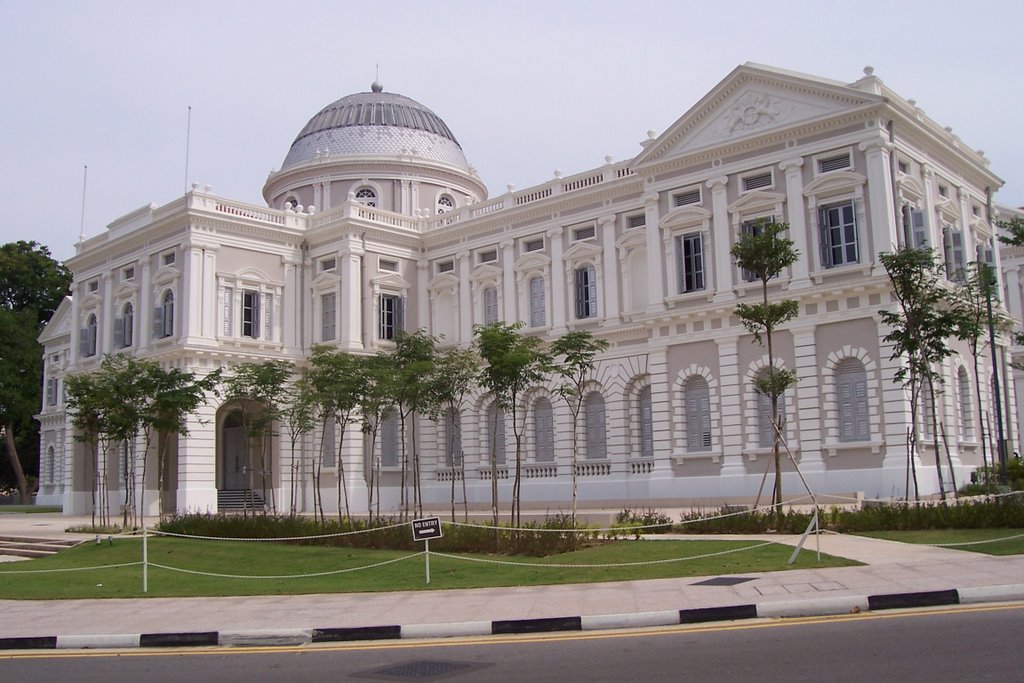
National Museum of Singapore


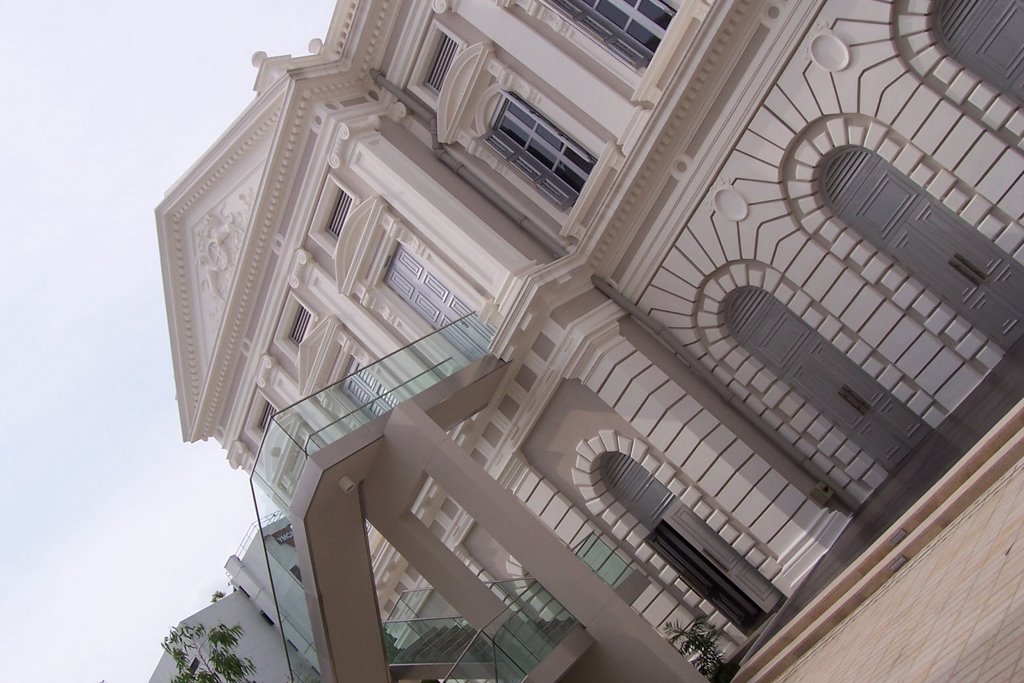
It will usually bring me fond memories whenever I walk past the National Museum of Singapore.

I remember myself joining one of the night-tours before the museum was closed for the recent renovations. The best part that I most enjoyed was to be able to climb up the stairway to the roof-top of the museum. Actually, it felt eerie to be up there, especially when the tour guide was sharing with the tour group about haunted stories that were known to the museum. Nevertheless, the climb up was the best part for it was novel. Furthermore, it would be rare for most member of the public to be up there on the roof-top.

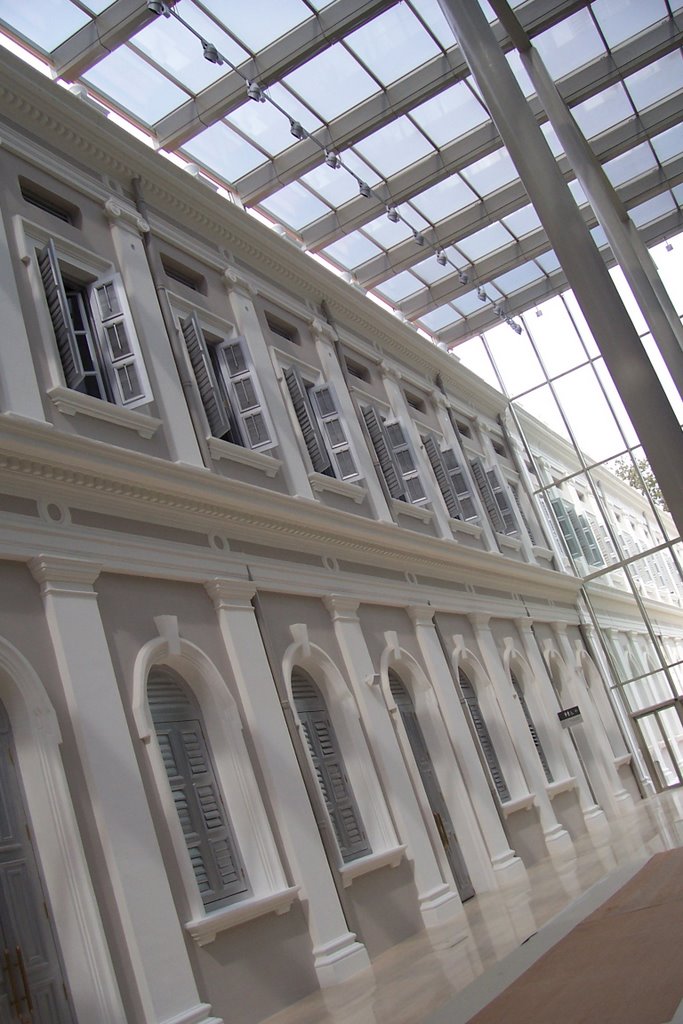
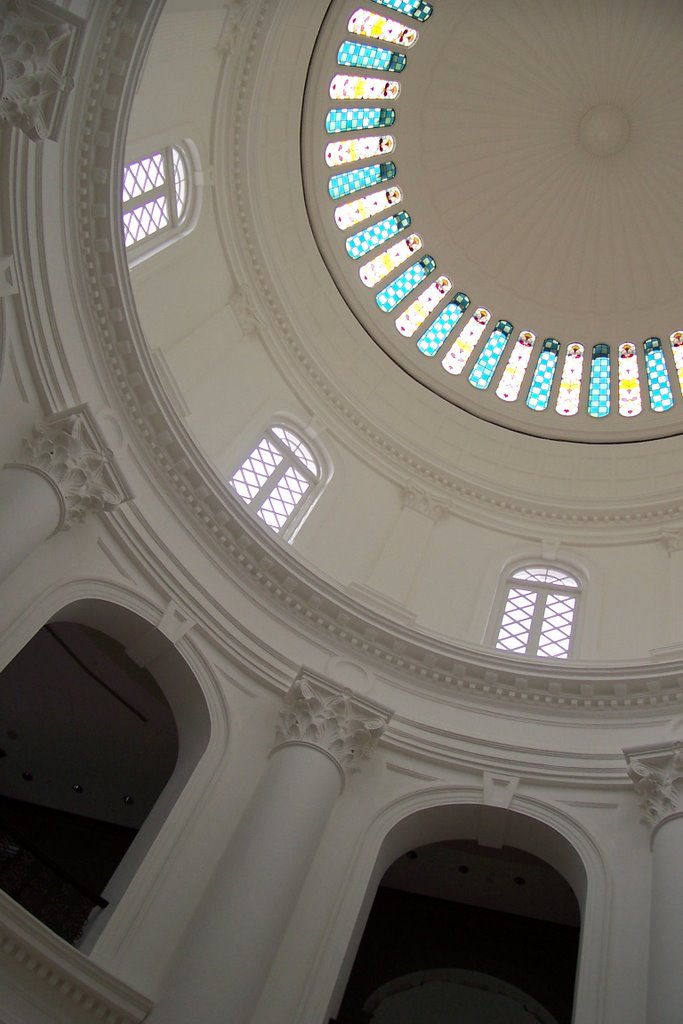
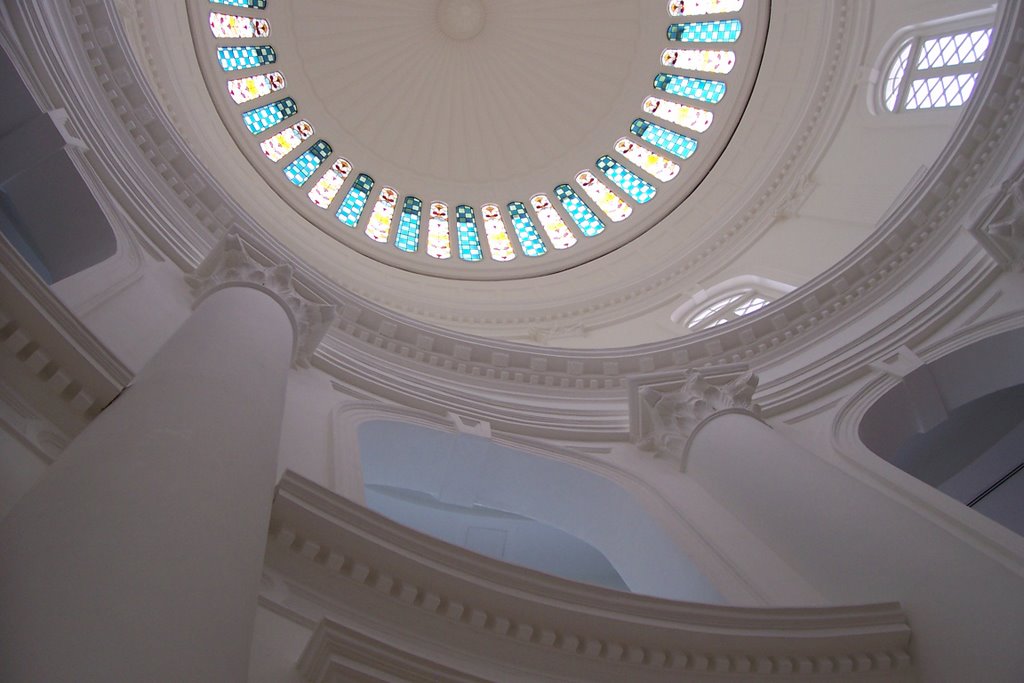
Last weekend, I decided to take a breather from practising, and I visited the National Museum of Singapore. The visit brought back nice memories. Here are some snapshots from my visit.


This was the exhibitiion that I went for last weekend.


**

This familiar courtyard somehow felt new to me, because of the open-museum concept.


**

The wonders of glass.


**


Look up at the glass panels. When they were constructed to commerate the reign of Queen's Victoria (?), they were an engineering feat.


**

I had not enjoy walking up this flight of stairs, but a nostalgic feeling was triggered when I saw it last weekend.


**


I like the architecture here.

Monday, July 10, 2006

Little India in shades of brown

In response to Jessey's post titled What is your colour of Little India?, I shall add my input.

For some reasons, one of the colours that Little India (Singapore) reminds me of is brown. The shades of brown that can be seen in many of the delicious food that can be found in Little India.

The food should taste better than they look on the photos, shouldn't it?


Mutton masala?


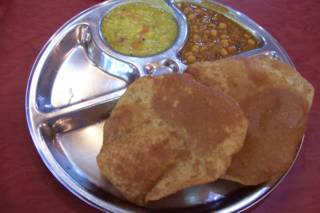
Poori: with dough made from whole-wheat flour, made into balls and deep-fried. Posted by Hello


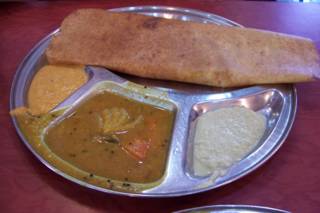
Masala Thosai, with its sauces. Posted by Hello


The Garlic Naan on the left, and the Chapati on the right. Posted by Hello

Naan, as I got to find out, is dough made from refined flour. The process of making naan goes like this: The dough is slapped at the side of the tandoor, then hooked with an iron skewer and taken out.


End the meal with a cup of Masala tea.

Masala actually refers to an assortment of herbs and spices. If I could remember correctly, the Masala Tea contains spices such as cloves, cinnamon, fennel and so forth. The aroma of the tea is rather strong.

That is Little India to me, full of nice food that spices up my day.

Now it is my turn to facilitate the continuation of the meme? Alright, what colour is Little India to you?

***
The 'meme chain':
Source: What is your colour of Little India?
1) Little India in shades of brown