 The Original Singapore Walks
 by
Journeys Pte Ltd has never failed to take me to "the roads less travelled". I dare say that Journeys Pte Ltd operates one of the best tours in Singapore. That is one of the reasons why you keep seeing me going onboard its tours every now and then.
With the painstaking amount of research and the guides' love for heritage behind every single of its tour, this is one tour that the locals in Singapore should consider going for if they have half-a-day to spare. You simply don't know what you are missing unless you join one of The Original Singapore Walks.
I had taken annual leave on the morning of 17 Aug 2006, and decided that one of the best way for me to spend the morning was to join one of The Original Singapore Walks. It seems always delightful and enriching for me to get to know more about this country that I was born and grew up in. Somehow, heritage tours often remind me never to take the present for granted. In addition, there almost always seem to be lessons to be learnt from history itself.
The walk that I had attended on 17 Aug 06 was titled:
Sultans of Spice. Savita was the tour guide of the day. At the start of the tour, the guide explained to us why the tour was named as it is.
In a nutshell, this walk takes one about the Kampong Glam area of Singapore. As many locals in Singapore might know, the word
Kampong means to "Village" in Malay language.
For the rest of the post, I shall let the photographs that I have taken do the large part of the talking. I must emphasis that the best part of this tour is not in the sceneries that you would get to see. Instead, the best part of the tour is the stories from the past that you will get to hear and the rich heritage that you will experience while onboard. As such, the best way to know more is to simply join the walk.
This walk is ideal for everyone, locals and friends from overseas. Its charges are very reasonable considering the amount of quality research that has been put in to back up the tours.


Although born and raised in Singapore, I must admit that I often find that I still do not know enough about this island-country that I have been living in. The
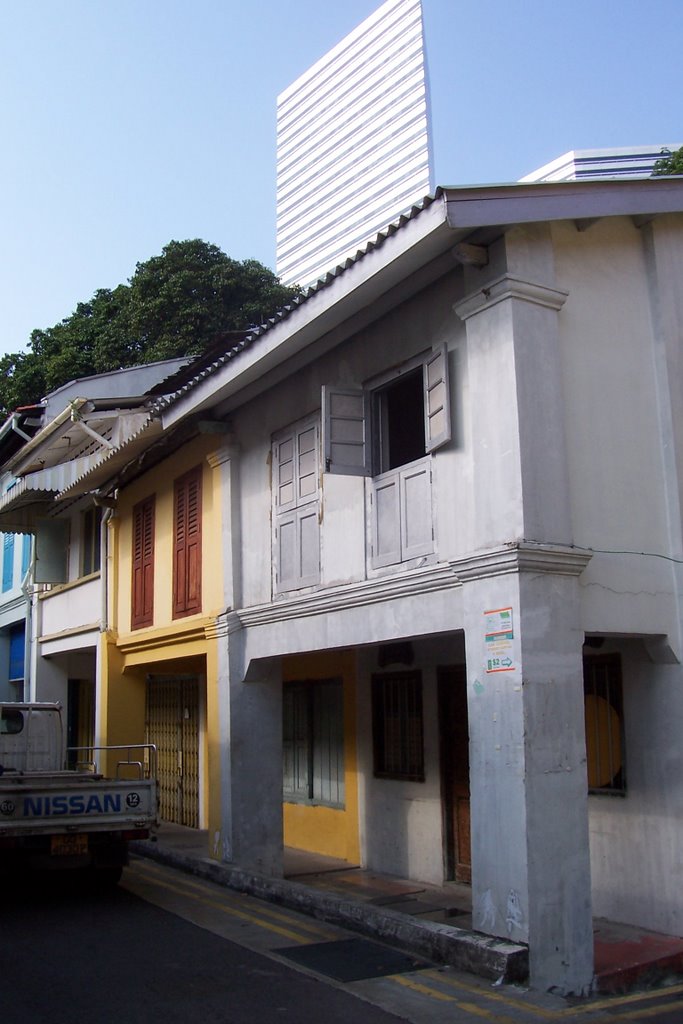
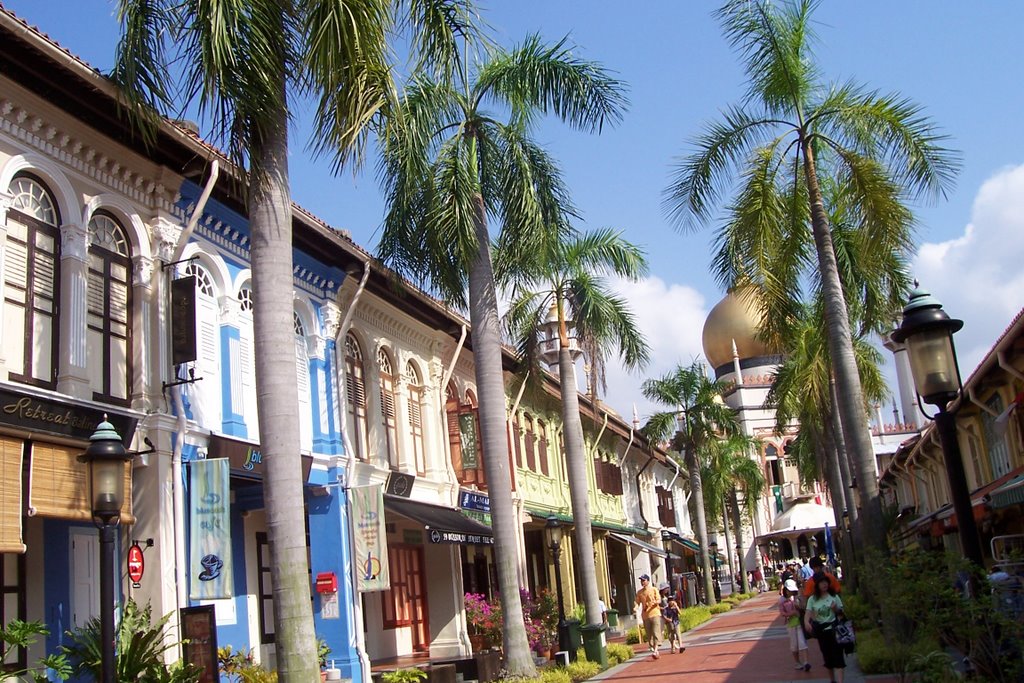
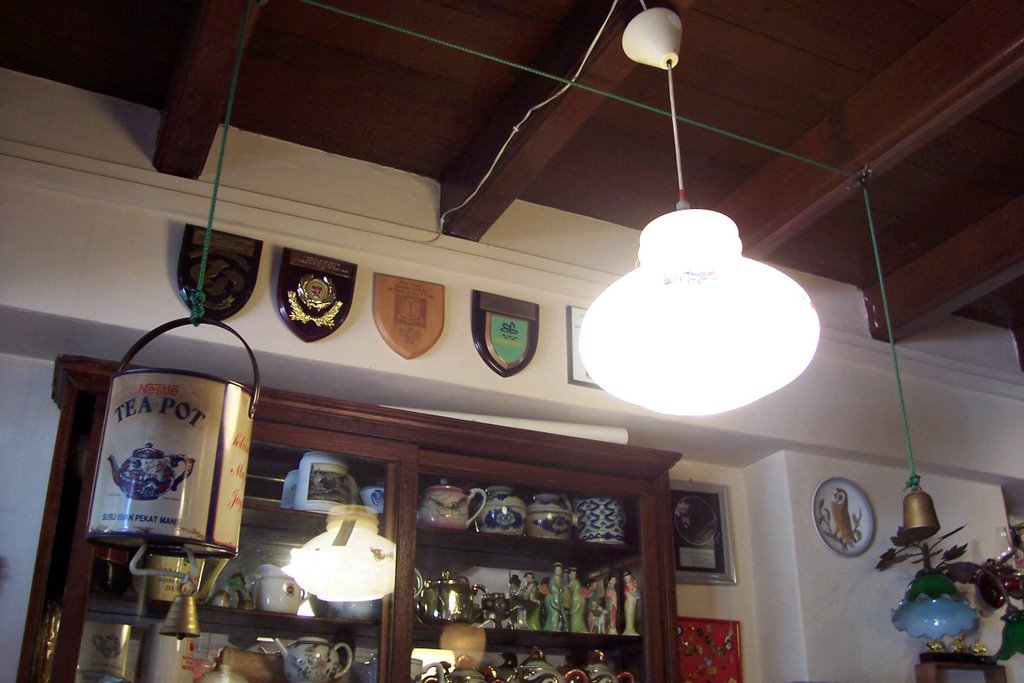
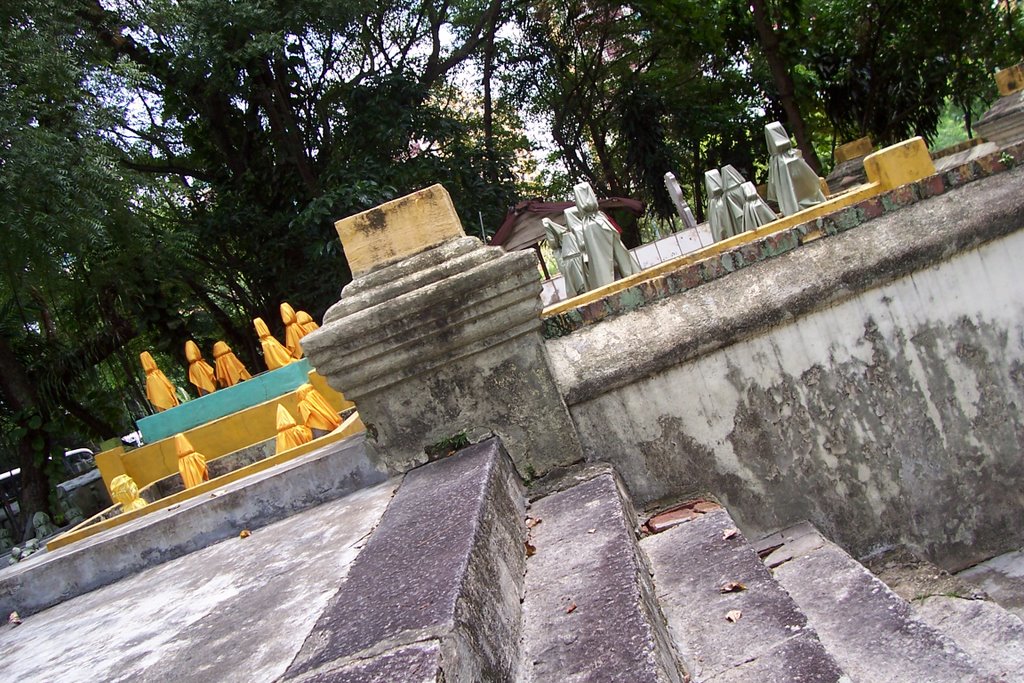
Sultans of Spice brought me to routes that I have never travelled before. Right above this paragraph, you should see two photographs of a lane in Singapore. Before the tour, I have never been to this lane, as best as my memory recollects. It may seem to be insignficant, but there is something special about this lane. To find out, join the tour and hear from the guide, of course.
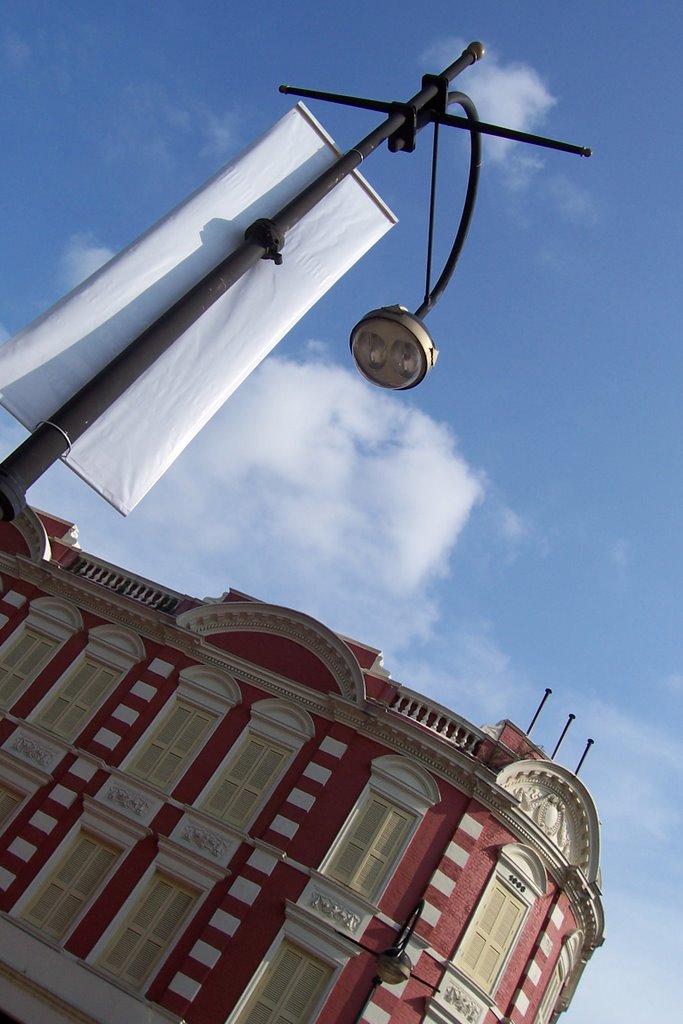
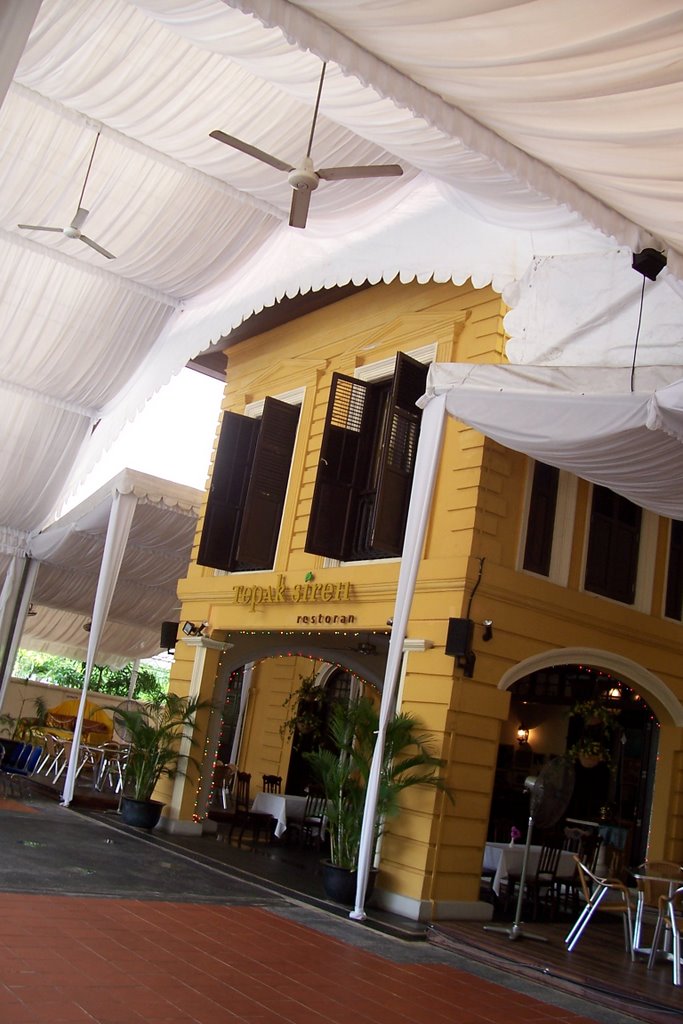
When I was walking with the tour group along Kampong Glam area, I found myself intrigued by the architectures of the buildings in the area.

 Bussorah Street
Other than hearing about the mysterious
keris (dagger-looking weapon), and actually seeing them, we also get to gain insights to the practice of chewing
sireh. Out of curiosity, I chewed a small section of a betel leaf. It tasted kind of peppery. This URL gives a short account on the practice of eating sireh:
http://www.trekearth.com/gallery/photo144246.htm
 Items used for chewing sireh.
We also stopped by a
shop that sells prayer rugs amongst other things. No, not for shopping, but to hear about the holy city of Mecca, and its significance to the Islam religion. Here's a site on the subject of the city of Mecca that I have came across:
http://www.religionfacts.com/islam/places/mecca.htm
At another shop,
Grandfather's Collections, located at 42 Bussorah Street, I got to see the cash register that operates based on the theory of the pulley system. You can imagine a fascinated look on face when I saw this. At that instant, I also recalled a post by Victor titled:
Yesterday's Office Equipment (1).
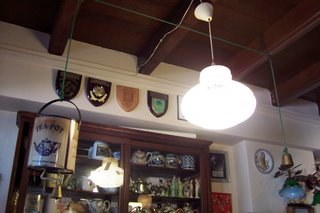 The cash register.
It's commonly seen in many traditional grocery stores in the past.
At
Grandfather's Collections, I saw that it sells digital postcards (postcards that contains digital photos taken from various parts of Singapore). I was looking high and low for one of these some months ago. Without much effort, I had actually found it there. Anyway, the shop's owner is a very helpful, humourous and friendly gentleman. He even gave the tour group a demonstration of how to tie the
sarong for different purposes. I never knew that the sarong could be so functional until this tour.
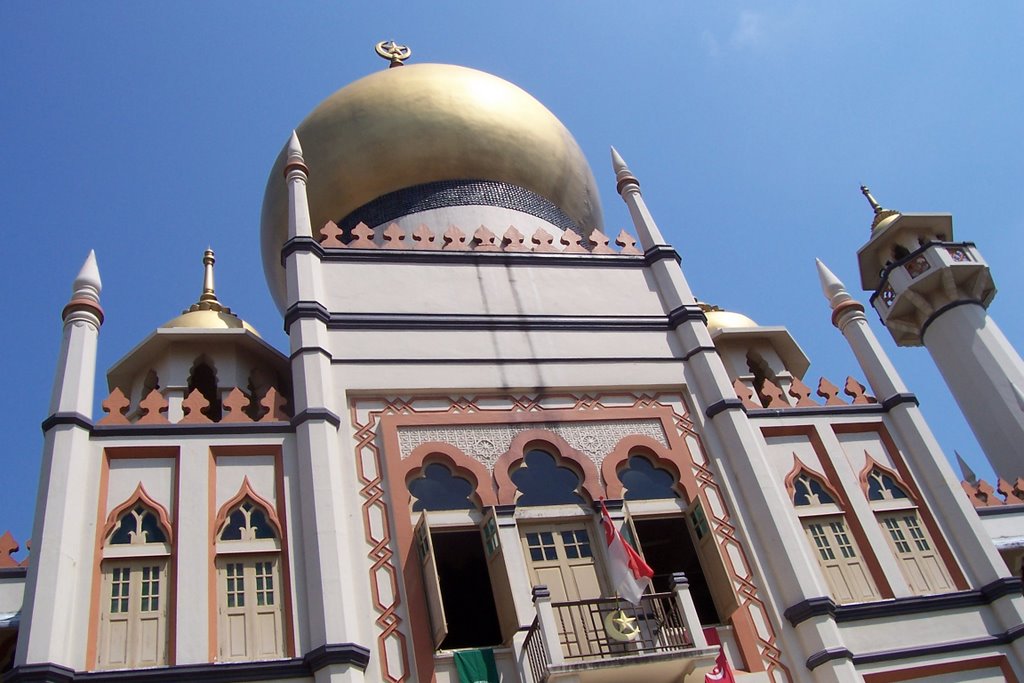
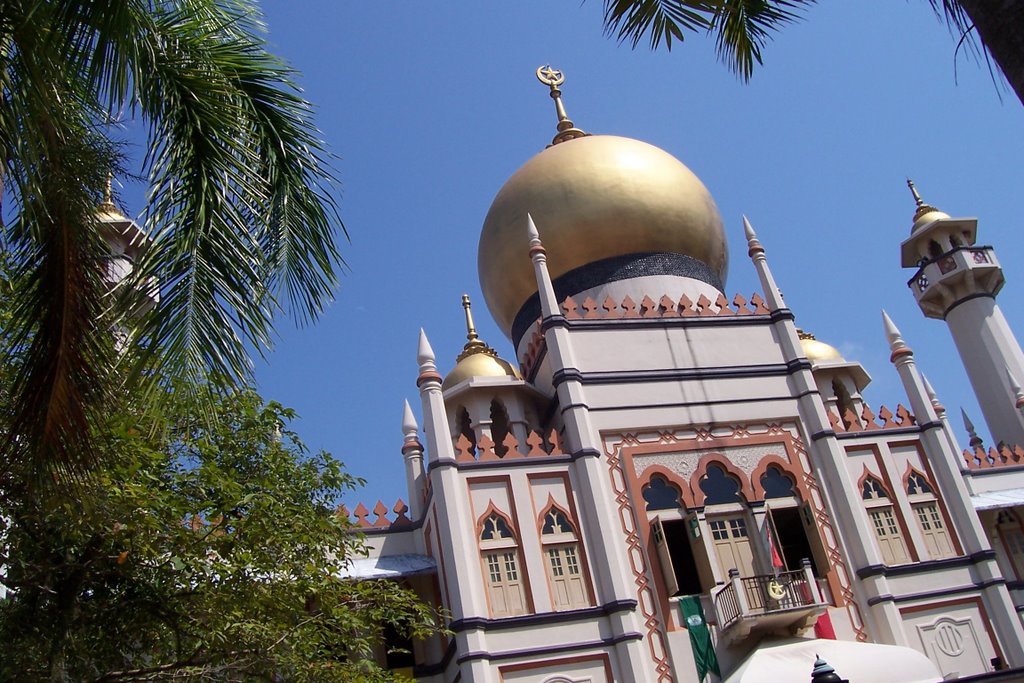
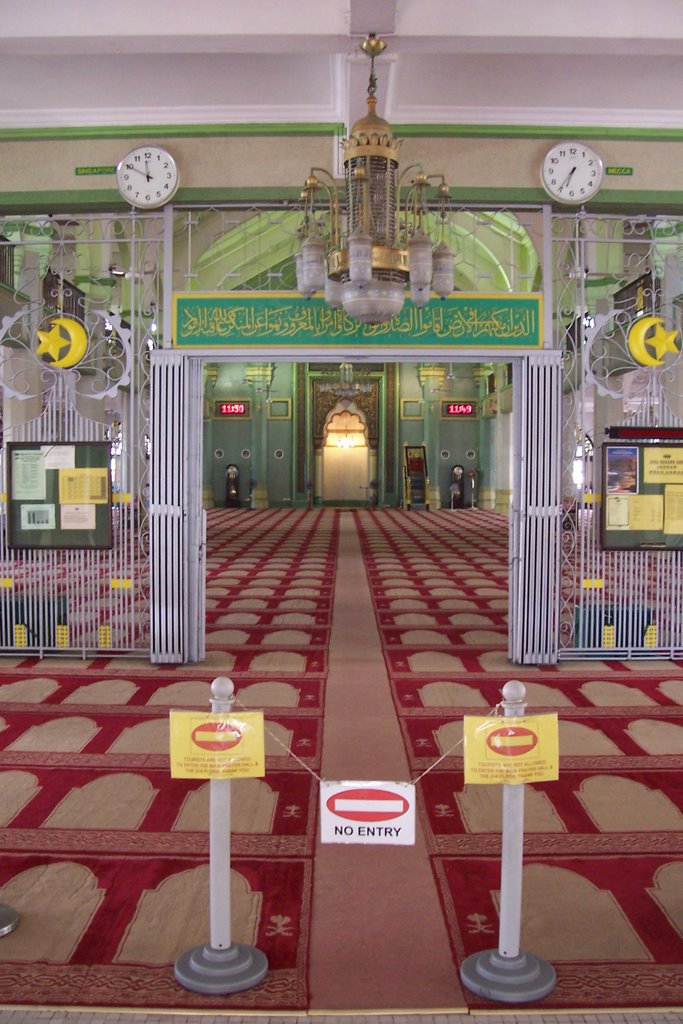
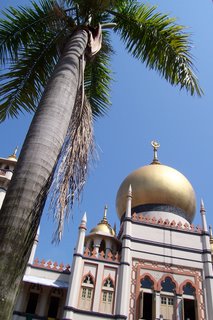
 Sultan Mosque.
One of the stops of the tour was the
Sultan Mosque. The tour guide pointed us to guess the material that was used to make the black-colour-looking ring that winds itself just below the golden dome. There is a noteworthy story behind it.
I was well-prepared with long sleeves clothings to enter the mosque's compounds. In this part of the tour, the tour guide shared with us insights about the Islamic religion, and it has been enlightening.
I think it is helpful to gain an appreciation of the various religions as this would help one better understand the ways of life and the perspectives of others. Understanding, in my opinion, promotes respect and peace. I think the tour guide has done a good job in her delivery of the materials, and that certainly helps to promote a good understanding and respect of the Islamic religion.


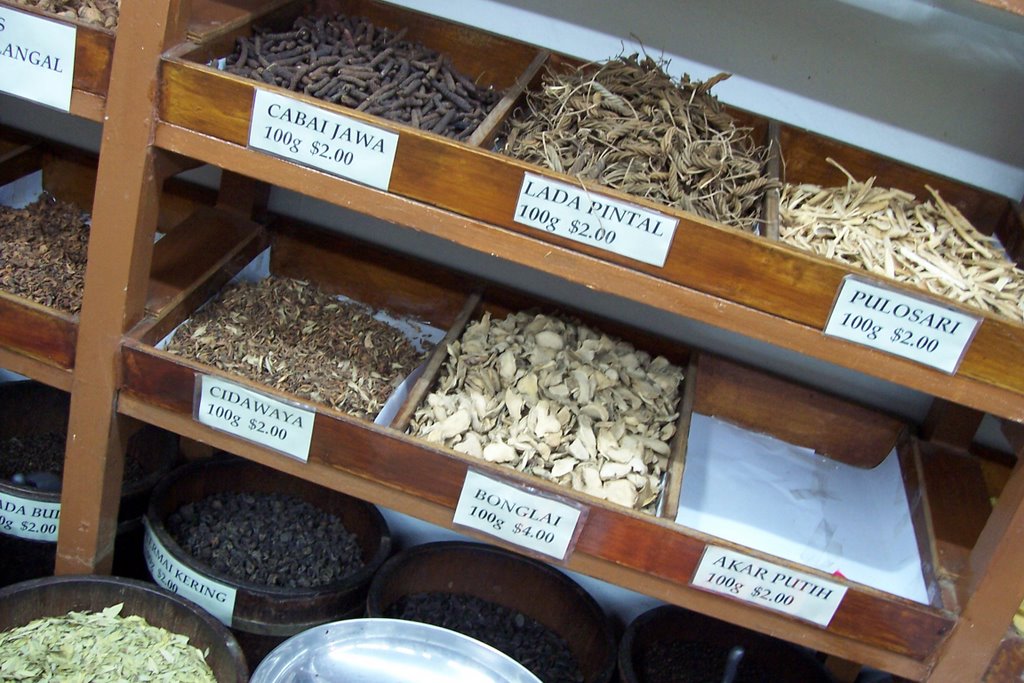
The next stop was a shop that sells Malay traditional medicine, if I remember correctly. The best thing I remember was the delicious dates that I was treated to at the shop, compliments of Journeys Pte Ltd.

After that, we continued walking and stopped by a Hajj supplies store. There is a lot of walking to be done, but I love it. Remember, there is no shopping on this tour. This tour's main focus is on experiencing heritage and history. At this tour, I learnt a bit more about the hajj. I was very intrigued to learn about the use of a wooden stick that you would see in the photo right below.

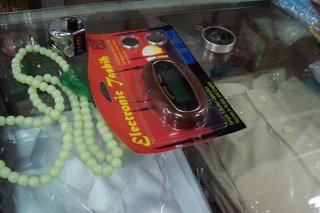
This Hajj supplies store also sells perfume containing no alcohol. I take my hats off the great sense of smell that the man concocting the perfume has.
One of my favourite parts of the tour was the section at the Old Istana Kampong Glam, now known as the
Malay Heritage Centre. It was here that the tour guide revealed to us a part of our Singapore's history that was totally unknown to me. Somehow, the story that was revealed to me reminded me of the value of humility, at the same time, fair-play. Even if fair-play might not seem to get one anyway too far initially.
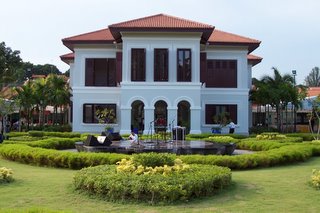 Istana Kampong Gelam was the historic seat of the Malay royalty of Singapore. Now the Malay Heritage Centre.
 Gedung Kuning.
Within the premises of the the Malay Heritage Centre.
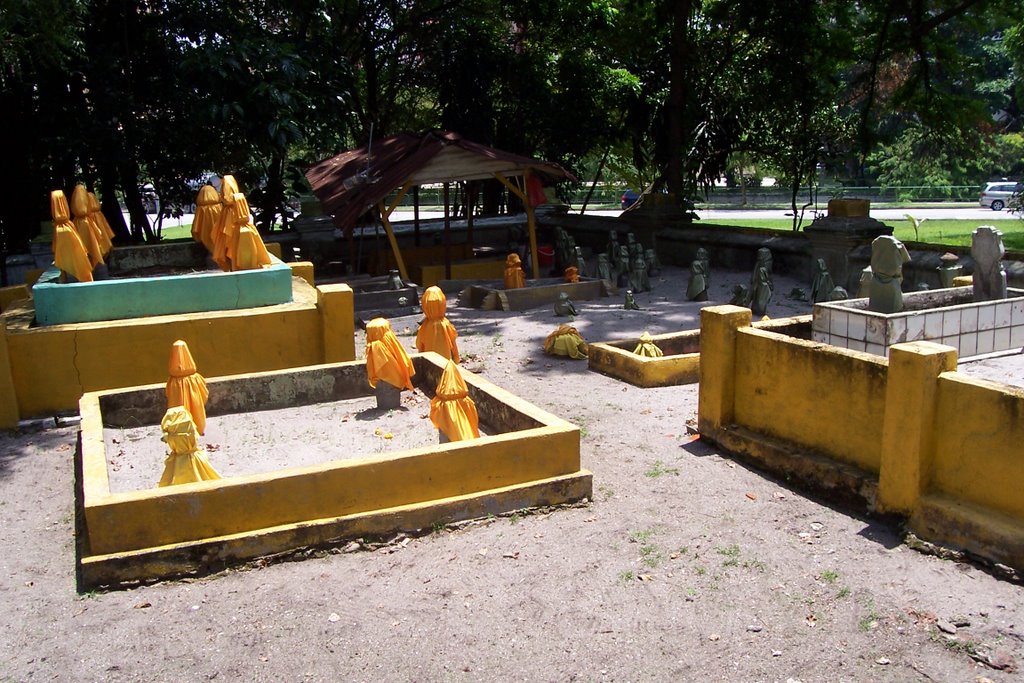
The tour ends at what I consider an unusual place for a tour: A graveyard. But this is no ordinary graveyard if we were thoughtful enough to infer from the clues staring at us at this graveyard. Please join the walk to find out more. I am neither a tour-guide nor a story-teller to be able to tell you anything much.


While I was at the graveyard, I kept wondering how much we are doing as a community to preserve our rich heritage. Would this graveyard make way for what we call "new developments"? How can we strike a good balance between preserving our heritage and ensuring spaces for developments?
Somehow, such thoughts reminded me of Scotland. Scotland is a developed country, with a rich heritage, and the community takes pride in preserving it. Because of the community's active efforts in preserving its rich heritage, I dare say that Scotland is more unique than Singapore, at least for now. I suppose that is why I fondly miss Scotland. I sometimes wish that I could see such a phenonemon in Singapore, and I hope I could see it within my lifetime.
In my opinion, it is not the state-of-art infrastructure that would make a country truly unique, it is the
soul behind it. The
soul arising from a rich and unique heritage.
What I have been sharing in this post is just less than 10% of the best parts of the tour. If you don't mind the sun, the climate of Singapore and the walking, it is highly unlikely that you would ever regret being onboard this tour:
Sultans of Spices.
Enriching and educational, this tour is a must for anyone who is keen to understand more about the history of Singapore, gain an appreciation of the Islamic religion and the way of life of the Malay and Arab community in Kampong Glam.
For more information, please check out the home page of The Original Singapore Walks:
http://www.singaporewalks.com