Friday, July 28, 2006

National Museum of Singapore


It will usually bring me fond memories whenever I walk past the National Museum of Singapore.

I remember myself joining one of the night-tours before the museum was closed for the recent renovations. The best part that I most enjoyed was to be able to climb up the stairway to the roof-top of the museum. Actually, it felt eerie to be up there, especially when the tour guide was sharing with the tour group about haunted stories that were known to the museum. Nevertheless, the climb up was the best part for it was novel. Furthermore, it would be rare for most member of the public to be up there on the roof-top.

Last weekend, I decided to take a breather from practising, and I visited the National Museum of Singapore. The visit brought back nice memories. Here are some snapshots from my visit.


This was the exhibitiion that I went for last weekend.


**

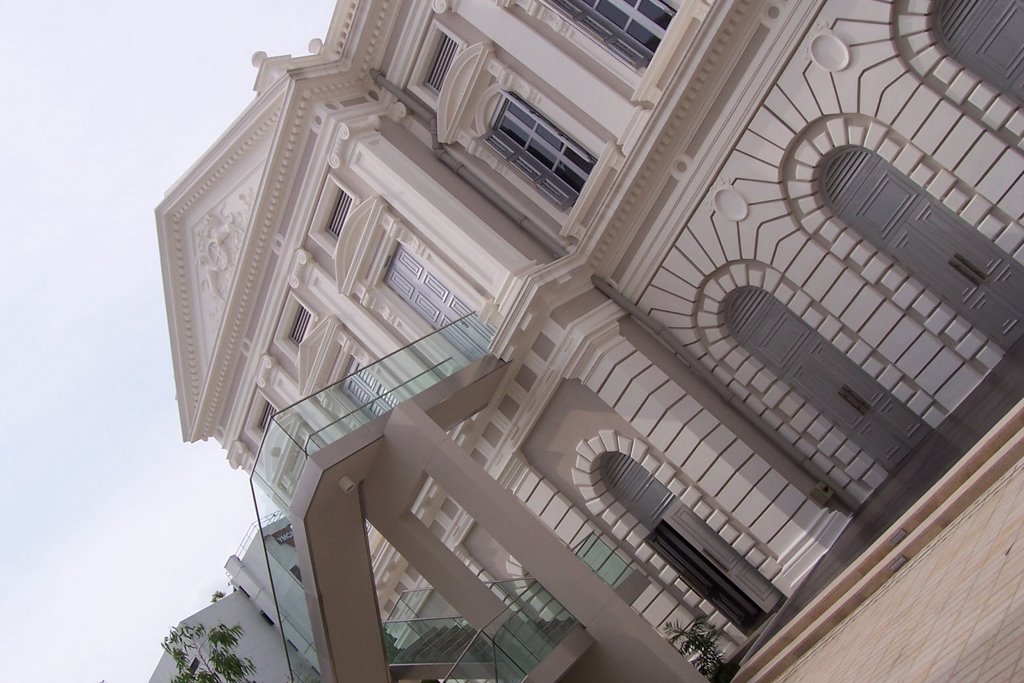
This familiar courtyard somehow felt new to me, because of the open-museum concept.


**

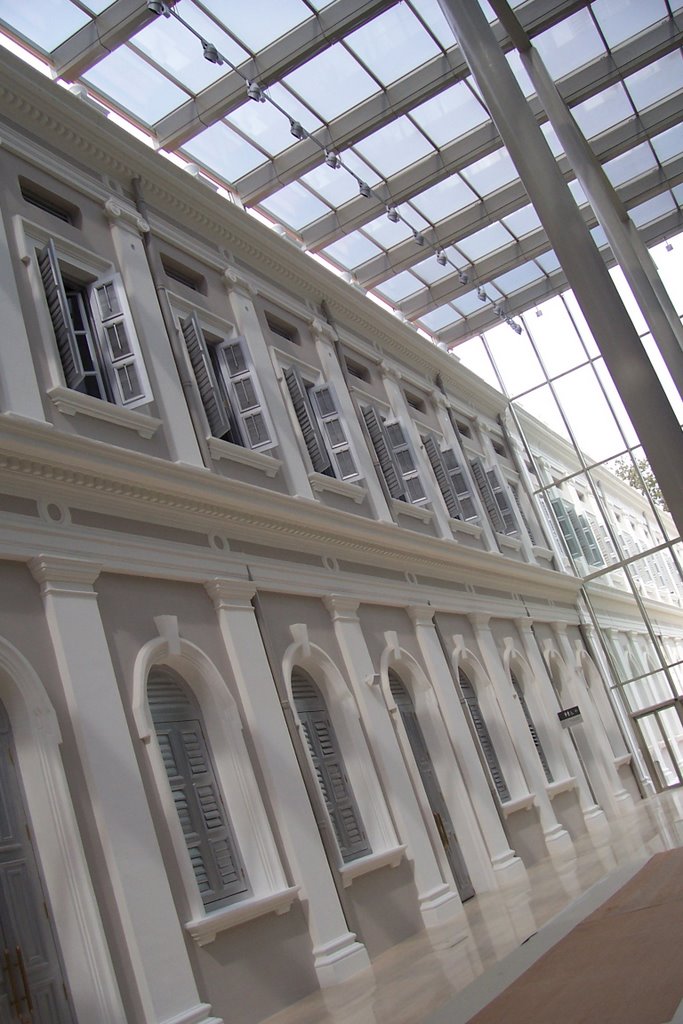
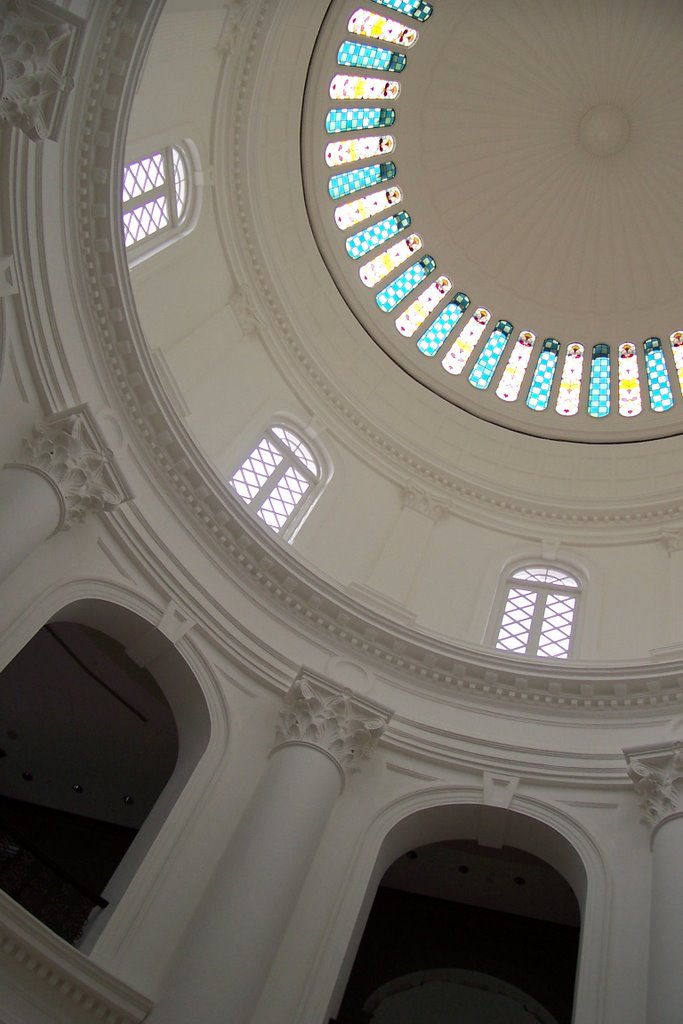
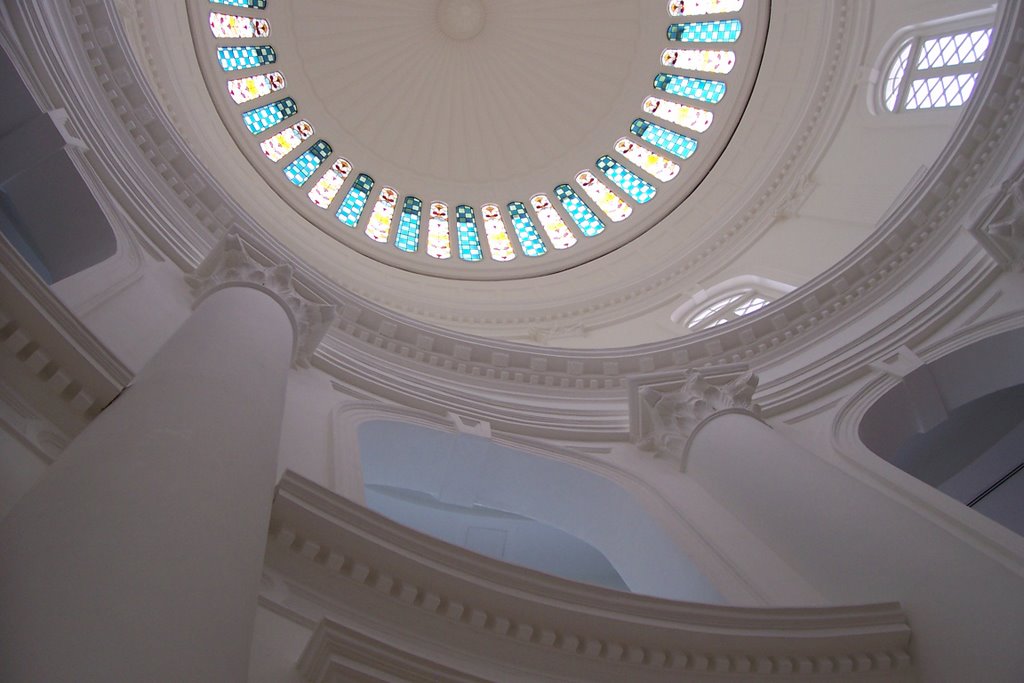
The wonders of glass.


**


Look up at the glass panels. When they were constructed to commerate the reign of Queen's Victoria (?), they were an engineering feat.


**

I had not enjoy walking up this flight of stairs, but a nostalgic feeling was triggered when I saw it last weekend.


**


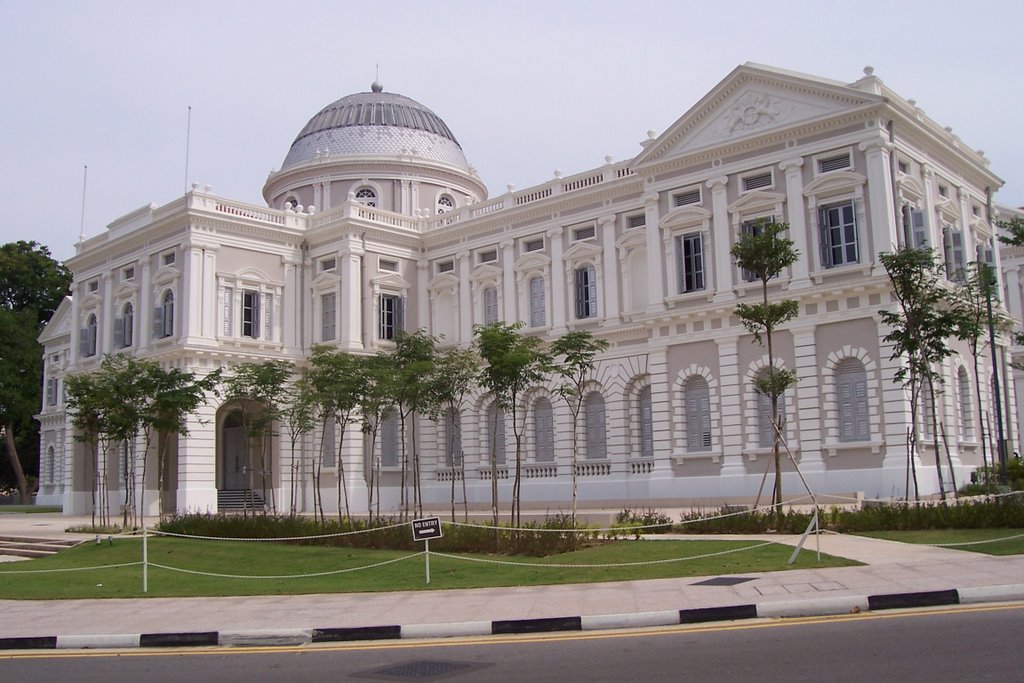
I like the architecture here.

Monday, July 10, 2006

Little India in shades of brown

In response to Jessey's post titled What is your colour of Little India?, I shall add my input.

For some reasons, one of the colours that Little India (Singapore) reminds me of is brown. The shades of brown that can be seen in many of the delicious food that can be found in Little India.

The food should taste better than they look on the photos, shouldn't it?


Mutton masala?


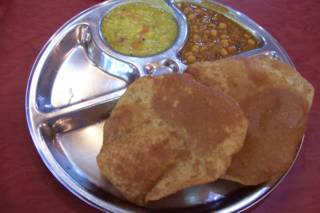
Poori: with dough made from whole-wheat flour, made into balls and deep-fried. Posted by Hello


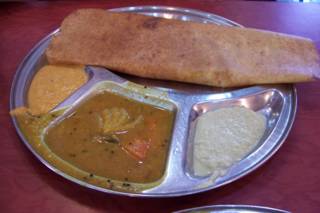
Masala Thosai, with its sauces. Posted by Hello


The Garlic Naan on the left, and the Chapati on the right. Posted by Hello

Naan, as I got to find out, is dough made from refined flour. The process of making naan goes like this: The dough is slapped at the side of the tandoor, then hooked with an iron skewer and taken out.


End the meal with a cup of Masala tea.

Masala actually refers to an assortment of herbs and spices. If I could remember correctly, the Masala Tea contains spices such as cloves, cinnamon, fennel and so forth. The aroma of the tea is rather strong.

That is Little India to me, full of nice food that spices up my day.

Now it is my turn to facilitate the continuation of the meme? Alright, what colour is Little India to you?

***
The 'meme chain':
Source: What is your colour of Little India?
1) Little India in shades of brown

Saturday, June 17, 2006

The colourful Little India

"To go or not to go." I decided to choose the former, and to embark on the journey of yet another of The Original Singapore Walks: Dhobis, Saris & a Spot of Curry earlier this Wednesday.

This tour brings participants along what is commonly referred to as Little India in Singapore. The tour guide greeted us "Welcome" in Tamil, and she was wearing a North Indian punjabi suit. Were these to complement the theme of the tour?

The tour started with an introduction that bought us to hear about how Race Course Road was like in the good old days. There was more, but I shall leave it to you to join this tour to find all these out for yourself.

The next part of the tour brought us to the Tekka Wet Market. What does Tekka mean? Where was the original location of the Tekka Wet Market? What are the characteristics of a wet market? The answers to these questions will be revealed on the tour, of course.

Till you join the tour, I could only bear to tempt you with scenes from the wet market.


Coconuts, on the right of this photo.


The floor of the market is wet. Wear good shoes on this tour. In my opinion, doing so would help prevent one from slipping.

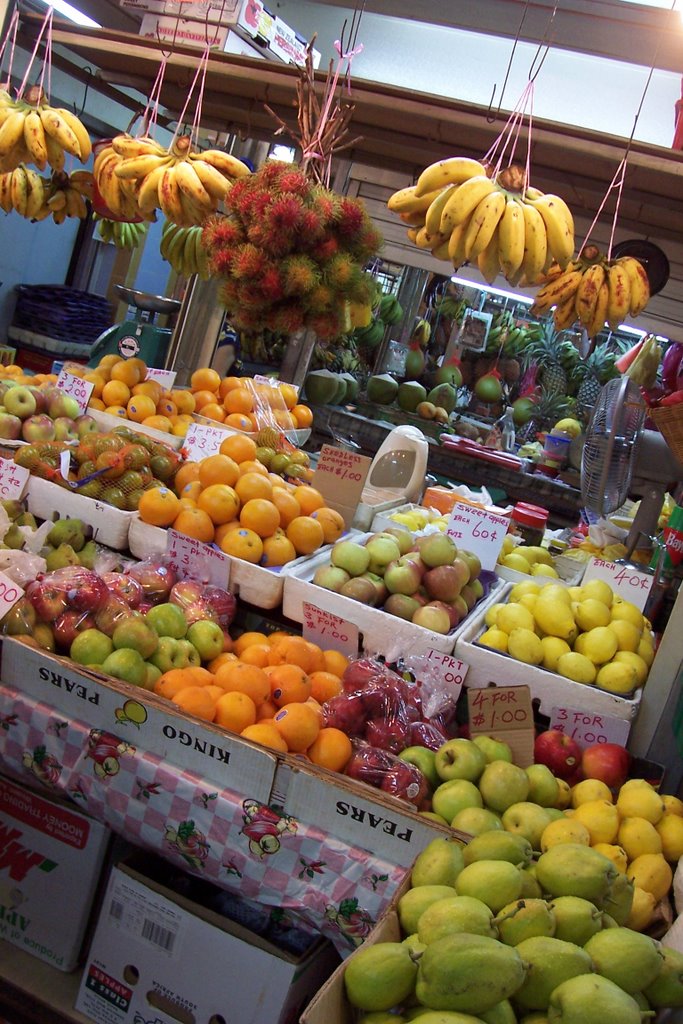
My favourite section of the market is that of the fruits. Whichever market that I am in, the fruits section never fails to bring me the fragrant smell that only fruits could bring.
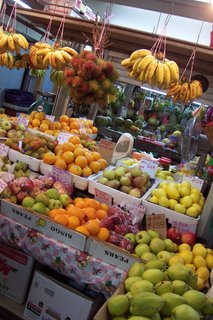


Tropical fruits, and more fruits.


Along our walk about the wet market, the guide pointed us to various interesting items that were sold in the market. For example, the "drumstick", believed by the Indians to have aphrodisiac properties. Also, we get to hear about the tonic black chicken that you would see below.
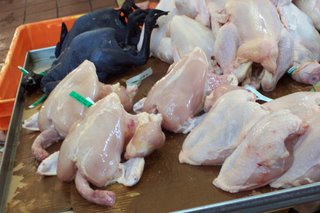


Top left: Black chicken. It has white feathers, but its skin and flesh is black.


More interesting thing awaits. This part of the tour will definitely lend the novice some insights to parrot-astrology.
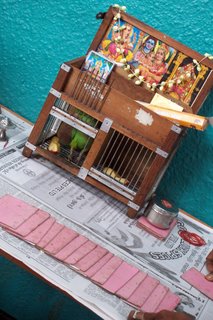


Have your fortune being told here.


This tour unravels many interesting stories about the past of Little India. Many buffaloes used to roam about in Little India. Is it a pity that we have progressed so much that people from my generation could no longer witness the rearing of buffaloes on that very same grounds?

Anyway, the tour has given me more insights to the history of this little island that I inhabit in. It also gave me more insight to the culture of the Indians in Singapore.
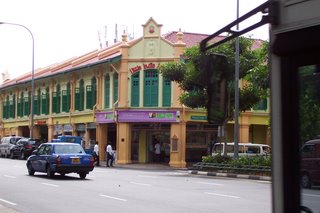


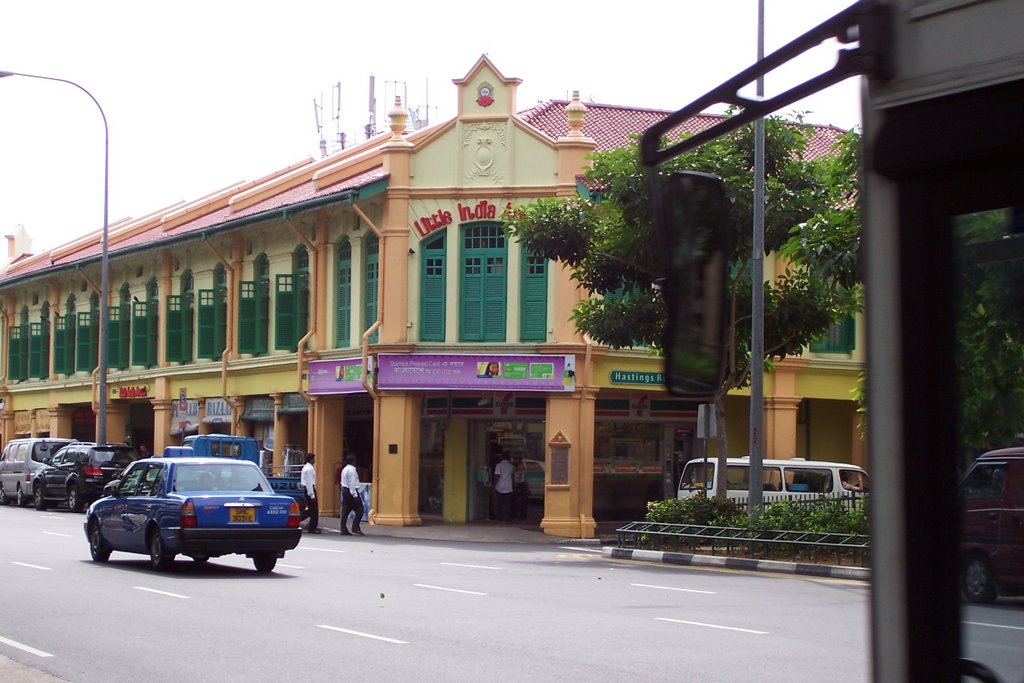
Snapshot of Little India Arcade.


One of the stops for the tour was the Little Indian Arcade. Here, I learnt more about the art of Henna Tattooing, Indian candies and even got to see a demonstration of how the Indian saris is being worn. The guide also shared with us about the pottu and the symbolic meanings behind it.
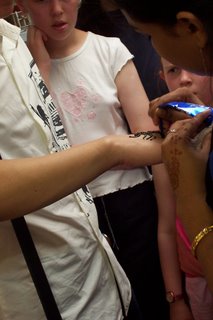


Henna Tattoo


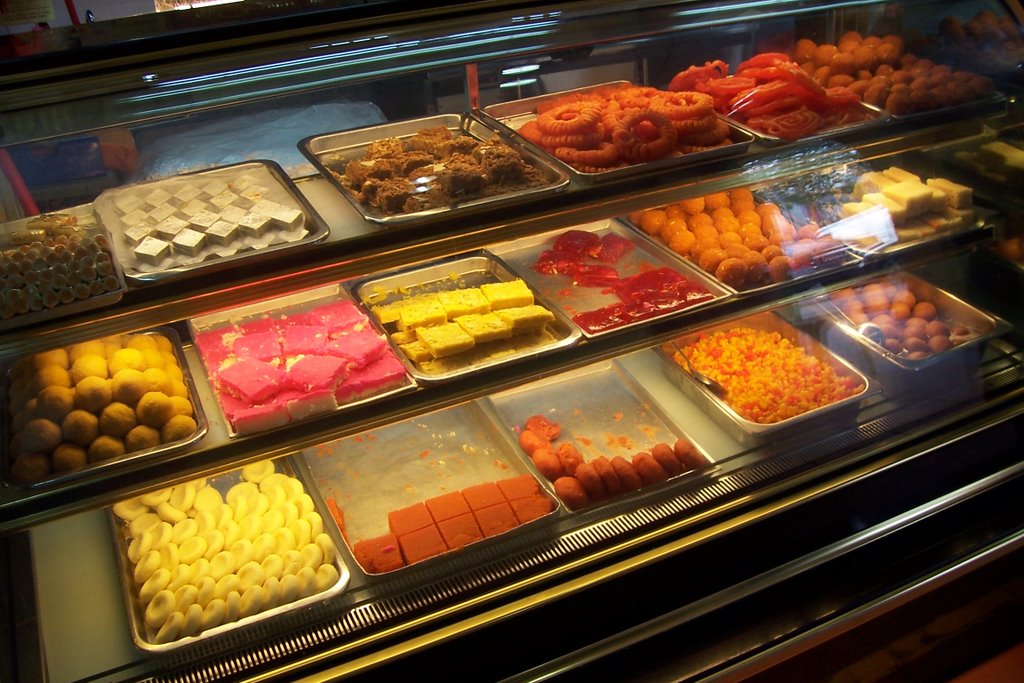
Indian candies. Some of these taste very good!


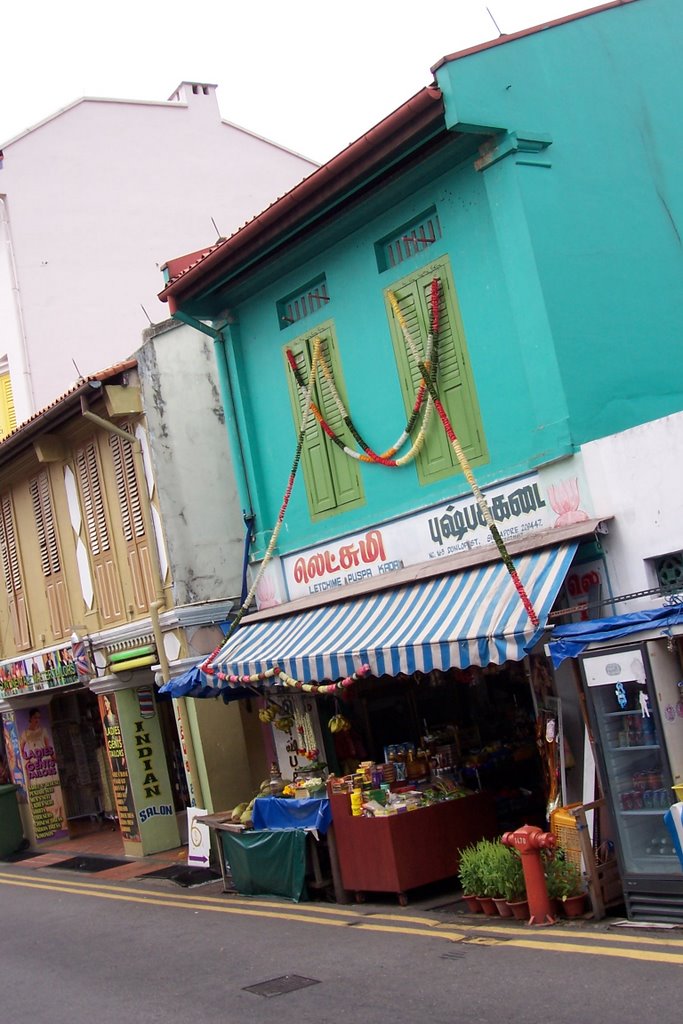
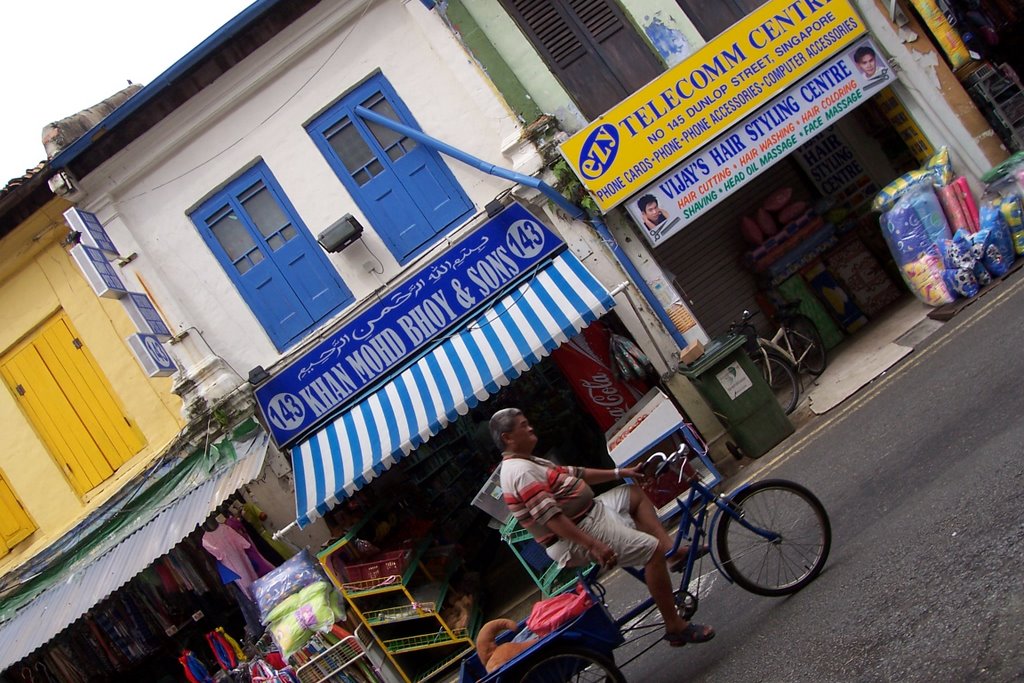
Little India is charming in its own way. Occasionally, as one walked along the streets of Little India, one may find himself welcomed by the exotic smell from the Indian spices. Some of the shop houses in the area have been existing way before yours truly was born.
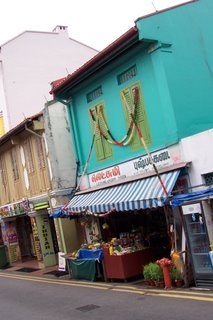
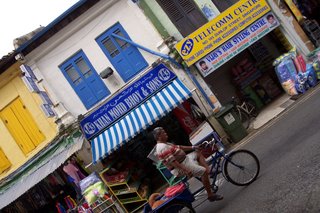


A shop selling spices and groceries.


I think I will never look at decorative items found on the doorway as simply decorative items. Look at the dried mango leaves on the doorway that you would see below. If you were to see mango leaves like these hanging on the doorway, there is high likelihood that that place of residence belongs to an Indian household. If you want to know why this is so, please ask the tour guide.
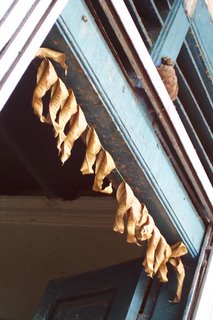


Those dried leaves hanging at the doorway are mango leaves.
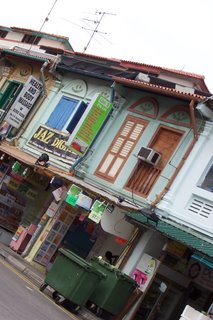


Walking along streets of Little India.


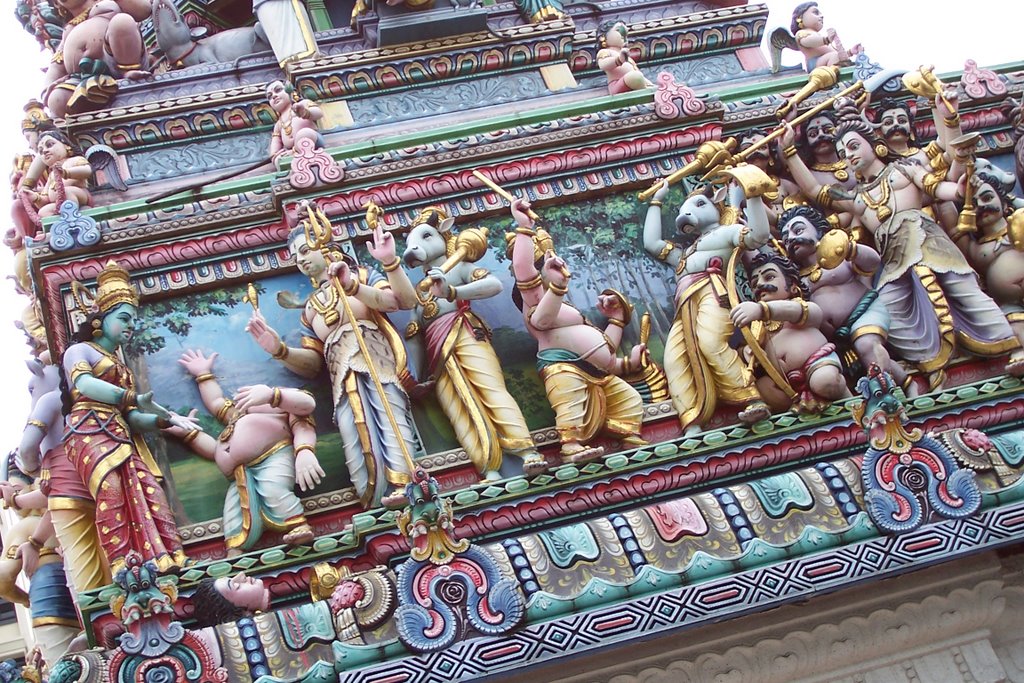
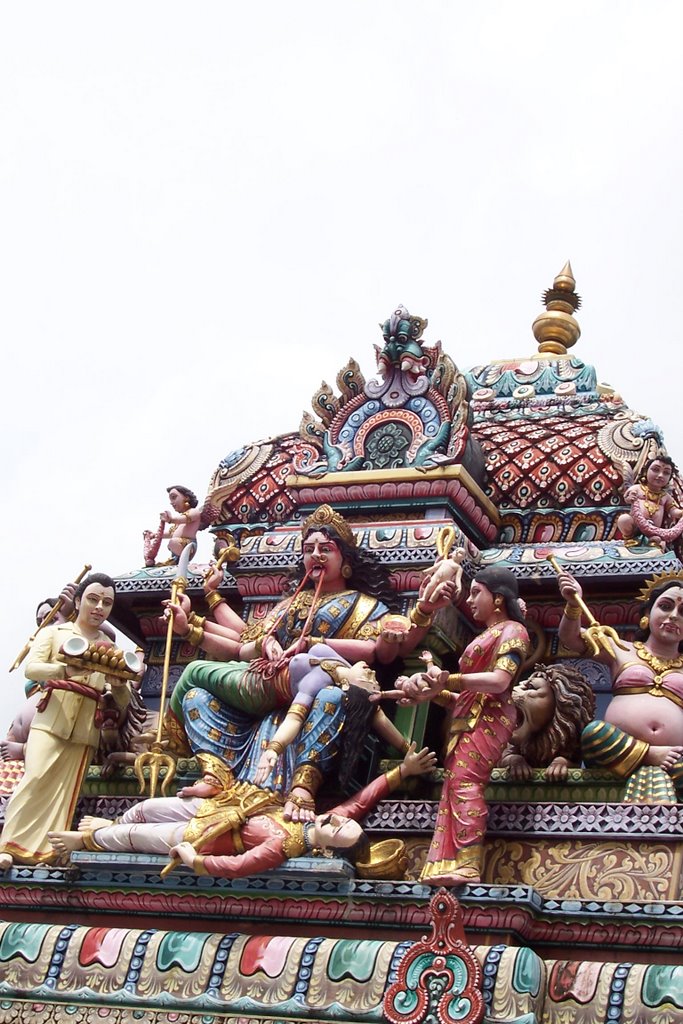
One of our final stops was the Sri Veeramakaliamman Temple. Here, I learnt a little more about the Hindu religion. Thanks to the guide.


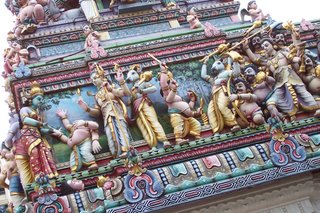
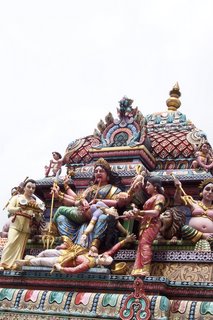
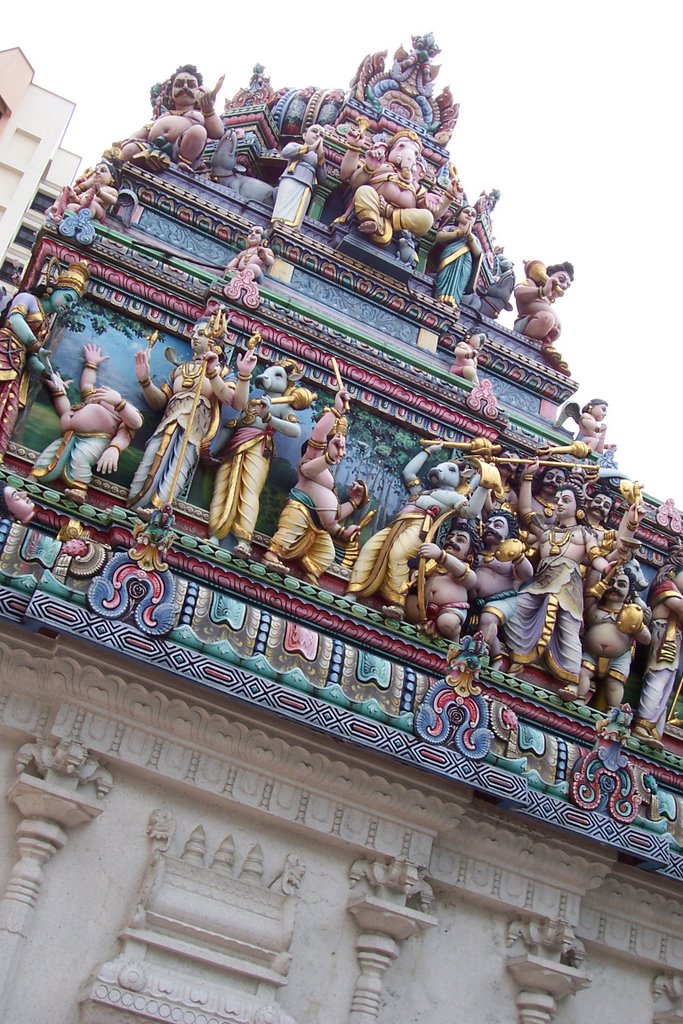
Sri Veeramakaliamman Temple.


The statues here all tell the story of Ganesha.
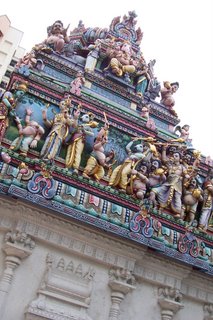


Could you find the Statue of Ganesha?


The statue with the long tongue represents the protector of babies. She's looking fierce, in order to deal with the evils.


Finally, the tour was concluded at an open space nearby the Sri Veeramakaliamman Temple. Certainly, this tour has been an educational one, even for a local Singapore citizen like myself.

As I part from the rest of the group, my eyes were attracted to the colourful garland from a shop nearby.
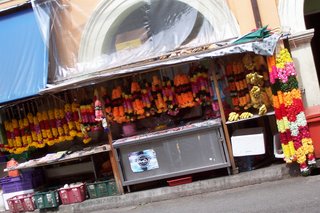


I couldn't agree more that Little India is full of life, colours and more. And if you are still deliberating whether to go for this walking tour or not, do consider the former option too.

Information on this tour can be found here: http://www.journeys.com.sg/singaporewalks/tours_dhobis.asp

Saturday, June 03, 2006

In praise of the Chinese

This must have been a long overdued post. I visited the Hua Song Museum about a month ago. Located very nearby the Haw Par Villa, its name Hua Song means "in praise of the Chinese (Community)".

In a nut shell, I read that " Hua Song is a one-stop centre for visitors to learn (about) the stories of Chinese living around the world." (Source: http://www.huasong.org/about_huasong.htm)
When I first entered the Hua Song Museum, I felt I had entered the wrong place. Instead of being greeted with what I expected to be a museum set-up, I was faced with a Chinese restaurant set-up. I realised that the museum is combined with a in-house restaurant, Made in China, that serves Chinese cuisine. So if one is keen on fine dining before or after visiting the museum, one can conveniently enjoy fine Chinese cuisine within the compounds of the museum.

I made my way to a counter in the restaurant and made purchase for the admission ticket. Then, I was ready to tour the museum.


The Chinese junk. Somehow, it seems that the Chinese junk would often be featured if we were to speak of Chinese migrants and how they had travelled to various parts of the world in the much earlier days?


I remembered that one of the first exhibition rooms is that of The Long Road. It describes about the origins of the Chinese migrants. That long walkway that one has to walk through to the next exhibition room seems to give me a sense of the uncertainties that migrants might have felt when they left their homeland in search for opportunities overseas.

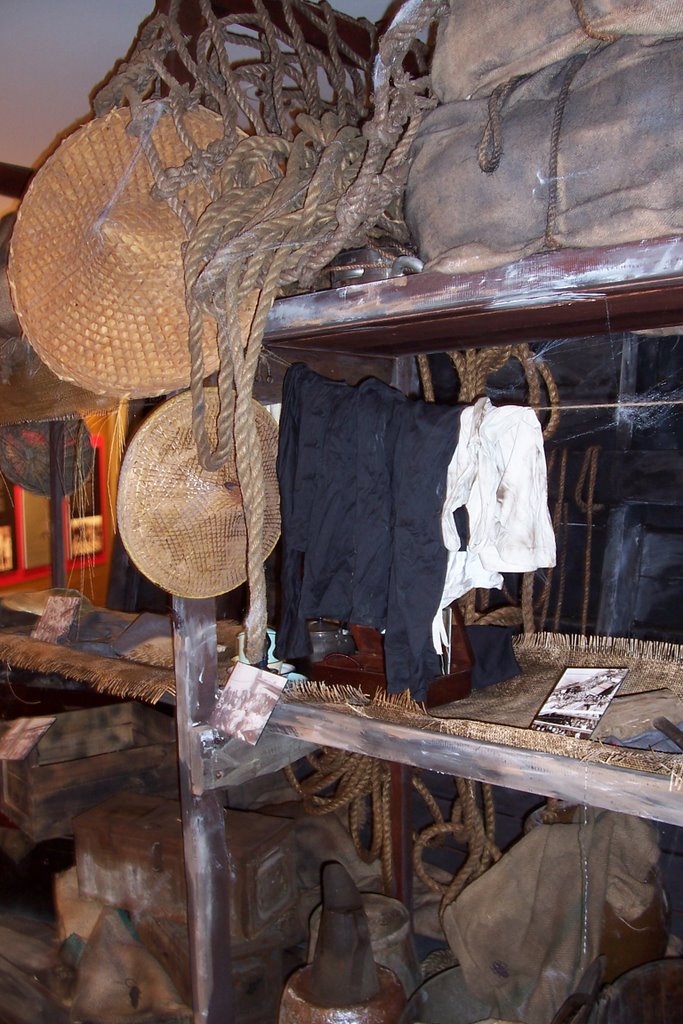
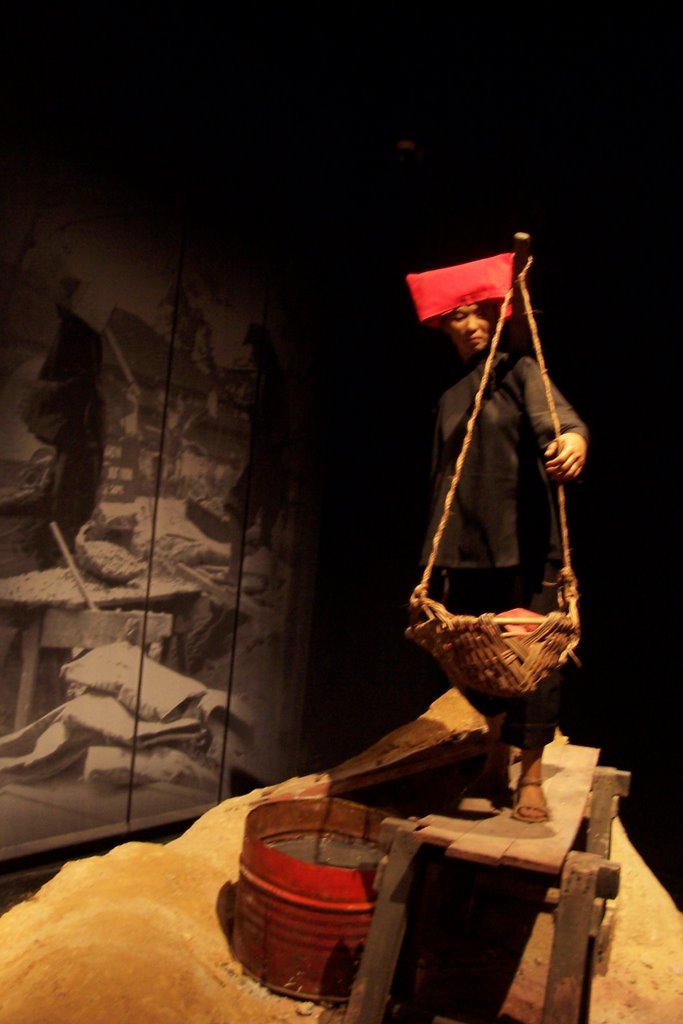
At the next exhibition gallery, Floating Hell, there is this model that you will see below. It depicts the harsh conditions that some of the Chinese migrants had to endure when they sail to the new lands.


I took time to read a chart containing information regarding the estimated number of Chinese living in various parts of the world. It looks like there are traces of Chinese in many parts of the world. (See photo below)


I particularly like the exhibition gallery titled The Survivors. In my own understanding, this section touches on how the early Chinese immigrants had to bend and blend in to survive. If there is anything I could learn from the stories of these Chinese immigrants, it is that of resilience and adaptability.


The Samsui Woman. I quite like this one, it seems to tell that women can be independent and be equally good performers as men.


The Ma Jie.


The Railway Worker. I remember reading that many Chinese workers were employed in the building of America's railroads.


There are more to discover about in The Survivors gallery, so I shall not reveal too much. Check out for yourself.

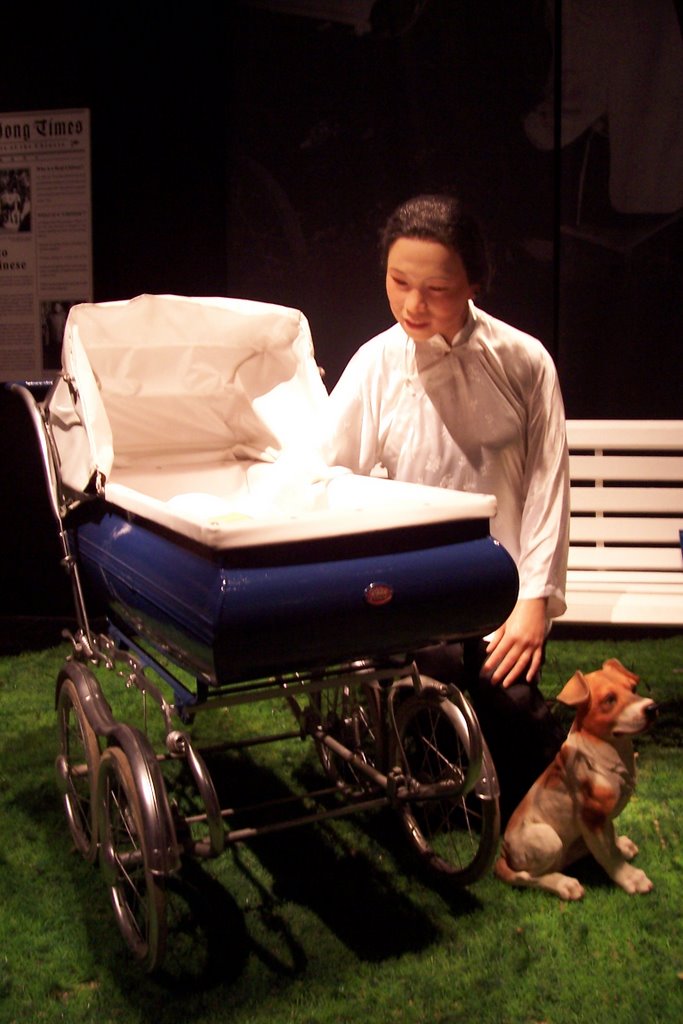
The next gallery is the En En's Kitchen. Here, one finds a replica of a typical traditional Chinese kitchen. When I was there, there was a family of four (with two young children), and I could see that the children enjoying themselves. There were spices put on display meant for visitors to touch, and the children of course helped themselves readily.


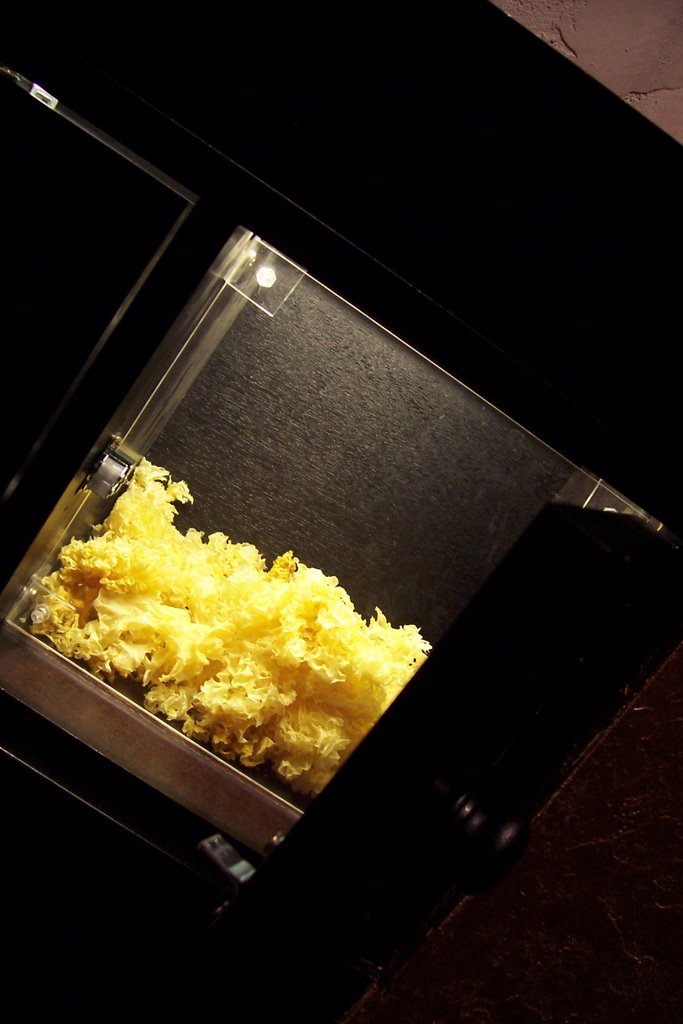
Have a closer look at the White Fungus used in some Chinese cuisine.


The Chinese Kitchen.


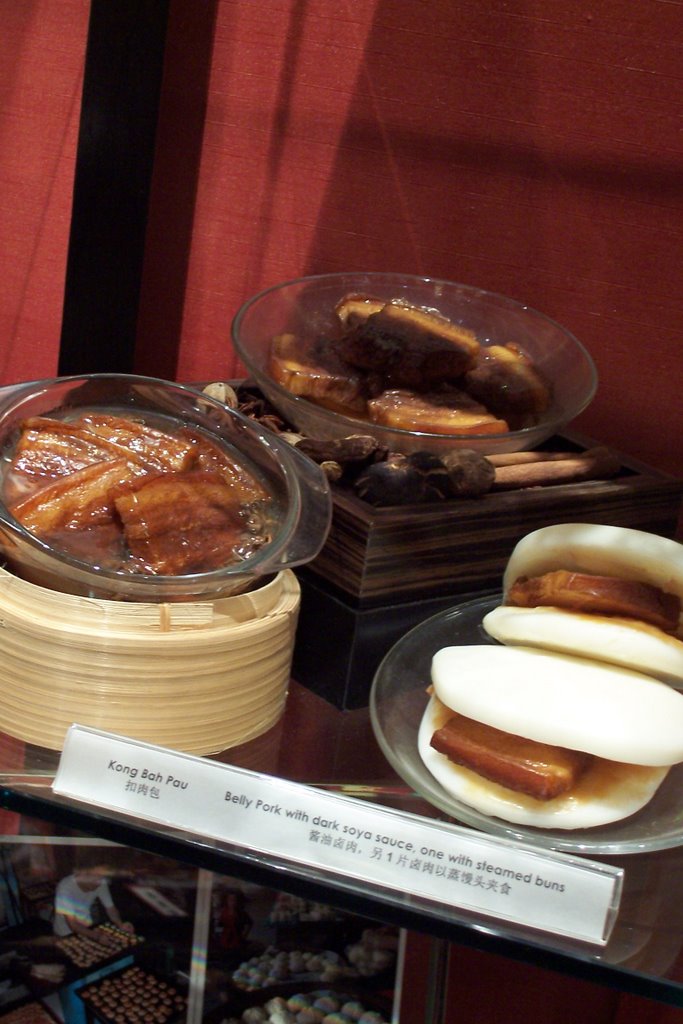
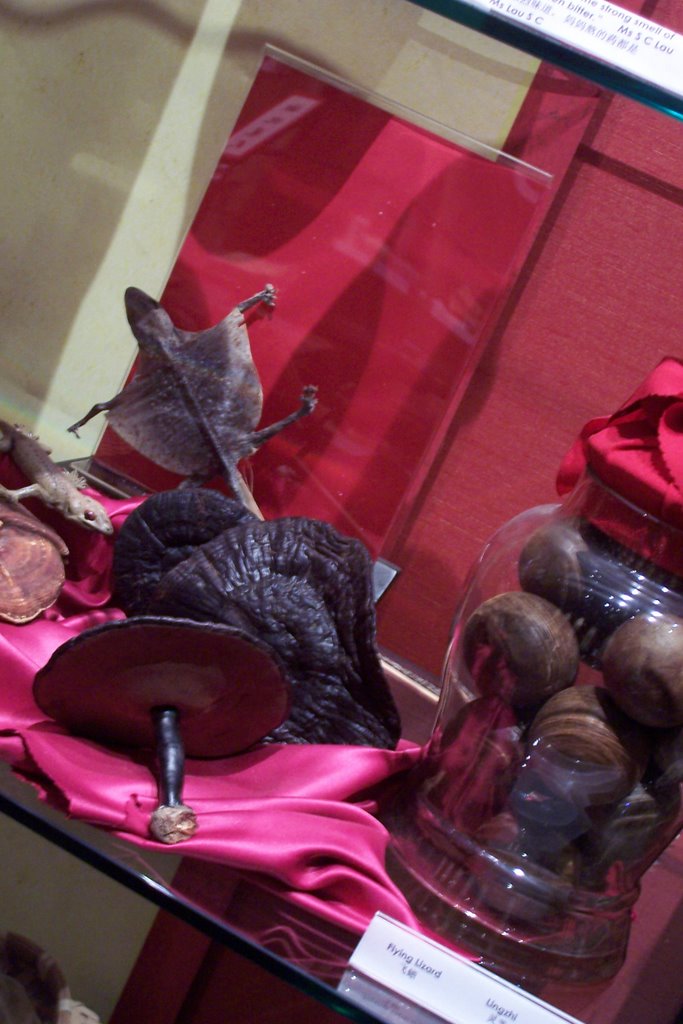
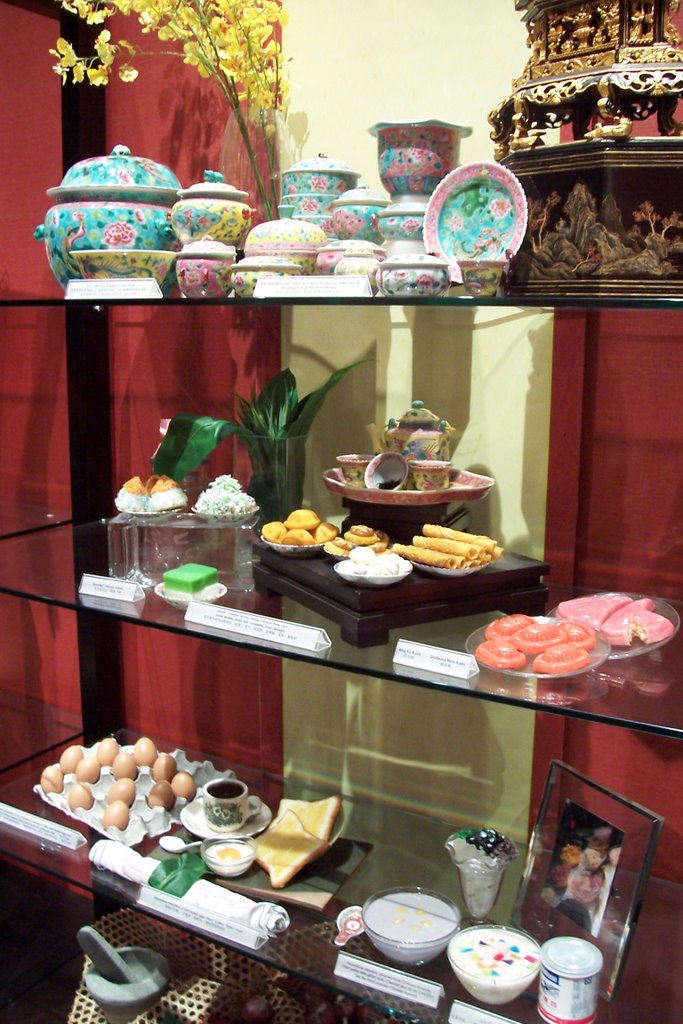
The Grand Food Hall tells interesting facts and stories about Chinese food. Warning: The exhibits may not be real, but they may make one feel hungry. One needn't worry too much, real food can be found nearby, from the in-house restaurant.


On the right, Belly Pork with steamed buns.


Exotic items for one's diet. Flying lizard and more.


Some herbs used by the Chinese.


Don't you feel the craving for food by now?

For the visitor's information of Hua Song museum, check out this link.

***
More posts on Hua Song written by other bloggers can be found below: