Sunday, November 05, 2006

Culture Clubbin' at Malay Heritage Centre


On 4 Nov 06, I was at Sultan Mosque to check out the Singapore Biennale 2006 exhibits there. The Malay Heritage Centre was within walking distance away. As such, I was able to kill two birds with one stone, and visit these two places on the same day.

There was a special event: Culture Clubbin' at the Malay Heritage Centre that day. The event was the Explore Singapore! Opening Special.

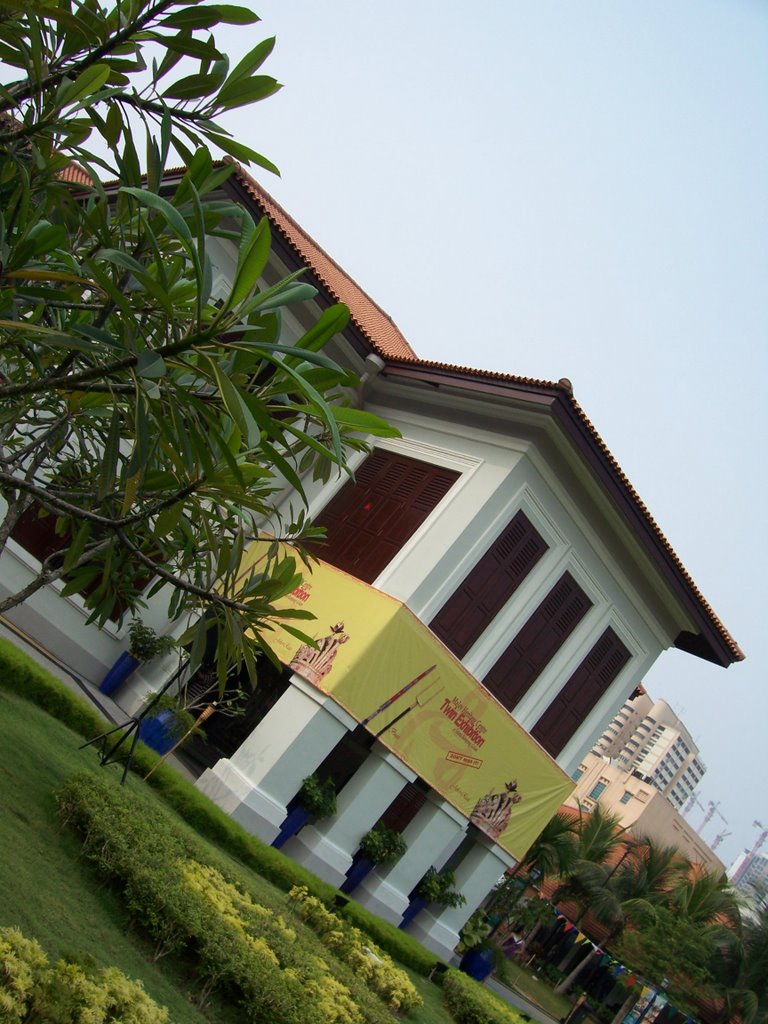
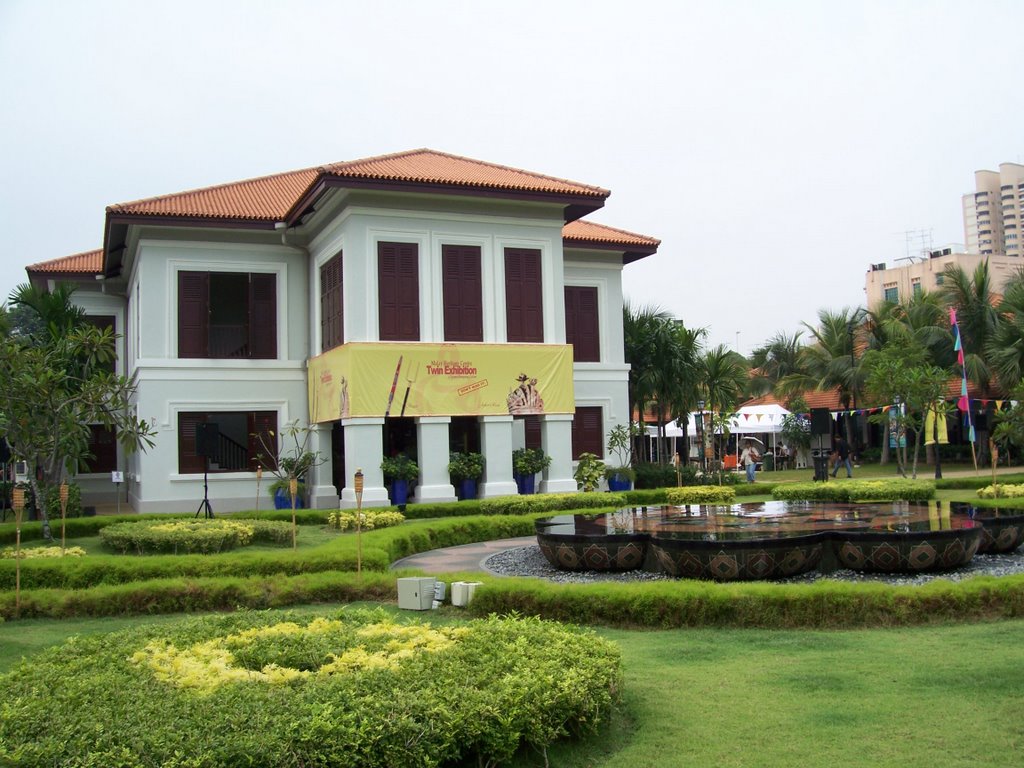
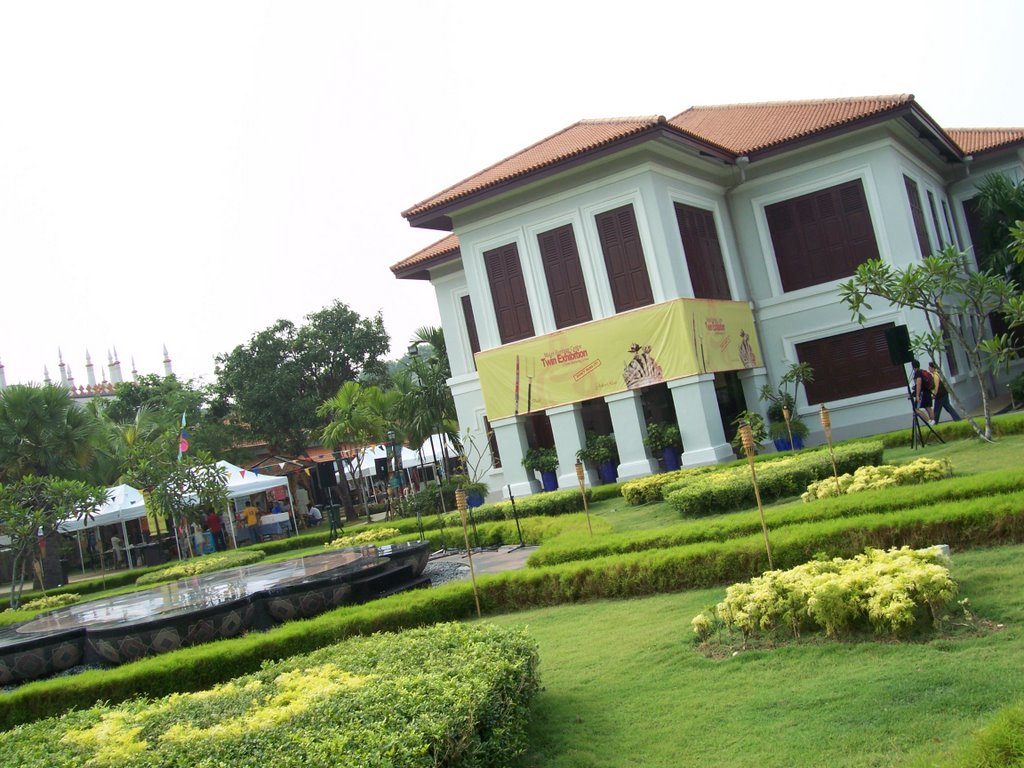
I particularly like the outdoor landscapes of the Malay Heritage Centre. It has one of the most beautiful landscapes in the Kampong Glam area. It was no surprise when I realised that I have captured quite a number of shots of its beautiful landscapes.
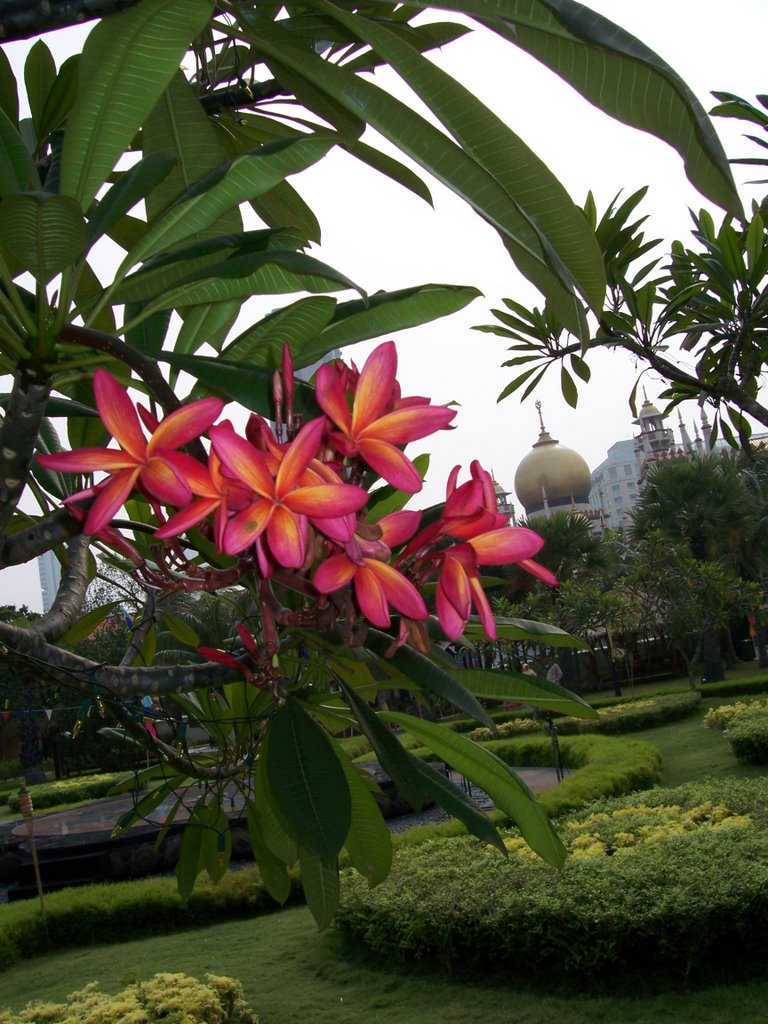

I had to wait for the sun to move a little before I can get Sultan Mosque to appear visible in the background.


The volume of the music at the event was too loud for my ears. I could only try to cope but trying to be as unresponsive to the rest of the world as possible. I had ear plugs with me but decided that it was too much of a hassle to have them put on. Personally, I think the music did not quite suit the landscapes of the Malay Heritage Centre. However, it seemed to be quite appropriate for the street art exhibition held in conjunction with the event. I might have been able to bear with the music if it were much softer in volume.

Since I was there, I decided to check out the Malay Heritage museum and Twin Exhibition featuring Bugis & Johor-Riau-Lingga Star Exhibits. I had visited the museum about a year ago, and I felt quite disappointed yesterday as I did not notice much major improvements in the exhibits since my last visit.

Nevertheless, there were good things about the museum that kept my disappointments to the minimal. I felt pleased to see a photo of the previous Sultan Mosque that was completed completed in 1826, with its double-tiered roof. I quite like the multi-media interactive station found in the gallery describing the past of Kampong Glam. In the museum, there stood a replica of a room of a kampung house on stilts. It was nothing new to me, but it still felt nice to walk into it.

In general, I felt that while there was much historic value behind each of the exhibits and collections, there was a lack of substantial historical research to weave together the story behind the historically significant Istana Kampong Gelam (now known as the Malay Heritage Centre) and the rest of Kampong Glam area. I felt that I was merely entering a gallery housing a collection of items from the past, but I did not gain much insights to the rich past and heritage of the Kampong Glam area and its community. Anyway, the beautiful outdoor landscapes helped make up for the disappointments that I had felt.

The temporary exhibition, the Twin Exhibition, has a fairly good collection of important artefacts. However, I felt there was a lack of information to educate novice like myself on how to appreciate the cultural and historical significance of these artefacts. As such, while I was aware that those artefacts were important and priceless, I left the exhibition gaining almost little insight to the cultural heritage of the Bugis and the Johor-Riau-Lingga period.

If I were asked to give a feedback, I would suggest that the museum organise regular guided-tours to guide visitors to the exhibits in the museum. This may help make visitors' visit more enriching and meaningful. Perhaps the guides of the guided tours could be volunteers who have lived in Kampong Glam for many years. What better ways to learn about the heritage of Kampong Glam and the community there than to hear these from these folks?

Hopefully, there could be more donors to this centre, and perhaps with more funds, the Malay Heritage Centre could have enough resources to engage researchers to conduct in-depth research on the history of Kampong Glam and the heritage of the various communities that live or had lived in this area.


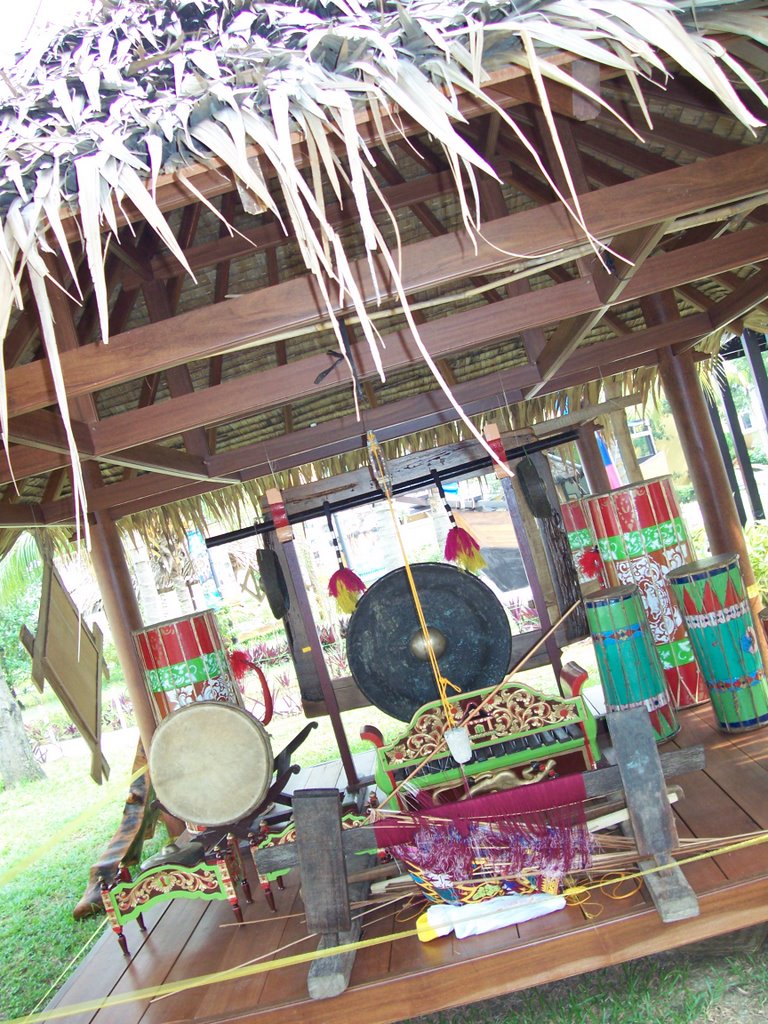
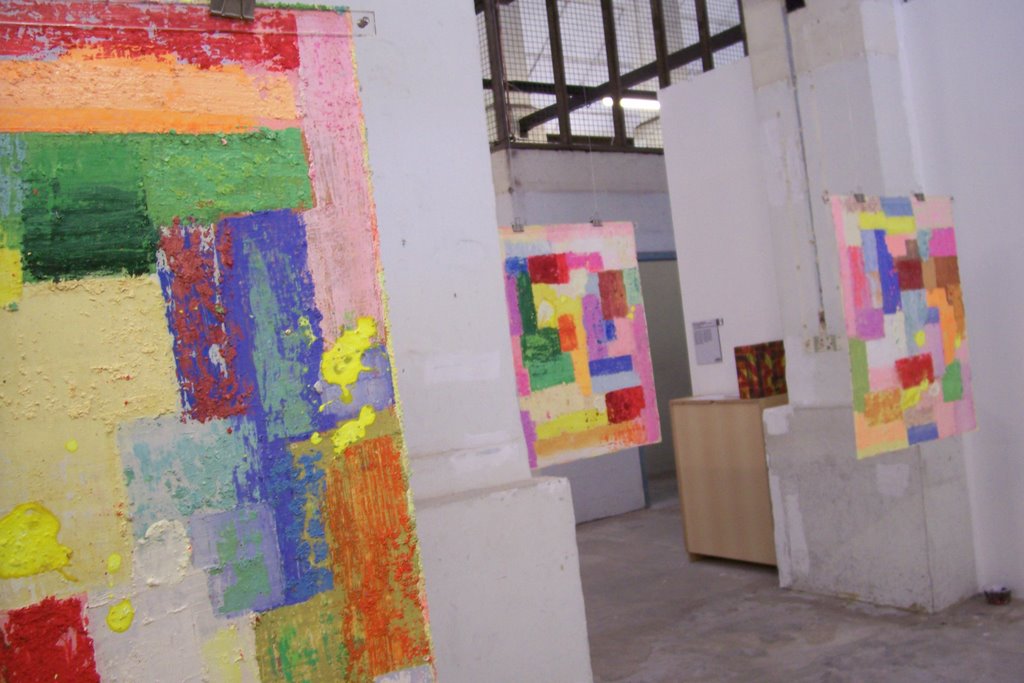
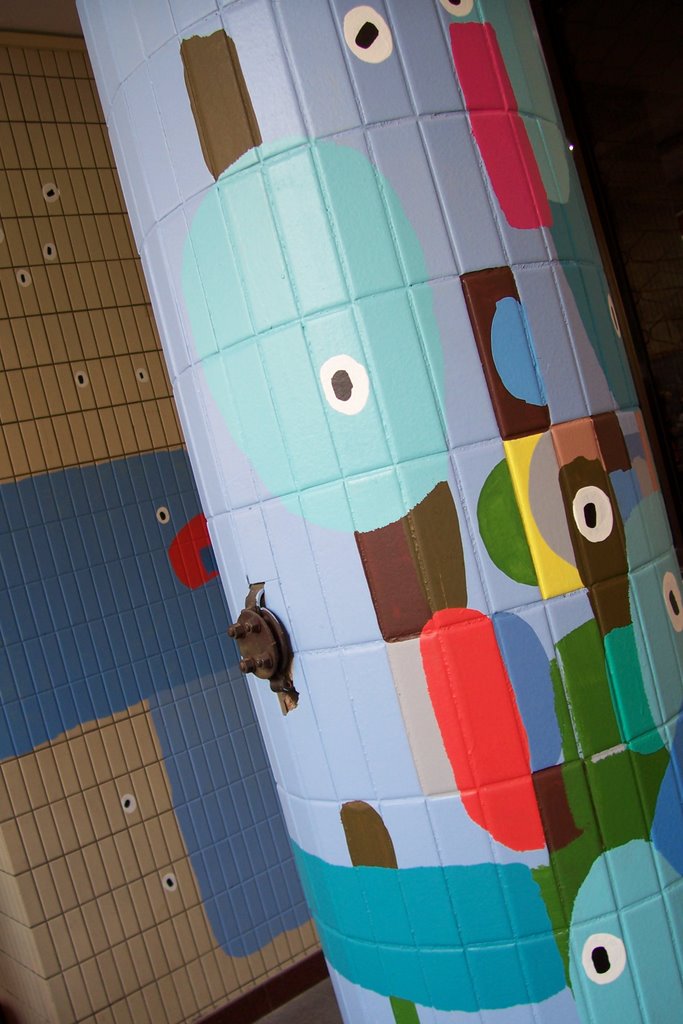
The museum does not permit digital photography within its premises. As such, I only had the permission to take a photograph of the above exhibit which permitted photography. I like the striking colours of this exhibit.

After visiting the museum, I checked out the street art exhibition that was part of the Culture Clubbin' event. In addition, I was quite attracted to the signboards below. I like the lines, they look cool!
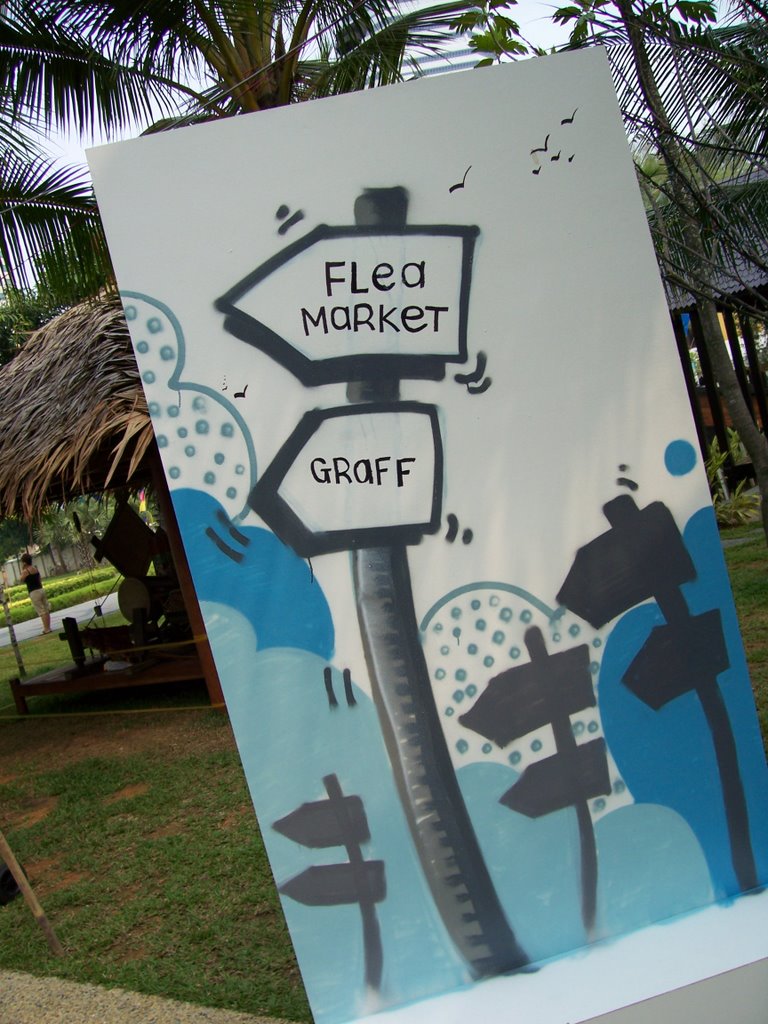


Yet, I still like the outdoor landscapes so much better.


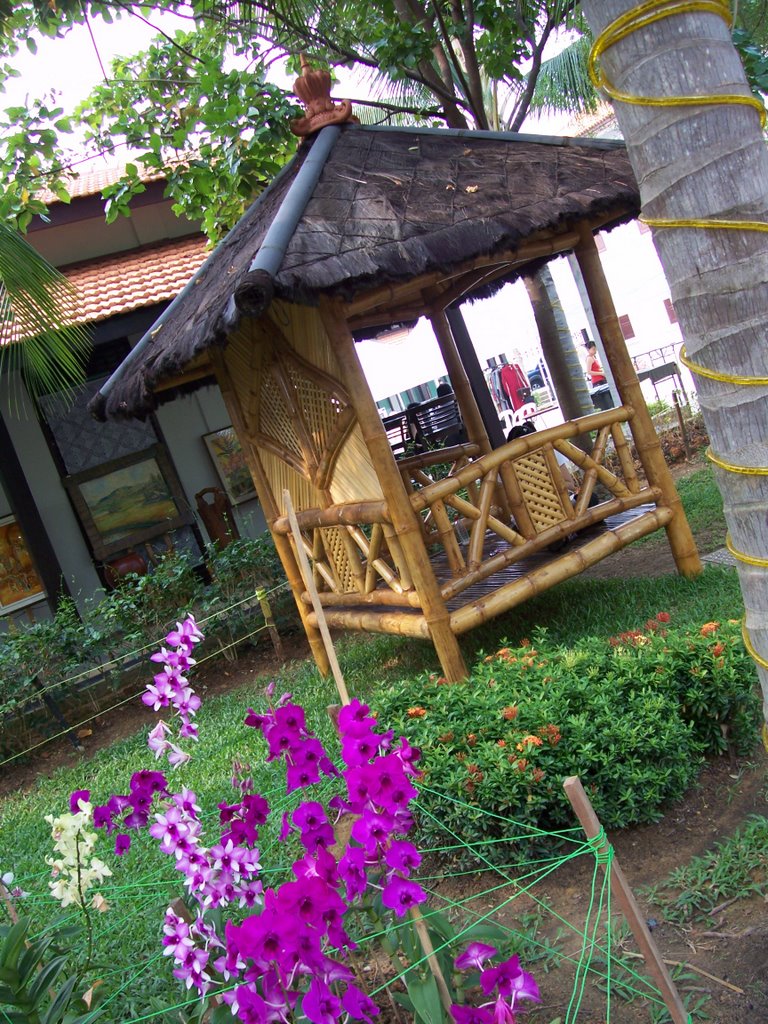
I was particularly fascinated by the thatched roofs that I saw on a few of the structures.


Closed-up of a thatched roof.


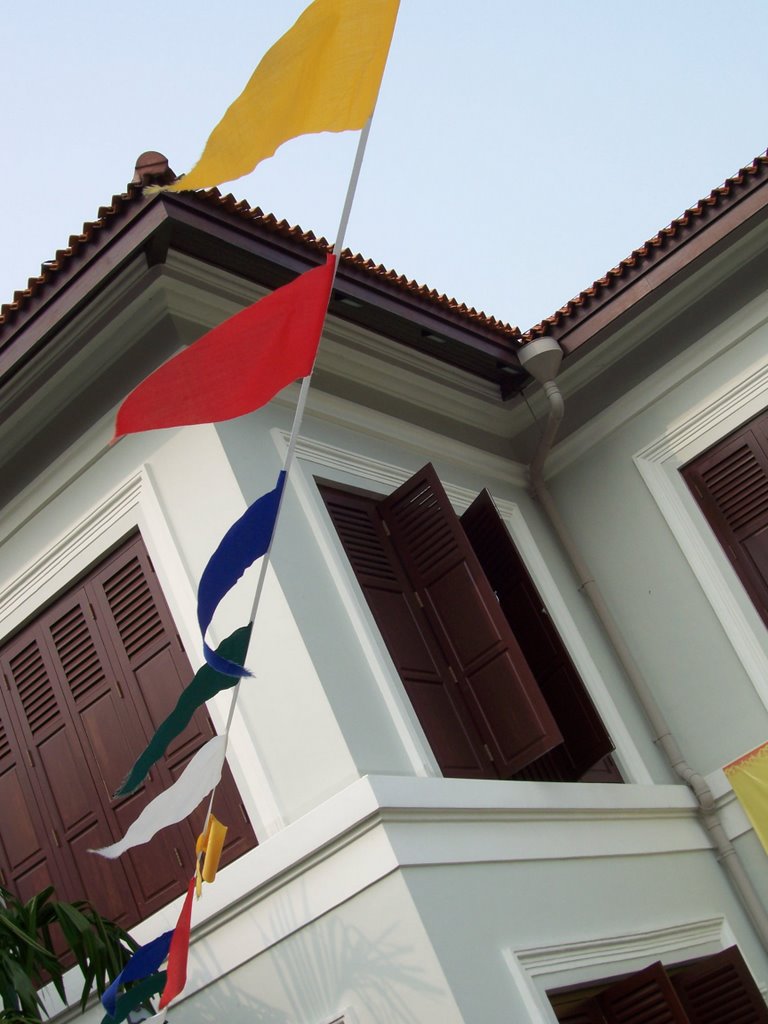
When I was at the Malay Heritage Centre, there was some private function at the nearby Gedung Kuning, and I could not help but like its bright yellow walls.


I left the Malay Heritage Centre fairly early. As such, I had missed the performance by Mak Yong Kedek. Before I had left the Malay Heritage Centre, I had overheard the members of Mak Yong Kedek rehearsing at the backyard, and they sound very good. Good rhythms and an infectious zest.

A few fellow bloggers had the good fortune to catch Mak Yong Kedek's performance, and they have blogged about their experience at Culture Clubbin'. Check out their posts:
- Culture Clubbed at MHC by Toycon.
- Getting into the Rhythm by Tym.

***
There are more events lining up as part of the Explore Singapore! Campaign (Nov 06 - Jan 07). For information, please check out: http://www.yesterday.sg/explore/main.html

SB2006 site at Sultan Mosque


One thing that I like about the Singapore Biennale 2006 (SB2006) is the choice of its exhibition venues. The exhibition venues, in my opinion, complement the theme of the Biennale: Belief.

I travelled to Sultan Mosque yesterday to view the SB2006 exhibits at that site. The Sultan Mosque has a rich history and I urge that readers take some time to read about it: http://www.singaporebiennale.org/venues-sultanmosque.html
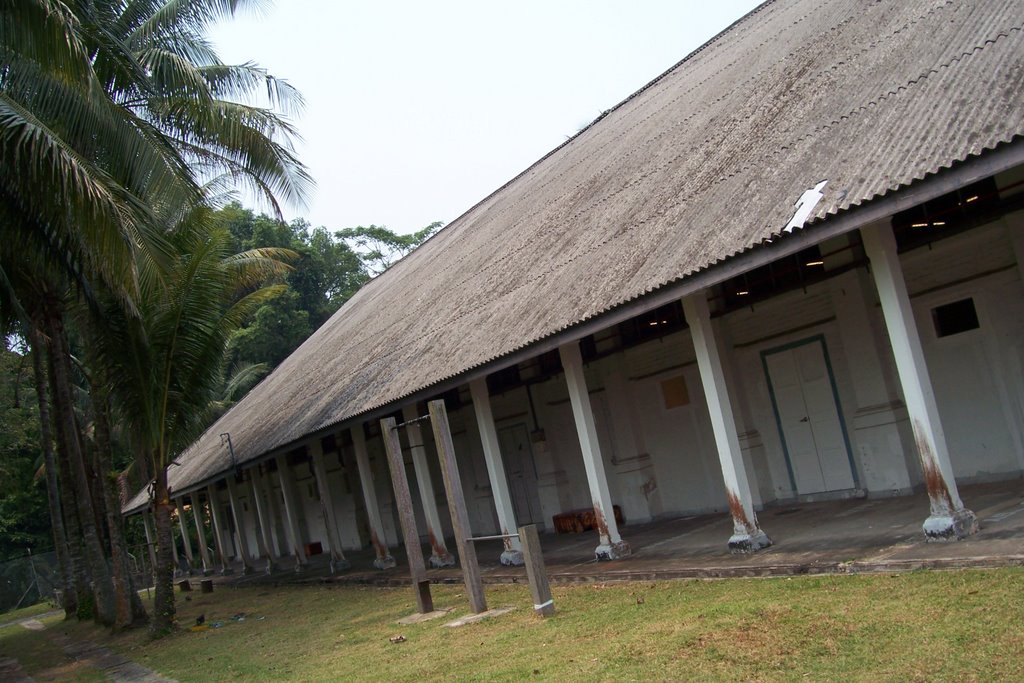
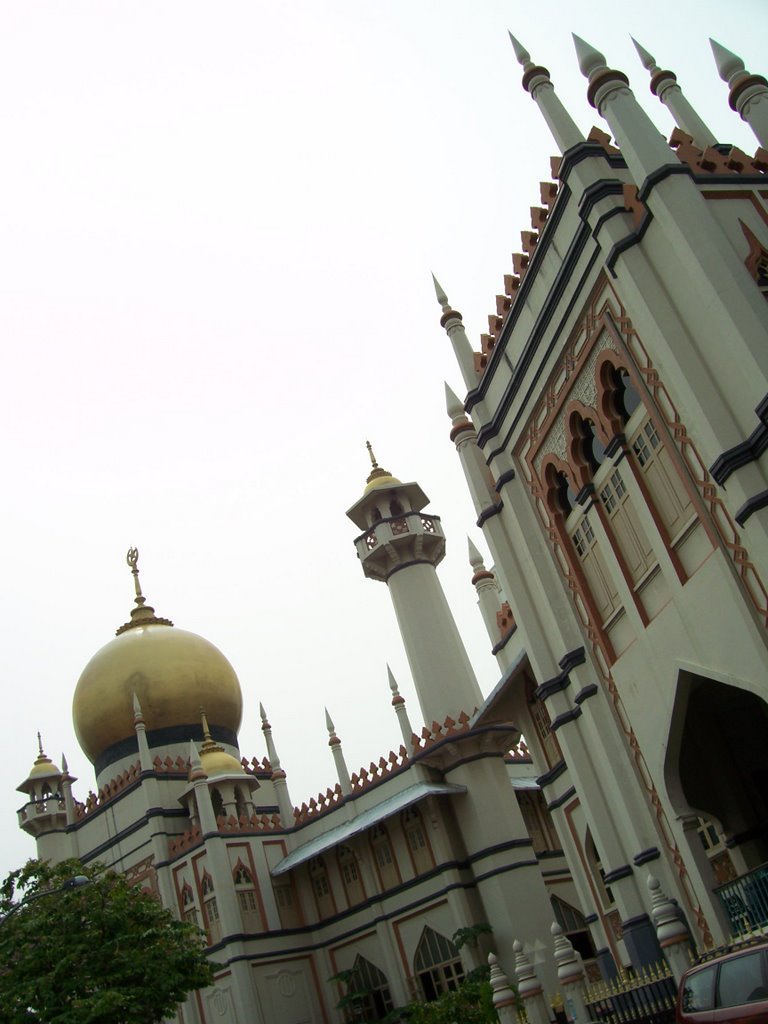
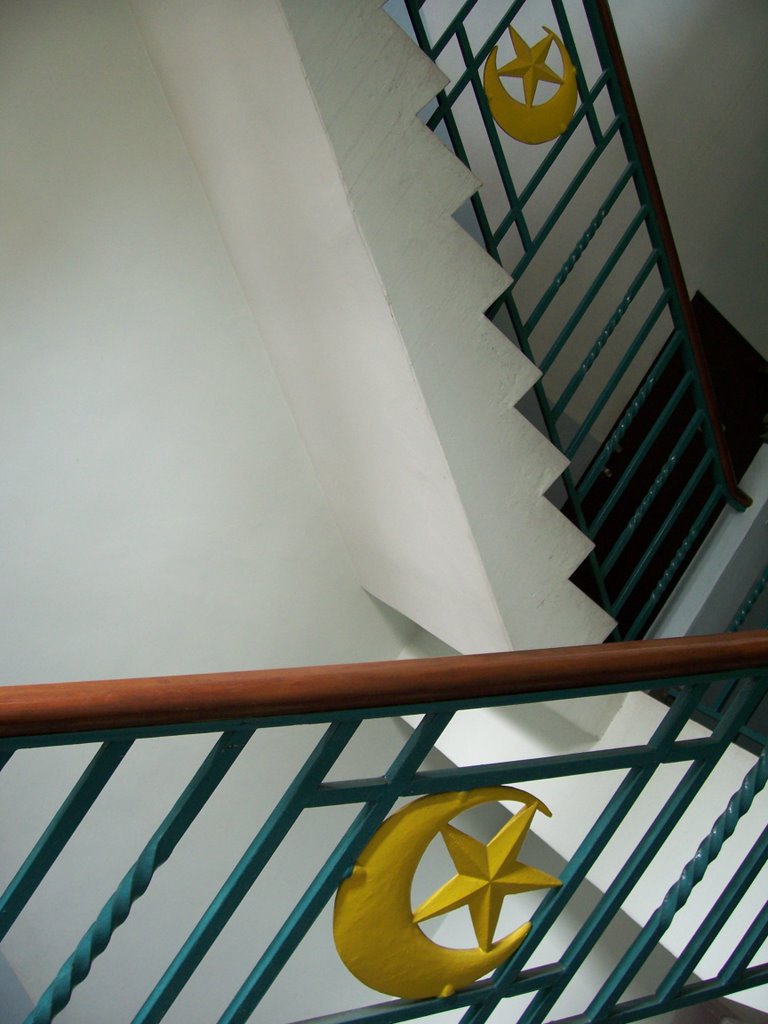
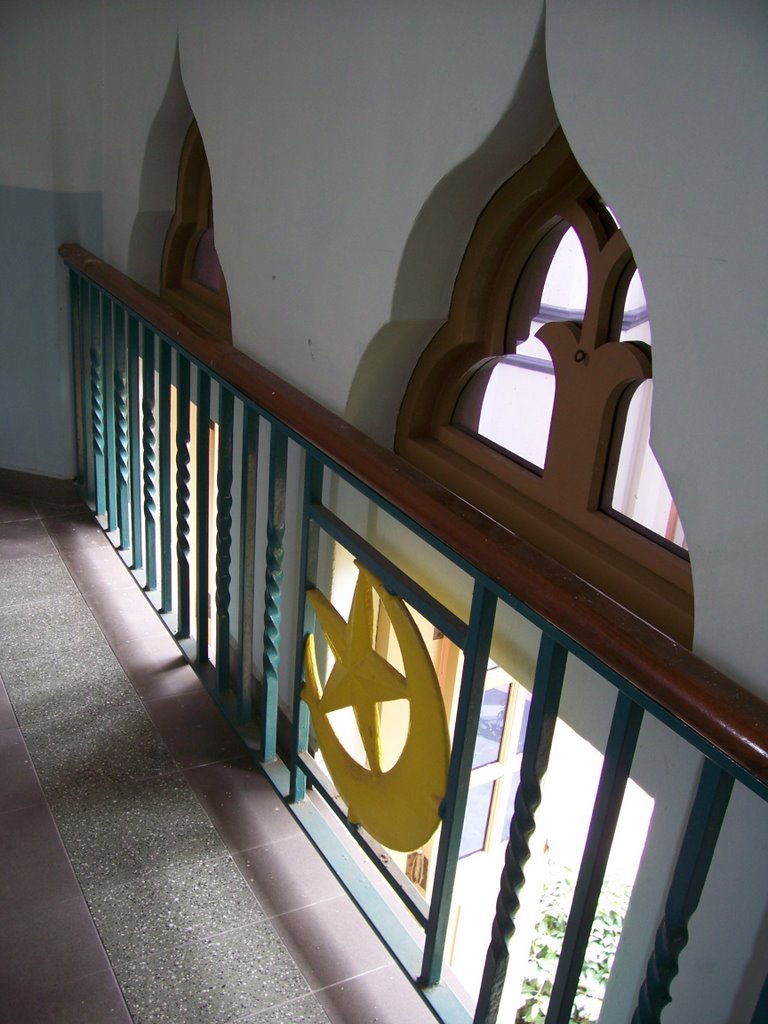
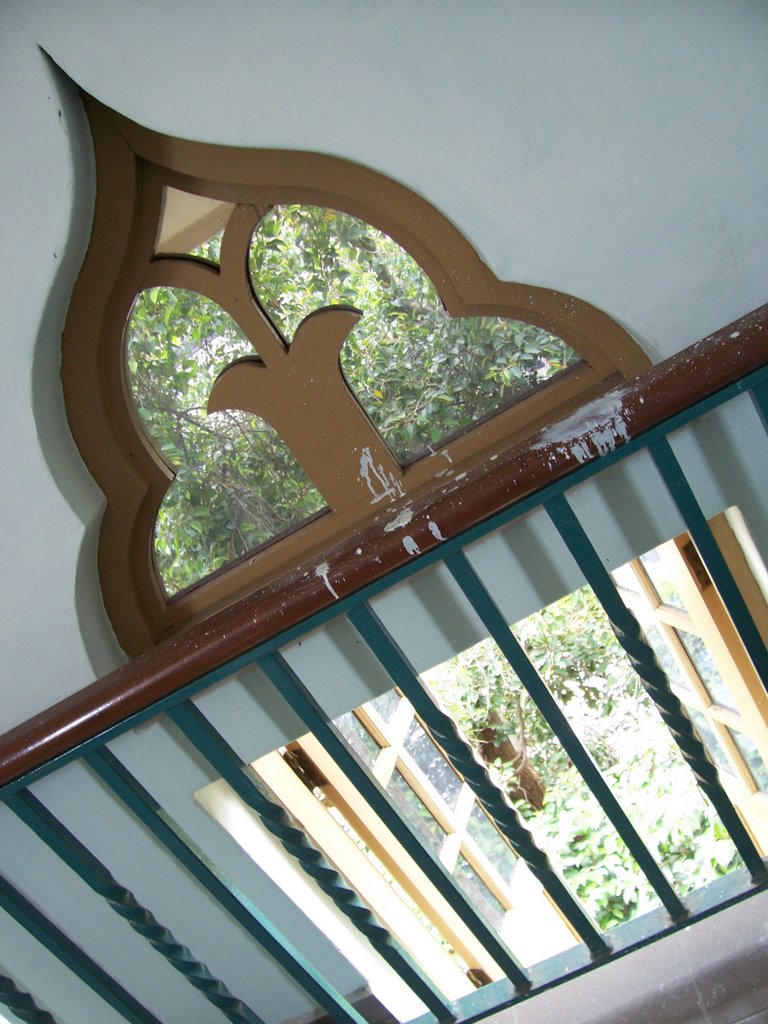
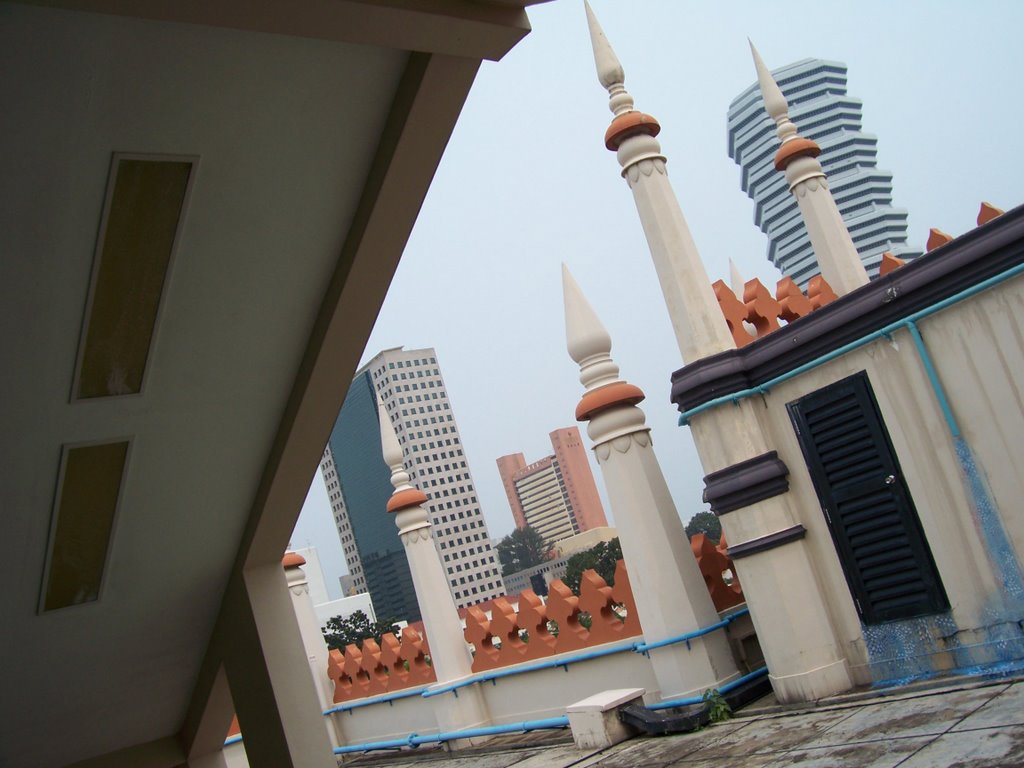
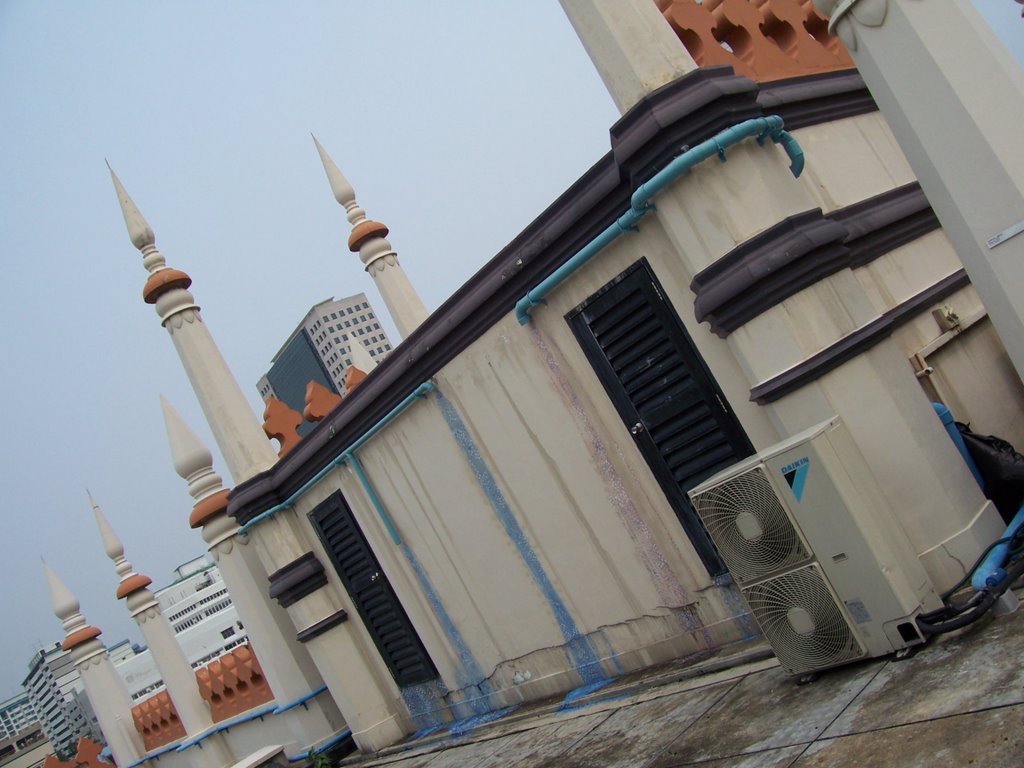
At Sultan Mosque, the exhibits for the Singapore Biennale 2006 are found at the basement, the third level and the roof-top of the Annex building. As I walked up to the roof-top, I found myself fascinated with the designs of the building.

I like the simple yet dignified design of the stairway.


I was attracted to the designs of the window-frames.


On the roof-top, I saw some interesting views. I could not help but capture these using my camera.


Kampong Glam. This is for Kunstemaecker. The white building in the background is the hotel that he had stayed in when he was here last December.


Aerial view of the Malay Heritage Centre, and more of Kampong Glam.


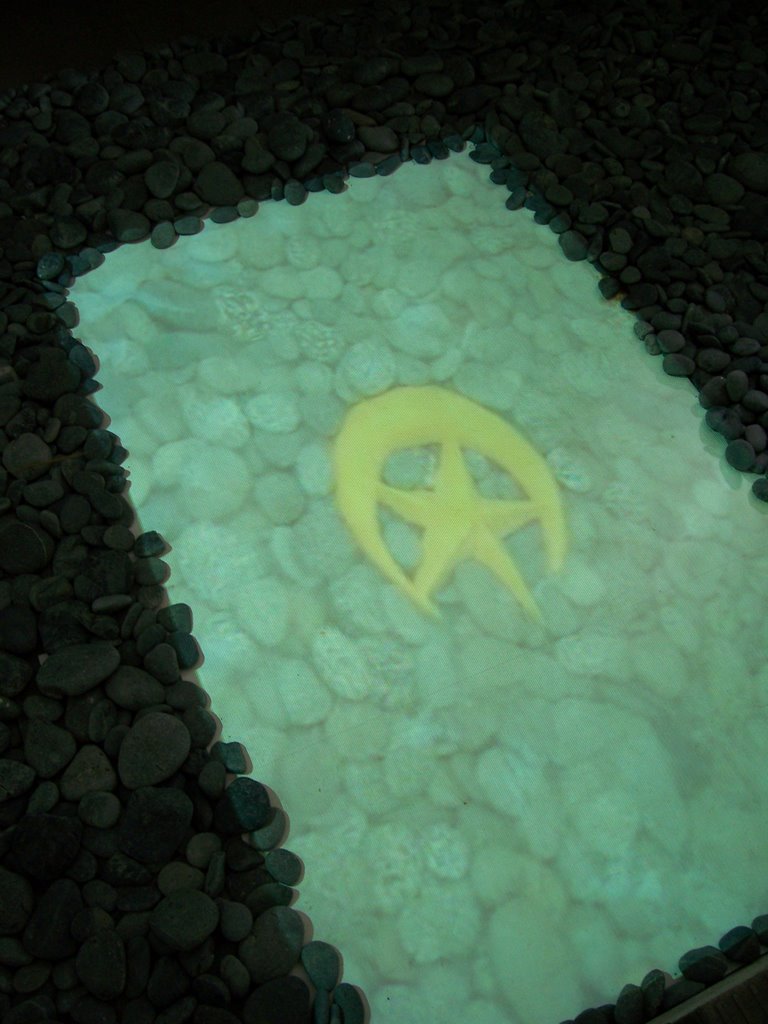
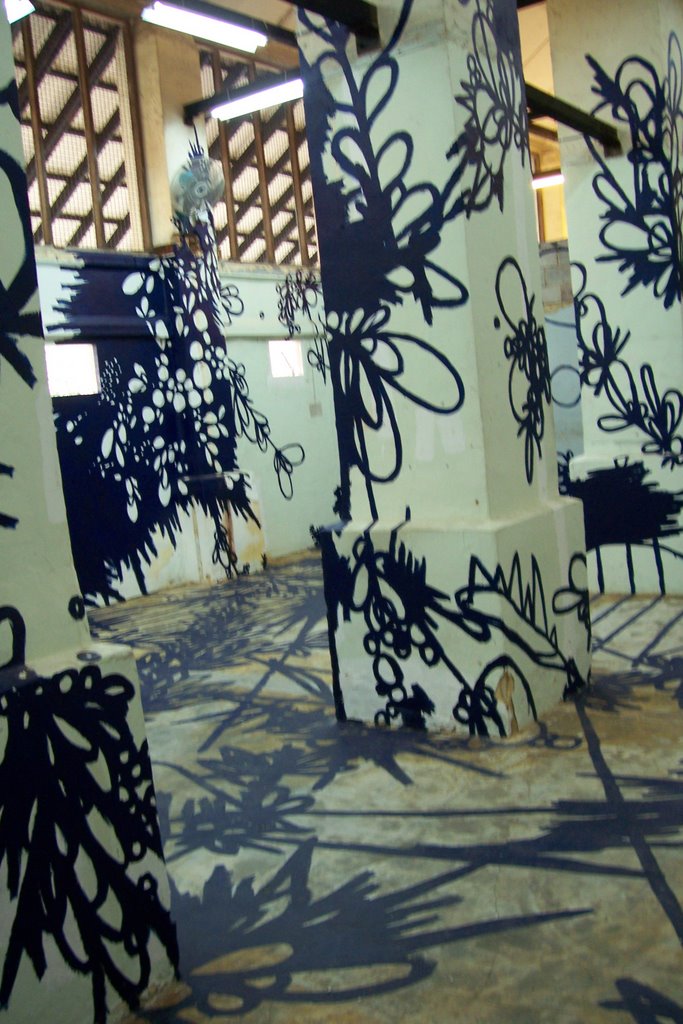
I particularly like Qureshi's Wuzu 2 and the ingenious way that Qureshi has marked the walls and floors (see below).


On the third level, the visitor would be treated with Abdul Aziz's Ten Triangles. I like the way that she uses her background in Mathematics and Science as her main source of inspirations for her works. Ten Triangles employs an organised geometrical system that I have yet to understand. What I can say for sure is that the work itself looks pleasing and balanced.

At the basement, one can find Jennifer Wen, Ma's Alms and Qureshi's Wuzu 1.

Wuzu 1


I can say that the Sultan Mosque is quite a good choice of venue to house the exhibits displayed there. As I viewed the exhibits, I cannot help but to think about how geometry influences Islamic art, and how the Islamic religion and culture have guide the lives of its followers. It struck me that our beliefs have strong influences on our behaviours, and that they shape the way we perceive the world.

After visiting the SB2006 site at Sultan Mosque, I walked about to enjoy the beauty of the Kampong Glam area.


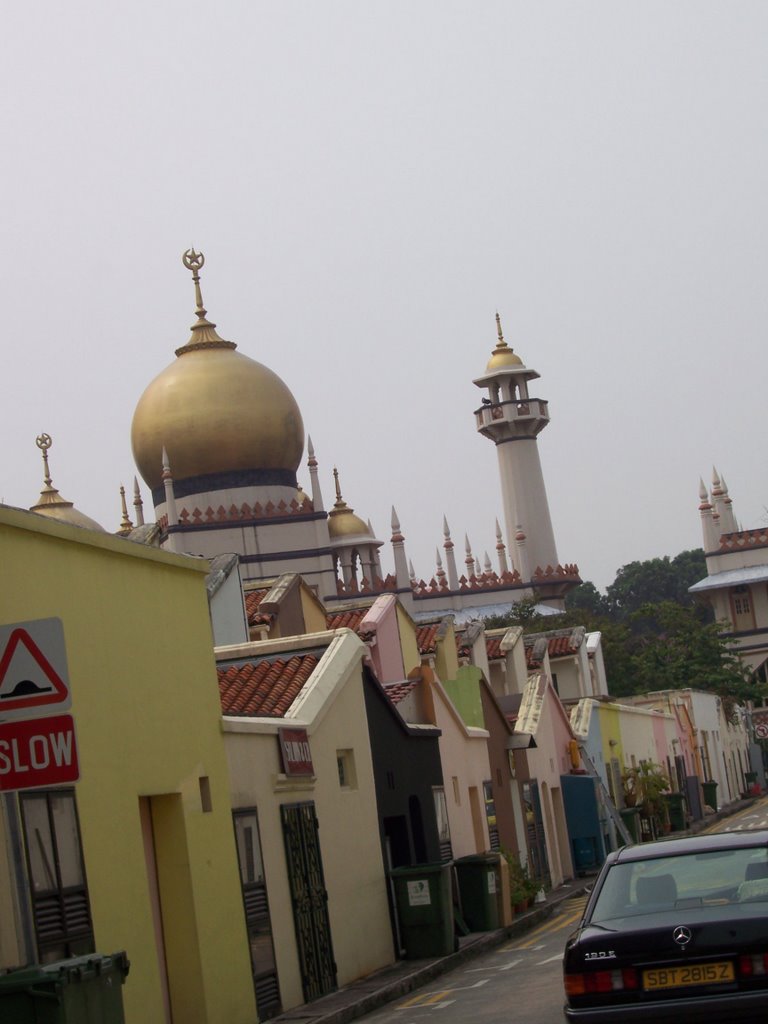
Sultan Mosque is such a prominent building in the Kampong area that I can see it visbibly while I was walking along one of the back lanes.


Other than the familiar Orchard Road (not that I go there often),
I suppose that there are still many parts of Singapore worth exploring.

Check out the Singapore Biennale 2006 before it ends on 12 Nov 06.

Sunday, October 22, 2006

Treasures of art hidden in a peaceful corner

It was thoughtful of the organisers of the Singapore Biennale 2006 (SB2006) to provide shuttle bus services to various locations. When I alighted the shuttle bus at the designated bus-stop nearby Tanglin Camp, I felt very glad that shuttle bus services have been arranged for.

The SB2006 site at Tangln Camp is tucked away from the hustle and bustle of city life. I felt I was being transported to a rural and peaceful environment, and I welcomed the respite that came along with it. Even though I had to take a slow 5 minutes walk from the designated bus-stop to the actual SB2006 site, I enjoyed every bit of the walk (except the part where I have to bear with the poor quality air from the recent haze).


After getting down at the bus-stop, I followed the signs on the signboards to head for the SB2006 site.


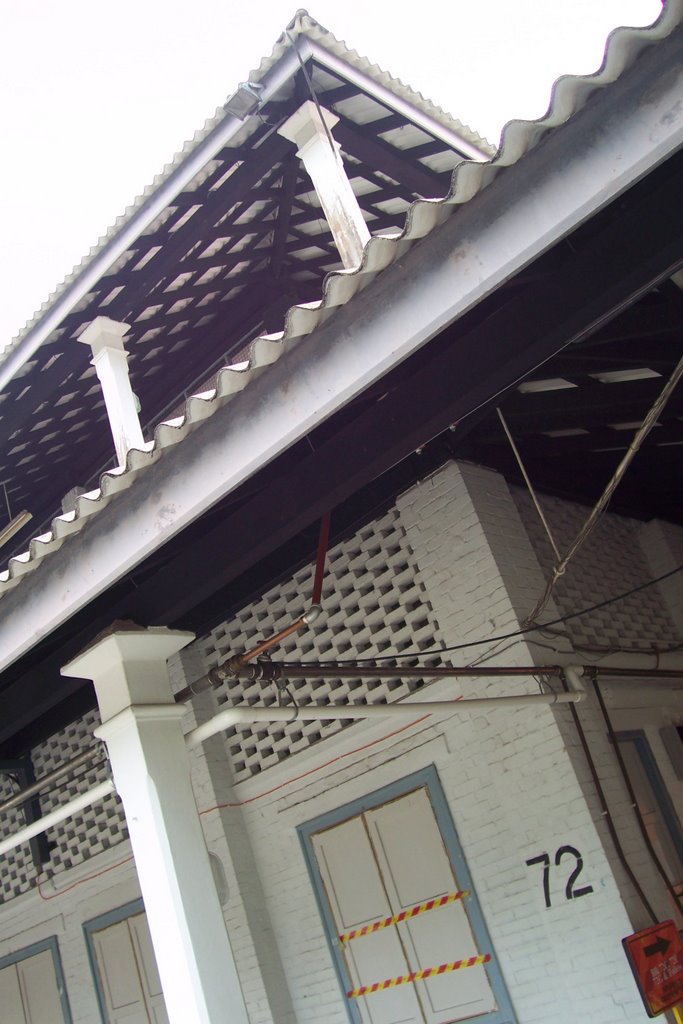
Block 71 Tanglin Camp.


Away from the rest of the world.


I was treated to a pleasant surprise when the friendly personnel at the reception told me that admission to the site was free as it was a public holiday (Deepavali) that very day. This meant that I can save my already purchased SB2006 ticket to make yet another trip to Tanglin Camp again, if time were to permit.

I had wanted to join the guided tour but it would only start about 45 minutes later. I began to venture the various galleries on my own.


Prvacki's The Leap of Faith. Can you feel the forces that attract one to it?


The first work at Tanglin Camp that won my attention was The Leap of Faith, a mixed media installation by Prvacki. What attracted me was the concept behind the work. This artwork has the power to literally and physically attract viewers to it. How can this be possible? One part of the work comprised of a large black-coloured magnetic block held on the wall. When a viewer puts on a specially designed metallic vest, the magnetic forces literally attracts the viewer to the work. Somehow, I see parallel between the magnetic forces from the work and the gravitational pull from Earth. To some extent, gravity limits our movement but it also creates the familiar framework which we organise our movements around. But in this work, having a force that attracts the viewer from unfamiliar direction also seems to force the viewer to redefine the way he/ she moves.


***


Escala

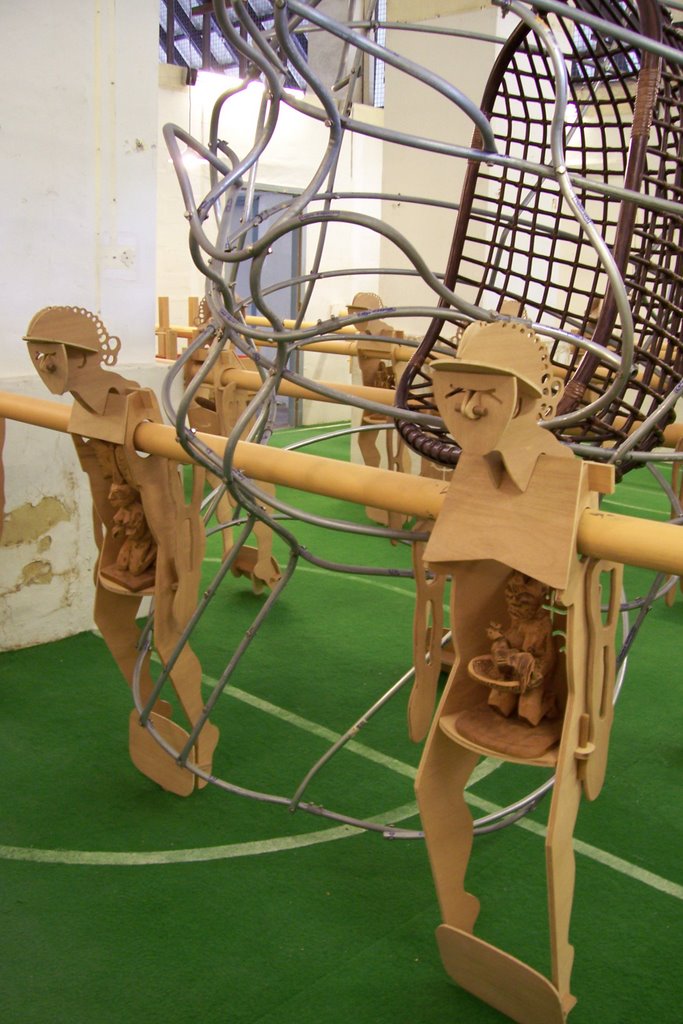
Juhasz-Alvarado's Escala (Stopover) also caught my eye. It was visually attractive to me. It is an installation that looks like a giant-sized table football game. The figurines (that seem to represent the toy "players") seem to bear images that look like African idols, while others seem to look like abstraction of Christian saints.


I realised that the appreciation of this work requires one to gain an appreciation to the cultural context in which the artist's work was influenced by. According to the exhibition short guide, "Juhasz-Alvarado's work was steeped in the culture of Puerto Rico." I can totally agree with the text found on the exhibition short guide that this work is a representation of a complicated game. Check out this work, and do get a copy of the exhibition short guide, read it so as to find out more about this interesting piece of work.

***


Phinthong's Dong Na Tham. This is one piece of art where the audience can contribute.


Phinthong's Dong Na Tham caught my attention as it "aims to test and raise the question of morality, spirit and social contribution" (from exhibition short guide) within the Singapore community. There is a box whereby one can make silent bids for the work. Funds raised from this method will go towards creating a small library at one of the primary schools in Southeast Thailand. How would the Singapore community respond to this work?

***


We live in a Dangerous World


I also went to check out Brian Gothong Tan's We live in a Dangerous World as I've read a positive review about it when I was reading a post by Emily regarding her visit to the Tanglin Camp. This installation by Brian Gothong Tan forced me to look at the objects that laid in front of me from perspectives that I normally don't take. This is one work that one should go and experience. It shakes one to experience things in ways different from one's norms.

**

When it was approaching 1.30 p.m., I headed for the meeting point to join the guided tour. My guide for that day was WH. I found some of the comments shared by the guide to be worth contemplating upon. I remember him saying that in looking at a work of art (especially a piece of contemporary art), it is helpful "to temporarily suspend one's disbelief". After thinking about it, I think the words do make sense. It does help in one's appreciation of the works if one can temporarily suspend one's disbelief when looking at works of art such as Brian Gothong Tan's We Live in a Dangerous World and many others.

Perhaps the value of art is that it seeks to present different ways of looking at life. There is no right or wrong. Art just presents the diversity of life. When one temporarily suspends one's disbelief, one can then learn to appreciate a perspective that may be an opposition to one's own. Art that challenges one to question one's very own perspective too. How intriguing, won't you think?

**


Aquarium: I feel like I am in a fishbowl.
In this work, the viewer can almost literally experience how it feels like to have his/her head in a fishtank.


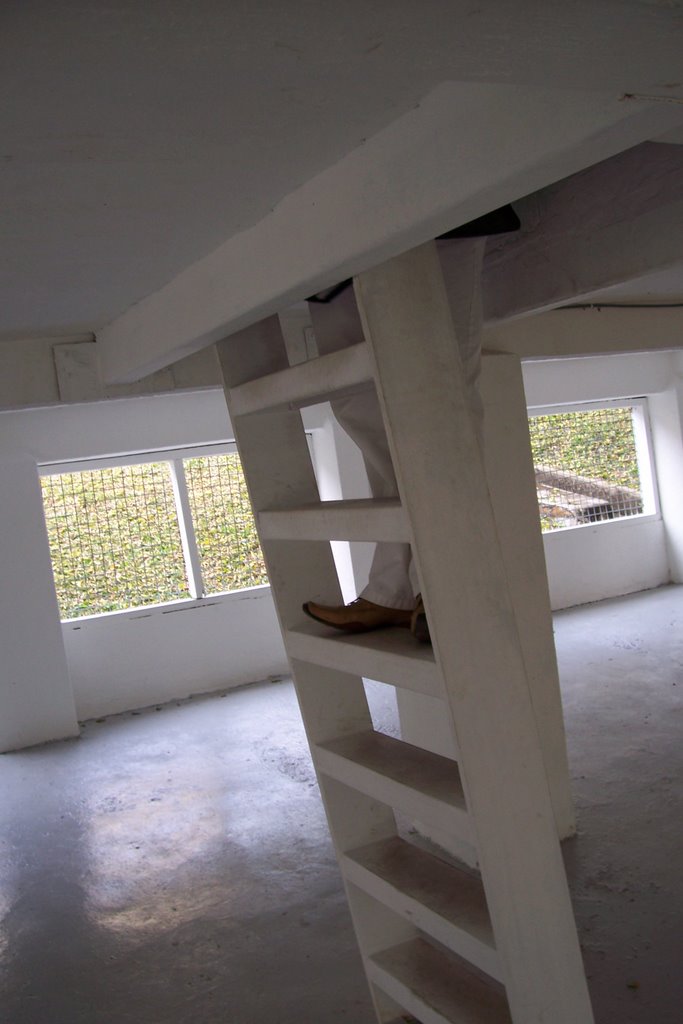
Do you know where this ladder leads one to?


I heard that seals and penguins are the sources of inspirations for Takashi Kuribayashi's works.


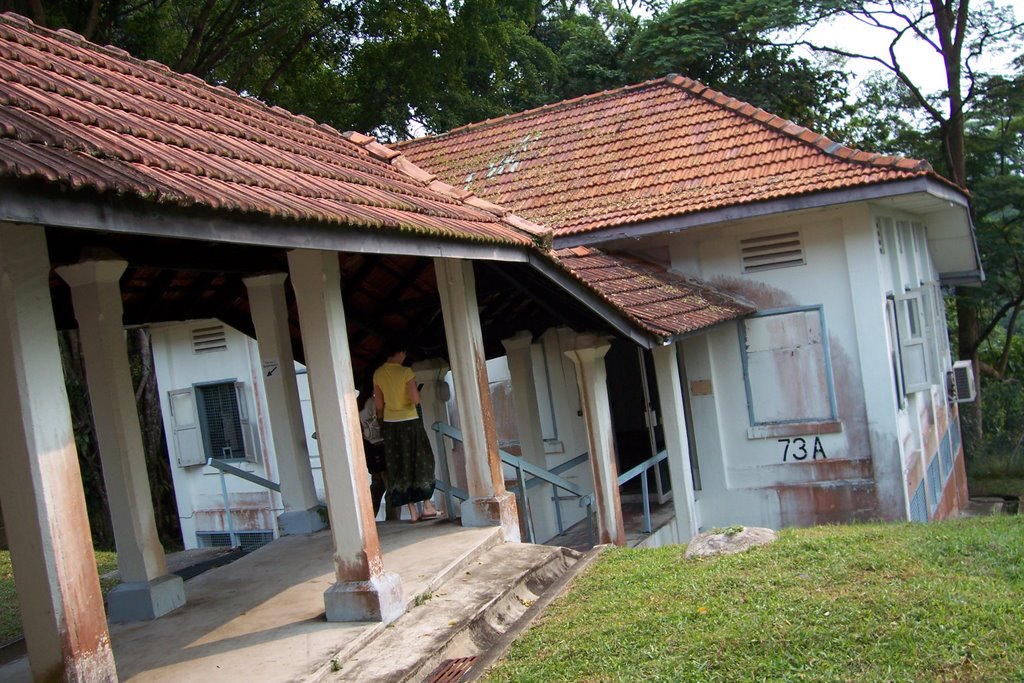
Look out for Block 73A.


The very first stop of the guided tour was at Block 73A of Tanglin Camp. The guide shared that Block 73A housed one of his favourite works from the site. Housed at Block 73A is Takashi Kuribayashi's Aquarium: I feel like I am in a fishbowl. I marvelled when I experienced this installation. While it seemed to disorientate me to see things from an odd-perspective, it was fun and novel. This is one installation that one must check out.

**


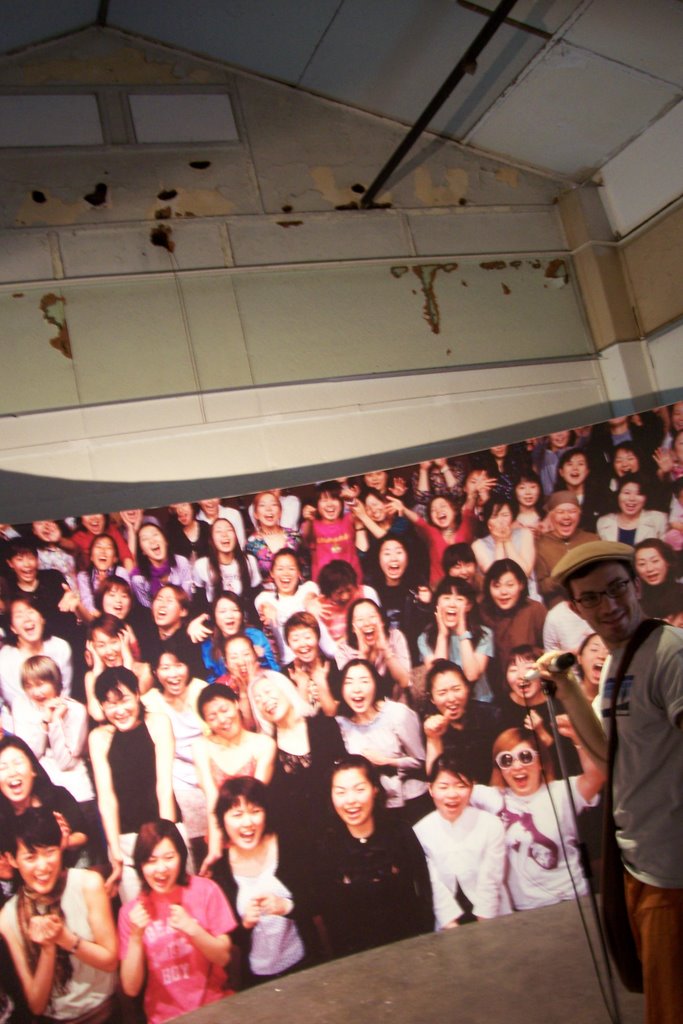
This work makes one feel like a star!


For the folks who would like to experience how it feels like to be a star on a stage, check the interactive installation STAR by Hiroyuki Matsukage. It is interesting to see how this work responds accordingly when a viewer shouts into the microphone provided. How fun!

Echo, also by Hiroyuki Matsukage is yet another thought-provoking work. According to the guide, this work seeks to portray the frustrations of being only able to echo another person's words. Imagine not being able to speak one's own voice and thoughts, and having to mirror another person's words all the time. I would think it is terribly frustrating. I was told by the guide that the title of this work is linked to a Greek mythology.

**
More photos:


Agathe de Bailliencourt's Occupation Bleue


I like the concepts behind Ashok Sukumaran's Redoubt (The Old Therapeutic Institution).


Suwage's and Titarubi's Crossroad


More of Tanglin Camp.


**

What you see and read here are just mere snippets of my experience. There are a lot more interesting works at the Tanglin Camp.

Please don't be put off by the location of this SB2006 site. The shuttle bus service can help making this site accessible. I can say that there are many treasures of art hidden in this peaceful corner of Singapore, the Tanglin Camp. Check it out. Till 12 Nov 2006.

Information regarding the free SB2006 shuttle bus service is available here: http://www.singaporebiennale.org/quickfacts.html#shuttleservice

Last but not the least, I thank my guide for his insightful accounts and sharings. I have enjoyed my trip at the SB2006 site at Tanglin Camp. It is definitely worth one's money and time to visit the Singapore Biennale.

****
References:
- Singapore Biennale 2006 website.
- Belief: Exhibition Short Guide (ISBN 981-05-6252-7)

Stairway to Heaven


One fine Saturday morning, I headed for the Singapore Biennale 2006's (SB2006) information centre on the grounds of SMU to join one of the Walking Art Trail Tours: Stairway to Heaven.

This trail takes one to the following SB2006 sites: SMU, Maghain Aboth Synagogue, Church of Sts Peter & Paul, Sculpture Square, Sri Krishnan Temple, Kwan Im Temple. My guide for this walking trail was SL.

The very first artwork that we were introduced to at the start of the walking trail was Paper House by Shigeru Ban. I have written a post on this artwork sometime ago. Check out: The paper-house at SMU.

**
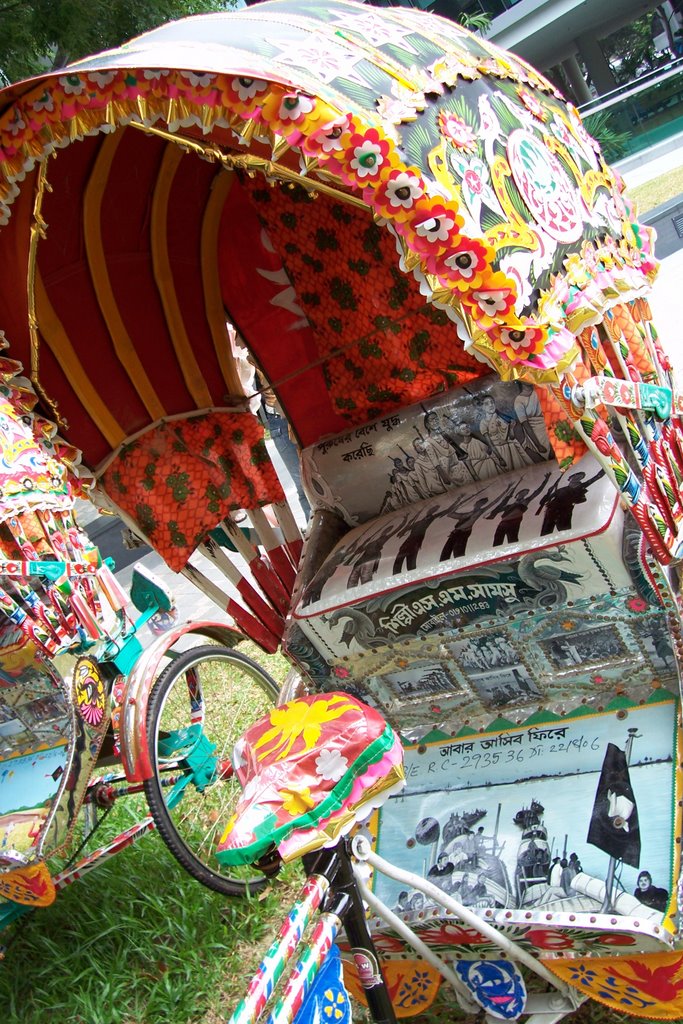
The next artwork that we were introduced to came about from a collaboration between Drik Picture Library Ltd and a number of traditional artists who decorate rickshaws in Dhaka.

I did not have a good impression of this artwork when I first saw it. I found the colour-schemes to be too ill-coordinated for my liking. But I found myself beginning to appreciate this artwork after I hear from the guide that rickshaws are being phased out by the Bangladeshi government.

As best as I understand, Drik Picture Library Ltd comprises of photographers and activists. Instead of showcasing the photographs that Drik has taken, it commissioned traditional artists to decorate the rickshaws based on photographs taken by the Drik photographers.

Was it Drik's attempts to provide a chance for the rapidly disappearing traditional art form to showcase their works? Was it to increase people's awareness of the decline of the art of decorating rickshaws? Was it to remind us that without any intervention, the traditional art may soon be lost? I have no answer at all. I can only say that this artwork triggered me to ask many questions. Art often has the power to make one think of issues that one takes for granted.

Then instead of seeing the artwork as a vulgar-looking work with ill-coordinated colours, I began to see that it has a value. The pictures on the rickshaws depict scenes of everyday life. The decorations on the rickshaws also give one a glimpse to the cultural values and practices of the folks who have painted them. Beyond that, perhaps the decorations can be seen as the products of the artists' their skills and patience, the artists' sources of pride and joy.


***

Afterwhich, we headed for the Maghain Aboth Synagogue along Waterloo Street. We were not able to view the exhibits there on that Saturday morning.

We were told that to view Jennifer Wen Ma's work that is installed there, we will have to visit the Maghain Aboth Synagogue from 2pm - 6pm, from Monday to Thursday. I also learnt that Jaume Plensa's Even Shetia is best viewed from 7.30pm - 9.30pm when the light projection is on. I heard that Plensa's work attempts to represent a connection with heaven. I wonder how it would look like to have light projected up to the skies. I shall visit the synagogue on another day then.


***


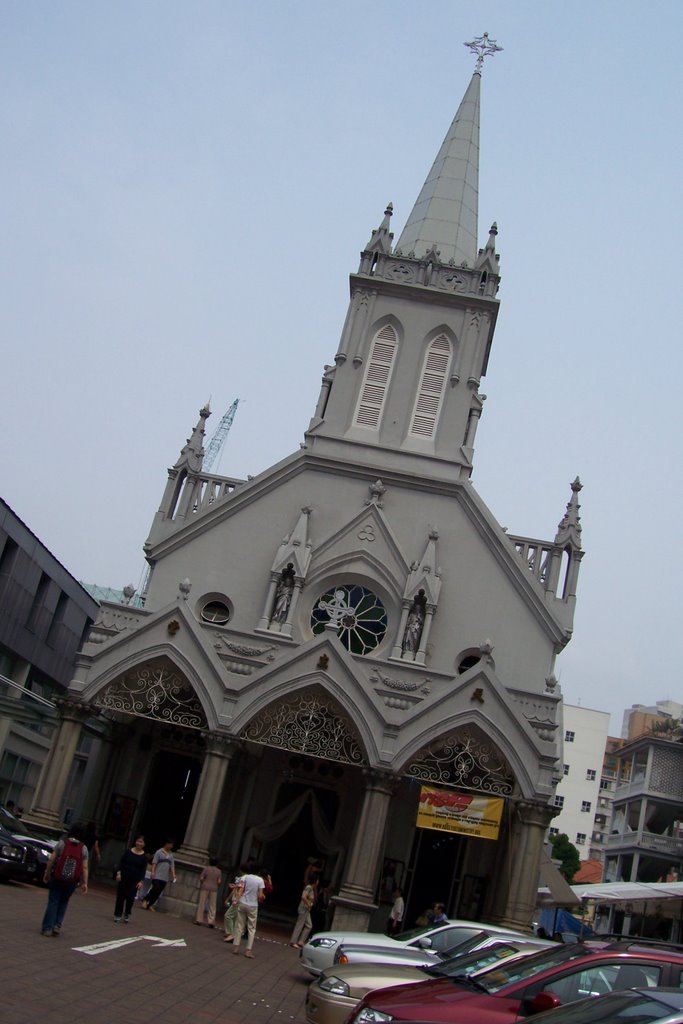
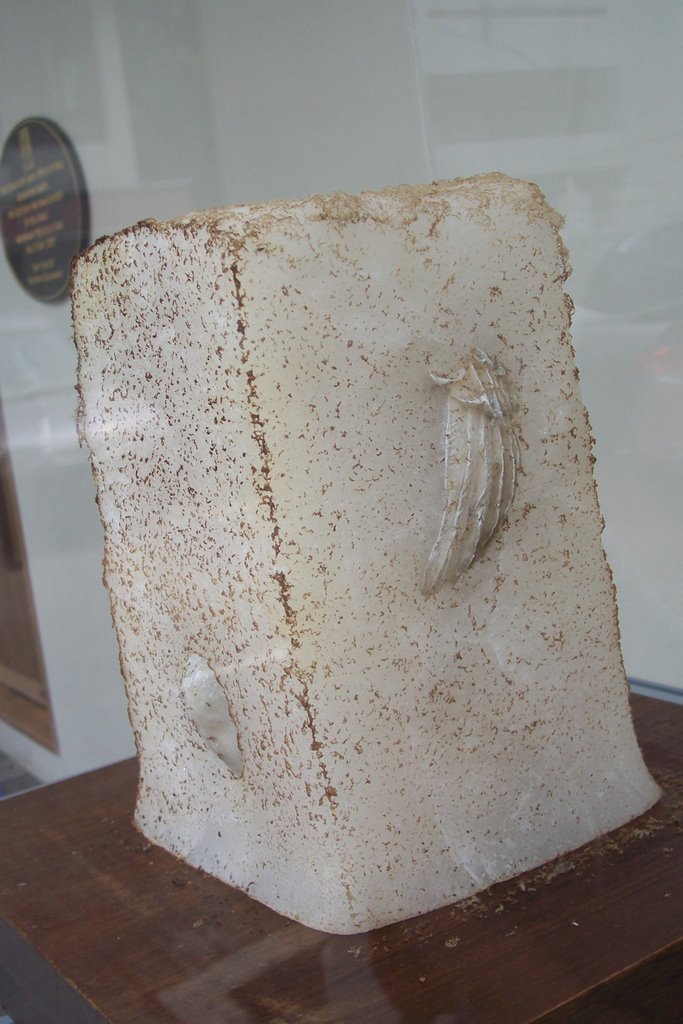
Next stop was the Church of Sts Peter & Paul. I went to take my second look at this artwork that was titled Emerging Angels. I found myself beginning to appreciate this artwork once I realised that there is actually a sculpture of an angel inside what appears to be a white block. The white block is made of a material that would slowly dissolve when it comes into contact with air. The material has a smell of mothballs. I didn't like the smell, but I was fascinated to see what looked like the wings of an angel revealing itself gradually from the white block.


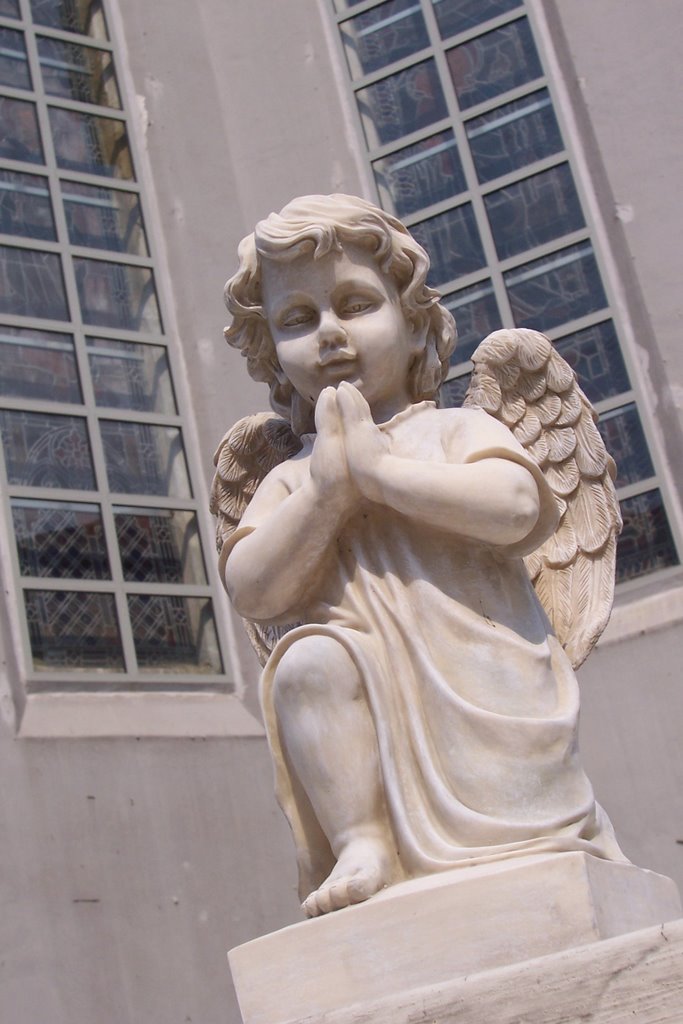
It was only after much thinking, I realised that the angels that I had seen around the perimeter of the church's wall could be part of the work by this artist, Balasubramaniam. There seems to be a relationship between the angels around the perimeter of the church's wall and the installation at the entrance of the church's Adoration room, though I cannot fully make it out.


***


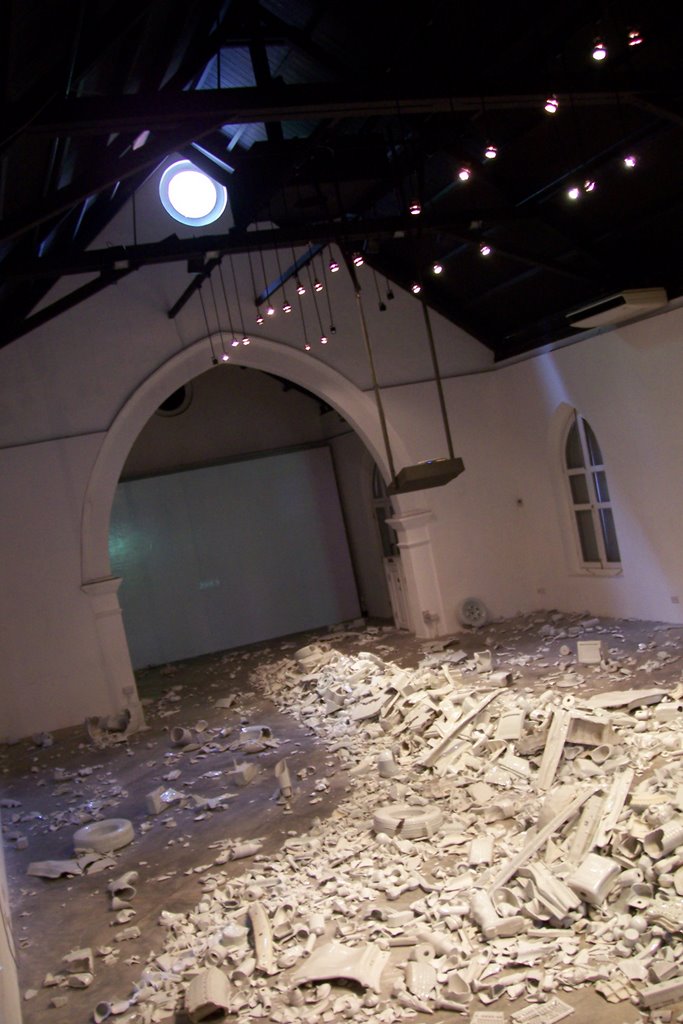
Liu Jianhua's Dream.


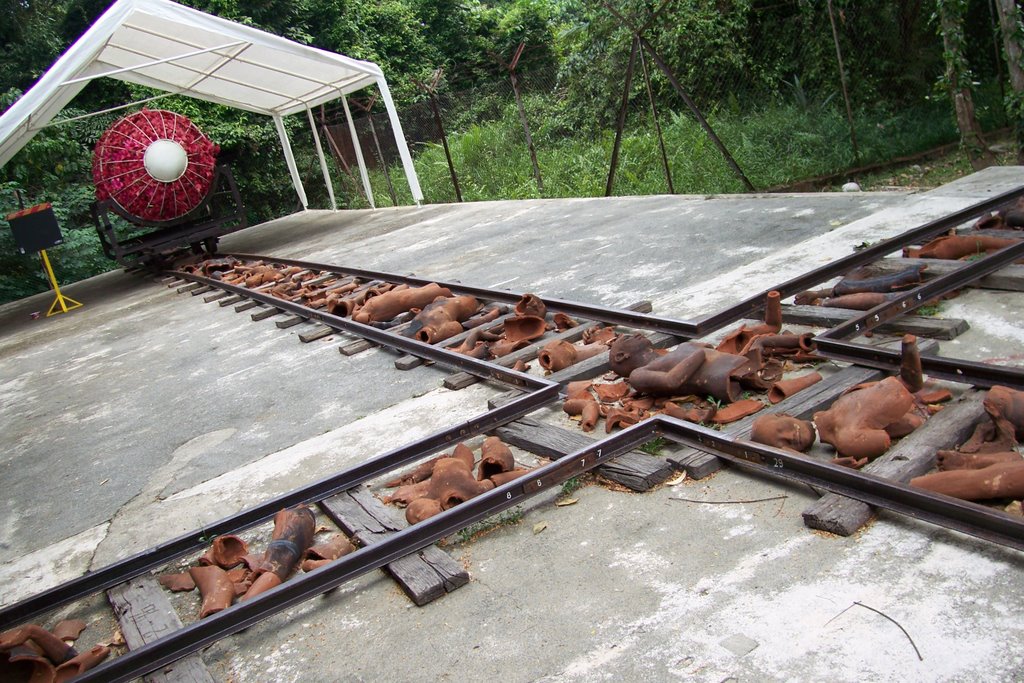
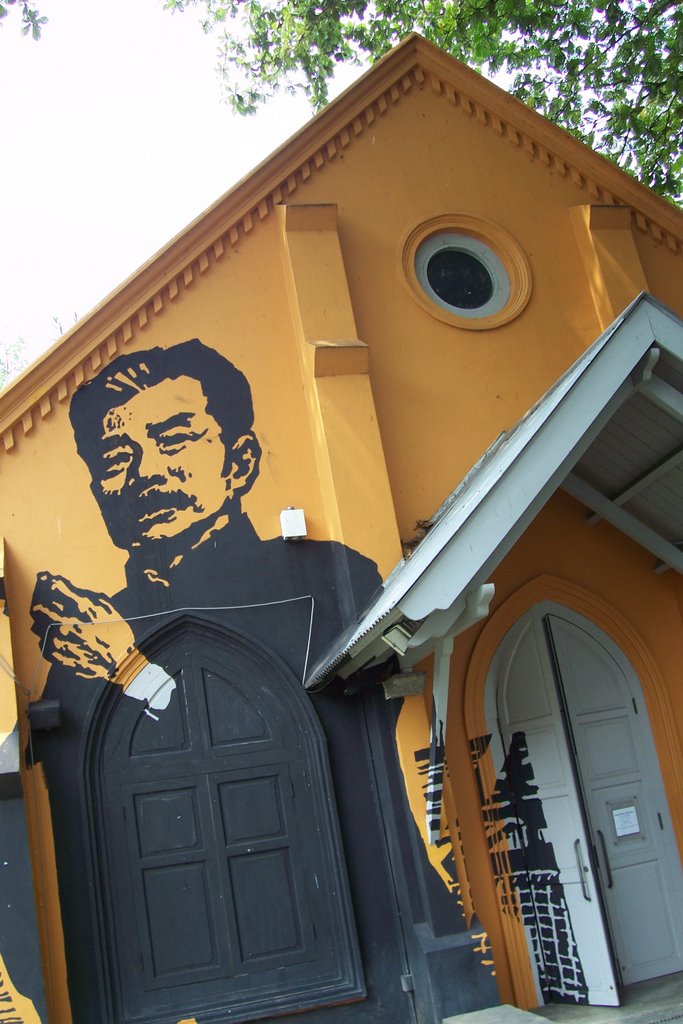
In the bright yellow colour of the building of Sculpture Square houses the next SB2006 exhibit that we were to see on the walking trail. Dream by Liu Jianhua is a mixed media installations. As I stepped into the gallery, I saw countless pieces of broken white-coloured ceramics that looked like common everyday objects. On the screen is a video about the accident of the space shuttle, Challenger.

The artwork seems to suggest that behind every endeavour, there is a possibility of failure. Yet, it is still meaningful to carry a glimpse of hope, as hope propels us forward to create the future.

***
The next part of the walking trail brought me to a place that I have never ventured to before. We were guided to take a lift to the 4th floor of a building that is part of the Sri Krishnan Temple.

As I looked down from the 4th floor, I could see the painting installation, Cosmic Orphans, conceptualised by Harsha. When one takes a look at the painting installation, one can see many figures in the sleeping position.

I was reading the exhibition short guide after the walking trail, and I particularly like this quote that was printed together with the notes on this work:
All men whilst they are awake are in one common world: but each of them, when he is asleep, is in a world of his own
- Plutarch

It just makes me think whether those figures in the painting installation were seeking refuge in their own world?


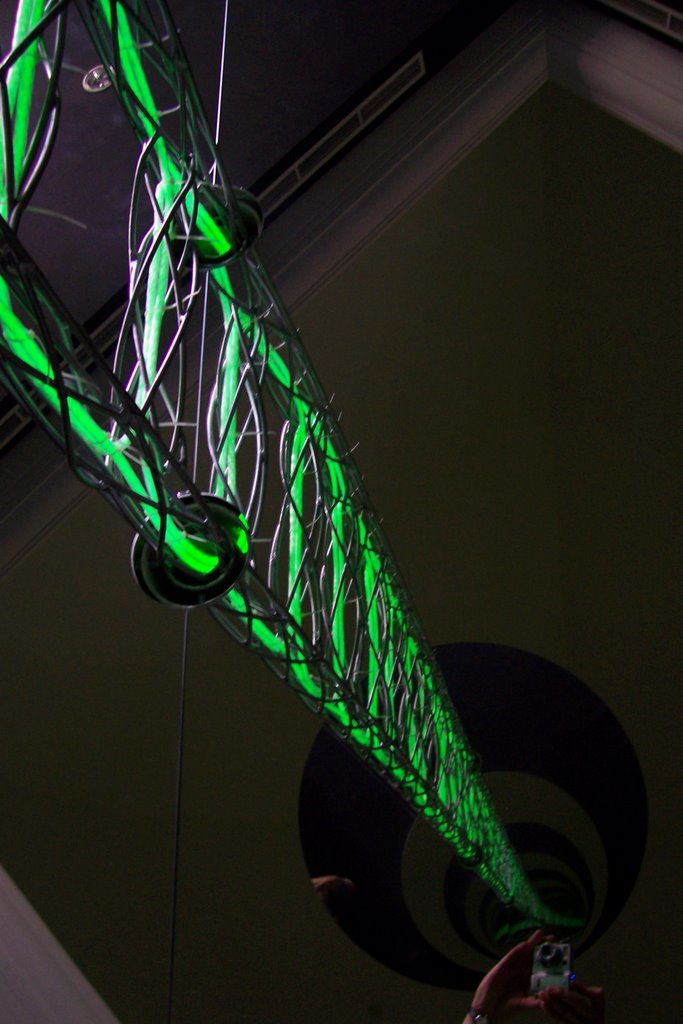
My favourite work on the walking trail was Yayoi Kusama's Ladder to Heaven. It comprises of a ladder-looking object. There are mirrors attached above and below this ladder-like object.

I think this work is ingenious. When I looked at the mirrors above and below the ladder-like object, I could see that the ladder leads to infinity. It felt as if the ladder might in fact provide the pathway to heaven and the underworld.

Yet the ladder does not actually lead us to either. It is just a matter of perception that we think that it may lead us to heaven. I thought to myself: perhaps if we were to alter our perceptions, we may find an opening that leads us to bliss, and the so-called heaven?


Yayoi Kusama's Ladder to Heaven


***
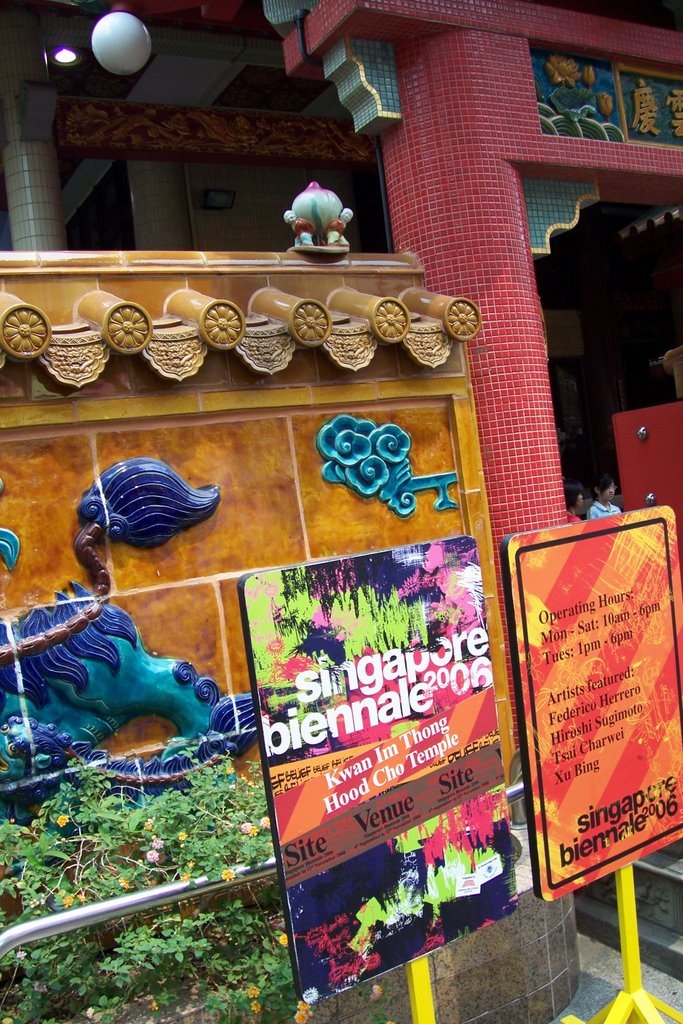
The final stop of the walking trail is Kuan Im Temple.


I was particularly intrigued by Xu Bing's Square Word Calligraphy. Using this style of calligraphy, Xu Bing transforms words written using the Roman alphabet into square, Chinese-like characters. On the carpet that the devotees of the Temple knelt on, Xu Bing wrote the words "Belief". It does look like a Chinese-like character, but this character did not make any sense to me if I were to look at it as a Chinese character.

I did not manage to get a picture of the Prayer Carpet, but I have got a blurred image of how Xu Bing's writing would look like on the carpet (see right below). Go and see the real thing and see if you can make the word out.


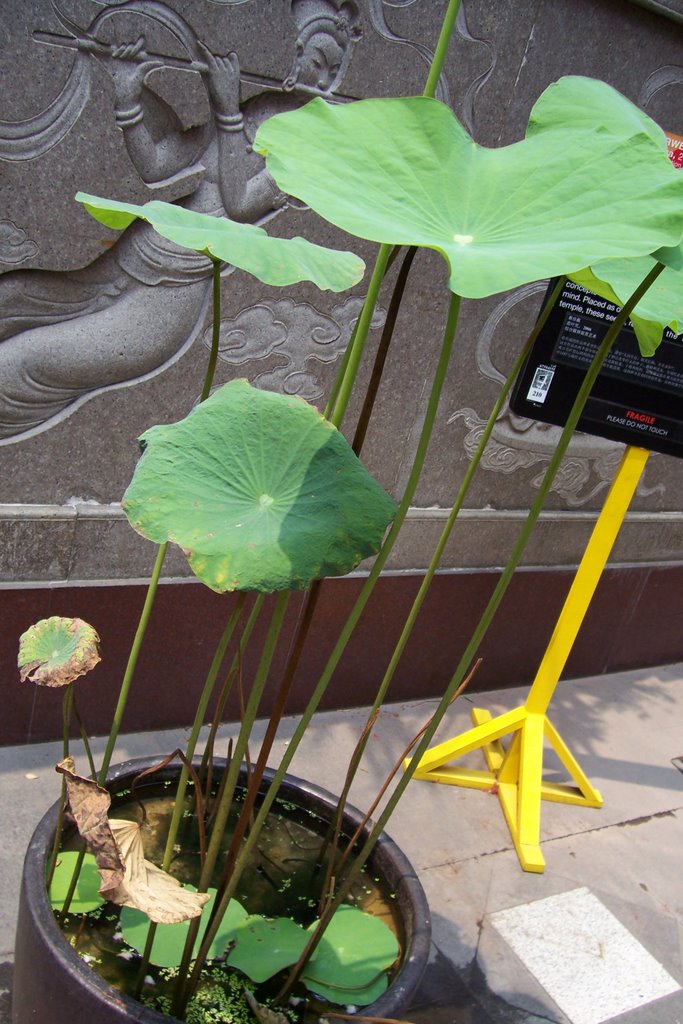
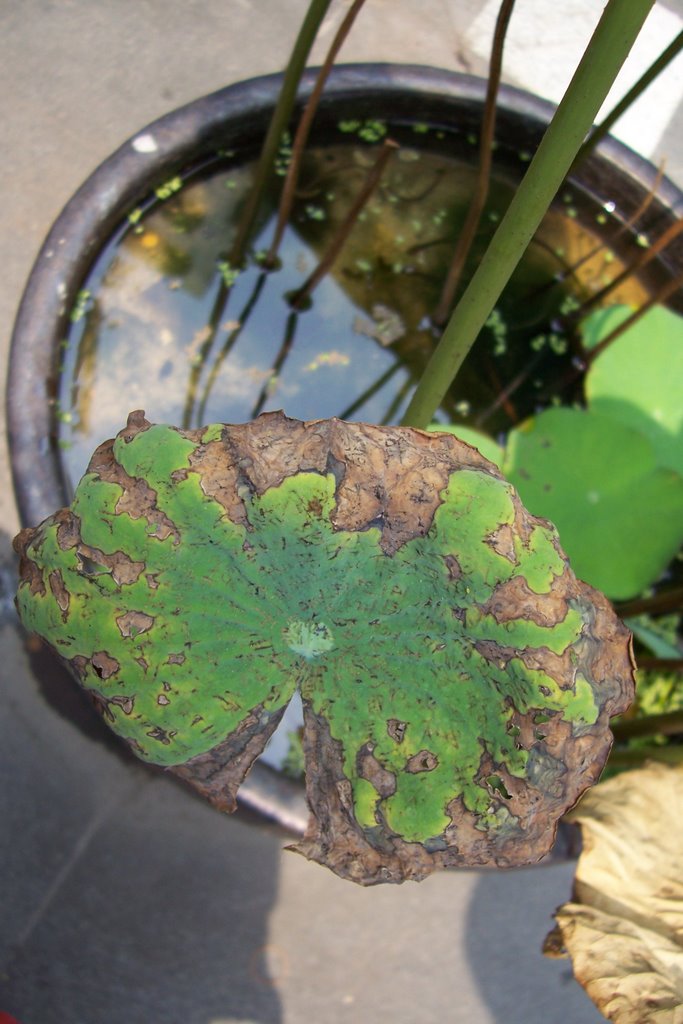
If you were to see a pot of lotus plant at the Kuan Im Temple, please take an extra look at it. It may be one of the SB2006 exhibits, Lotus Mantra. When I was there at the site, I could vaguely see writings on two of the lotus leaves. The leaves looked like they were gradually decaying, and it was difficult to make out many of the words on the leaves.


Tsai, Charwei's Lotus Mantra


What does the artist hope to represent? If you would like to find out, please check out the Singapore Biennale 2006. I would also recommend that one gets a copy of the exhibition short guide to increase one's appreciation of the various works.

I ended the walking trail with Herrero's Painting. I have found that his painting on the walls of one part of the Temple to be pleasing for the eye. This might have been one of the most accessible works of the SB2006 considering that it is installed near one of the main exits of the Kuan Im Temple, and the Kuan Im Temple has a steady flow of devotees visiting it everyday.


I have enjoyed this walking trail. Special thanks to my guide who has helped given me insights to the various works.

***
If you wish to experience the walking trail for yourself, please check out this URL for more information: http://www.singaporebiennale.org/programme-education-tours.html

If you prefer to view the exhibits at your own pace, you may visit the above-mentioned SB2006 sites on your own too. Check out this site for more information: http://www.singaporebiennale.org

Hurry though. SB2006 ends on 12 Nov 2006.

****

References:
- Singapore Biennale 2006 website.
- Belief: Exhibition Short Guide (ISBN 981-05-6252-7)